
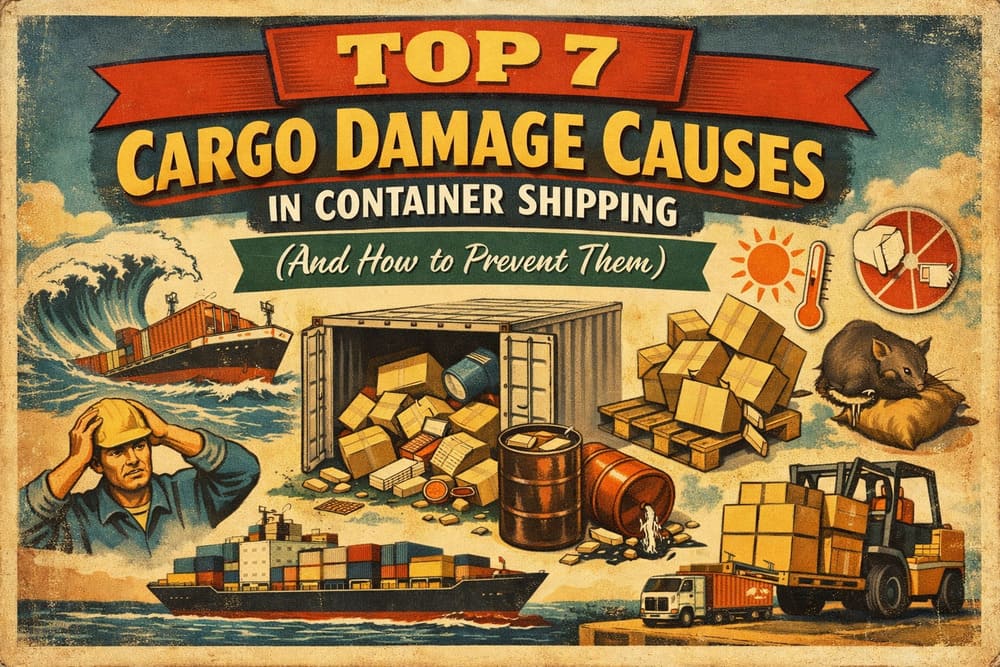
Cargo damage in container shipping is one of the most expensive and avoidable problems in international logistics. Contrary to popular belief, containers themselves rarely cause damage. In most cases, losses occur due to poor preparation, incorrect loading techniques, or a lack of understanding of how cargo behaves during ocean transit. This expert guide breaks down the top seven causes of cargo damage in container shipping and explains how each one can be prevented with the right planning and execution.
Why Cargo Damage Happens in Container Shipping
Containers are designed to protect cargo from external elements and provide a stable transport environment. However, they cannot compensate for improper packaging, weak securing, or incorrect weight distribution. During ocean voyages, containers are exposed to constant motion, vibration, and changes in temperature and humidity. If cargo is not prepared for these conditions, damage becomes almost inevitable.
Understanding the real causes of cargo damage allows shippers to address problems at the source rather than reacting after losses occur.
Top 7 Cargo Damage Causes in Container Shipping
Below is a quick-reference table summarizing the most common cargo damage causes in container shipping and how each issue can be prevented.
| Cargo Damage Cause | Why It Happens | How to Prevent It |
|---|---|---|
| Improper packaging | Domestic-grade packaging cannot withstand ocean transit forces | Use export-grade packaging designed for stacking and vibration |
| Poor blocking and bracing | Cargo is not immobilized inside the container | Apply professional blocking and bracing techniques |
| Load shifting | Uneven weight distribution and unsecured loads | Plan load distribution and secure cargo at multiple points |
| Moisture and condensation | Temperature changes cause container rain | Use desiccants, moisture barriers, and proper ventilation |
| Poor container condition | Damaged floors, seals, or doors | Inspect containers before loading |
| Overloading | Exceeding weight limits stresses cargo and container | Follow container payload limits and axle load rules |
| Inadequate handling | Cargo is vulnerable during terminal moves | Ensure cargo is fully secured before any transfer |
2. Poor Blocking and Bracing
Blocking and bracing are critical for preventing cargo movement inside a container. Without proper securing, cargo can shift during vessel roll, acceleration, or sudden stops.
Even small movements inside a container can generate significant impact forces. Professional blocking and bracing techniques immobilize cargo and distribute forces evenly throughout the container structure.
3. Load Shifting During Transit
Improper load planning often results in uneven weight distribution. When cargo is heavier on one side of the container, gravity and vessel motion amplify movement, increasing the risk of tipping or collapse.
Load shifting frequently leads to cascading damage, where one item’s movement causes multiple failures inside the container.
4. Moisture and Condensation Damage
Moisture is a silent but destructive factor in container shipping. Temperature fluctuations during ocean transit cause condensation to form inside containers, commonly known as container rain.
Without moisture protection measures, cargo such as machinery, electronics, wood products, and paper goods can suffer corrosion, warping, or mold growth.
5. Poor Container Condition
Using a container with structural defects significantly increases cargo damage risk. Common issues include damaged flooring, compromised door seals, and internal corrosion.
A pre-loading container inspection is essential to ensure the unit is clean, dry, and structurally sound before cargo is loaded.
6. Overloading or Uneven Weight Distribution
Exceeding container weight limits or concentrating heavy cargo in a single area puts excessive stress on both the container and the cargo itself.
Overloading increases the risk of floor damage, structural deformation, and handling incidents at terminals or rail ramps.
7. Inadequate Handling at Terminals and During Transfers
While containers reduce handling frequency, cargo can still be exposed to risk during terminal operations, inspections, or intermodal transfers.
Cargo that is poorly secured or improperly packaged is far more vulnerable during these unavoidable handling stages.
How to Prevent Cargo Damage in Container Shipping
The table below outlines practical damage-prevention measures used in professional container logistics.
| Prevention Measure | Purpose | Typical Cargo Types |
|---|---|---|
| Export-grade packaging | Absorbs vibration and stacking pressure | Consumer goods, boxed freight |
| Custom crating | Stabilizes high-value or irregular cargo | Machinery, equipment |
| Blocking and bracing | Prevents movement inside container | Heavy or dense cargo |
| Moisture protection | Reduces corrosion and mold | Steel, electronics, wood products |
| Pre-loading inspection | Eliminates container-related risks | All containerized cargo |
Preventing cargo damage requires a proactive approach that starts before loading begins.
Effective prevention strategies include:
- Using export-grade packaging designed for containerized transport
- Applying professional blocking and bracing methods
- Planning load distribution carefully
- Protecting cargo from moisture and condensation
- Inspecting containers prior to loading
In many cases, damage prevention depends on proper preparation rather than transport mode.
Why Proper Crating and Export Packaging Matter
Professional crating and export packaging services play a critical role in reducing cargo damage risk. Proper crating stabilizes cargo, absorbs transit forces, and creates a controlled environment within the container.
Well-designed export crates are especially important for machinery, high-value equipment, and sensitive goods that cannot tolerate movement or environmental exposure.
Final Thoughts: Cargo Damage Is a Planning Problem
Before loading, many experienced shippers use a final container preparation checklist to reduce risk.
| Pre-Loading Check | Why It Matters |
|---|---|
| Container inspected | Prevents damage from structural defects |
| Cargo packaged for export | Ensures resistance to transit forces |
| Load plan verified | Avoids uneven weight distribution |
| Blocking and bracing installed | Eliminates cargo movement |
| Moisture protection added | Reduces condensation damage |
Cargo damage in container shipping is rarely caused by containers or vessels. Instead, it is the result of preventable preparation and loading mistakes. Businesses that invest in proper packaging, securing, and planning dramatically reduce loss rates and protect both cargo value and supply chain reliability.
By treating damage prevention as part of the logistics planning process, shippers gain greater control over outcomes and long-term costs.
Talk to a Cargo Protection Specialist
If you want to reduce cargo damage risk on container shipments through better packaging, securing, and transport planning, professional guidance can make a measurable difference.
📞 +1 (365) 829-5000
📧 service@metropolitanlogistics.ca