
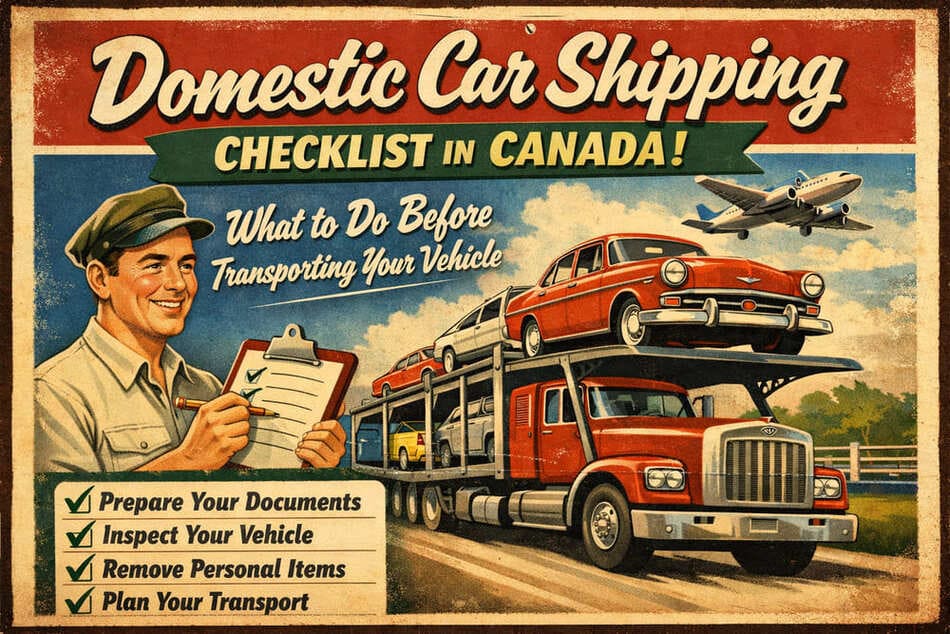
Domestic car shipping checklist Canada helps vehicle owners prepare properly before transporting a car within the country. This detailed guide covers open truck transport and rail-assisted shipping, explains what to expect at each stage, and helps avoid delays, damage, or unexpected issues.
What Domestic Car Shipping in Canada Includes
Domestic car shipping in Canada refers to vehicle transport within provincial borders or between provinces. Cars move primarily on open car carriers (open trucks) and, on certain long-distance corridors, via rail-assisted transport combined with trucking.
Moreover, domestic transport applies only to running and operational vehicles. Non-running cars typically require specialized services and are not accepted for standard domestic transport.
Transport Methods Used in Domestic Car Shipping
Transport Methods at a Glance
| Transport Method | When It’s Used | Key Advantages | Important Notes |
|---|---|---|---|
| Open truck transport | Most domestic routes | Cost-effective, flexible scheduling | Vehicle exposed to weather and road conditions |
| Rail-assisted transport | Long-distance, cross-country routes | Efficient for long hauls, reduced highway mileage | Requires terminal handling and truck delivery |
Open Truck Transport (Most Common Option)
Open truck transport uses multi-level car carriers designed to move several vehicles at once. This method is widely used across Canada for dealership transfers, relocations, and private vehicle shipments.
Key characteristics:
- Cost-effective for most routes
- Flexible pickup and delivery options
- Suitable for standard passenger vehicles
Rail-Assisted Vehicle Transport
For longer routes, especially cross-country moves, vehicles may travel part of the distance by rail before final delivery by truck. Rail-assisted shipping helps improve efficiency and reduce highway congestion.
Important considerations:
- Typically used for long-haul routes
- Requires coordination between rail terminals and trucking
- Transit times may vary based on rail schedules
Rail-Assisted Vehicle Transport
For longer routes, especially cross-country moves, vehicles may travel part of the distance by rail before final delivery by truck. Rail-assisted shipping helps improve efficiency and reduce highway congestion.
Important considerations:
- Typically used for long-haul routes
- Requires coordination between rail terminals and trucking
- Transit times may vary based on rail schedules
Domestic Car Shipping Checklist: Before Booking
Before scheduling transport, confirm the following:
- The vehicle starts, drives, and brakes normally
- There are no active fluid leaks
- The battery is in good condition
- Tires are properly inflated
- The vehicle meets standard road safety requirements
Therefore, verifying eligibility early helps prevent last-minute cancellations.
Documentation Checklist
Prepare the required documents in advance:
- Proof of ownership or registration
- Government-issued photo ID
- Pickup and delivery contact information
- Any special access instructions for pickup or delivery locations
Having documents ready simplifies carrier coordination.
Vehicle Preparation Checklist
Proper preparation reduces the risk of delays or loading issues during domestic transport. Before pickup, make sure the following requirements are met:
Vehicle Eligibility & Safety Requirements
| Requirement | Why It Matters |
| Vehicle is fully operational | Working brakes and an emergency brake are mandatory for safe loading |
| Minimum ground clearance of 5 inches | Low-clearance vehicles may not load safely onto carriers |
| No personal contents inside | Personal items increase risk and are not covered during transport |
| Fuel level between 1/4 and 1/2 tank | Ensures safe loading without unnecessary weight |
| Maximum vehicle size: 7’ H x 8’ W | Racks or attachments must be included in measurements |
| Modifications disclosed in advance | Lowered, lifted, or customized vehicles affect loading and routing |
Pickup Day Checklist
On the day of pickup:
- Be available during the agreed pickup window
- Conduct a walk-around inspection with the driver
- Confirm vehicle condition and note any existing damage
- Provide keys and access instructions if required
Clear communication at pickup helps avoid misunderstandings later.
What to Expect During Transit
While the vehicle is in transit:
- Transit times vary by distance and route density
- Weather and seasonal demand may affect schedules
- Updates are typically provided at key milestones
Understanding how domestic car shipping works in Canada helps set realistic expectations during this phase.
Delivery Day Checklist
Upon delivery:
- Inspect the vehicle carefully before signing off
- Compare delivery condition with pickup photos
- Report any visible issues immediately
- Confirm receipt and close out the shipment
Therefore, thorough inspection ensures accountability at delivery.
Common Mistakes to Avoid
Several avoidable issues occur frequently:
- Leaving personal belongings inside the vehicle
- Attempting to ship a non-running car
- Expecting exact pickup times instead of time windows
- Not documenting vehicle condition
Avoiding these mistakes helps keep the process smooth.
Choosing a Reliable Domestic Auto Transport Provider
Domestic car shipping requires coordination across carriers, terminals, and routes. Experienced providers understand regional logistics, rail integration, and long-distance transport challenges.
For an overview of available options and coverage, you can review our car shipping services in Canada page, which outlines domestic vehicle transport solutions.
Final Thoughts on Domestic Car Shipping in Canada
Following a structured checklist simplifies vehicle transport within Canada. By understanding transport methods, preparing documentation, and setting realistic expectations, domestic car shipping becomes predictable and efficient.
Speak With a Domestic Auto Transport Specialist
If you are planning vehicle transport and want guidance tailored to your route, the team at Metropolitan Logistics can help explain options and timelines.
📞 +1 (365) 829-5000
📧 autotransport@metropolitanlogistics.ca
Ship Your Car Anywhere
in Canada
Get an instant online quote — rail or truck, door-to-door or terminal. Our dispatch team will find the most cost-effective route for you.