
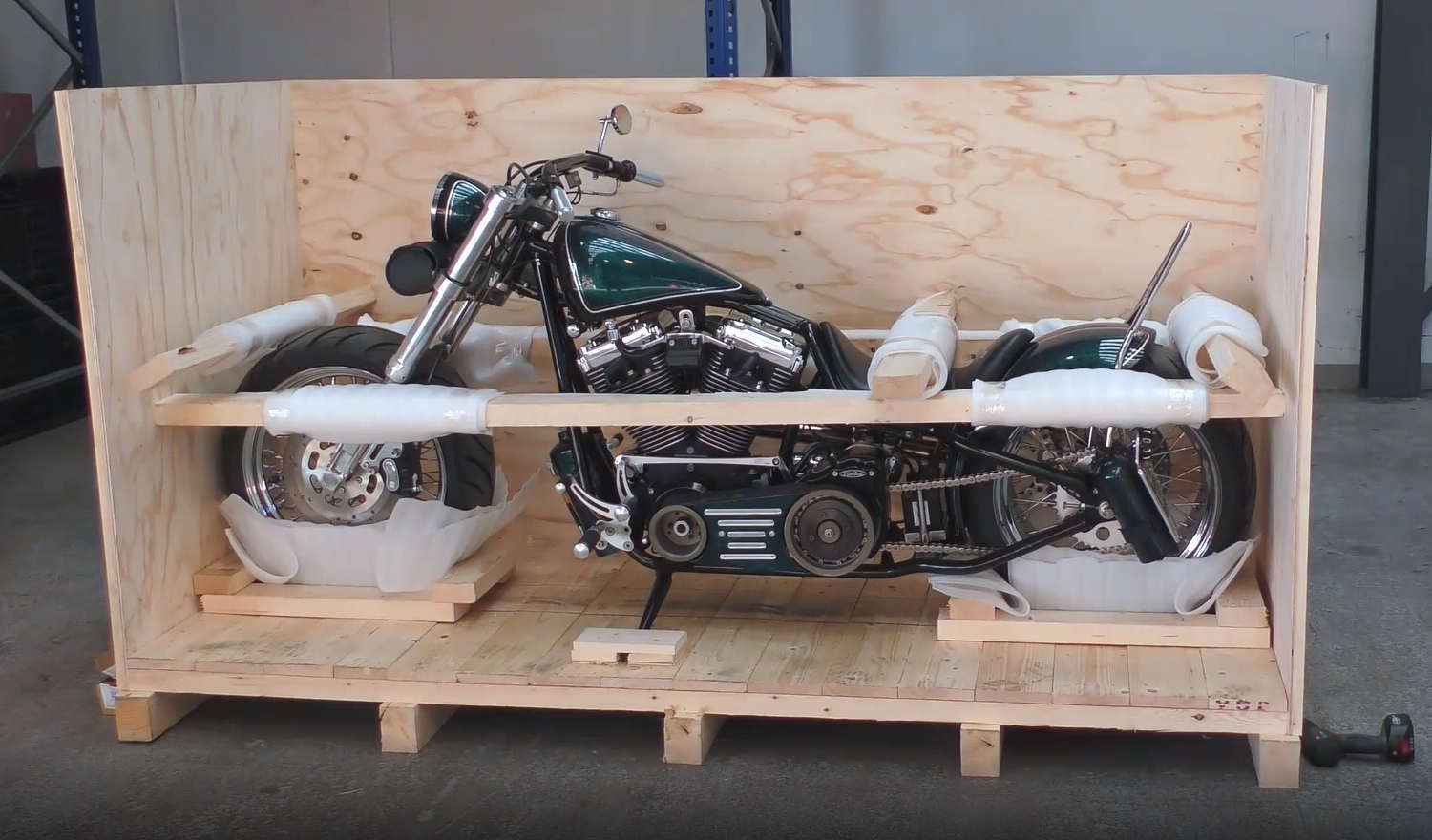
If you are searching for how to crate a motorcycle for shipping, you are already asking the right question. Crating is not just a box around a bike — it is a critical safety system that protects your motorcycle from impact, vibration, customs handling, moisture, and mechanical damage during transport across Canada or overseas.
In this guide, you will learn exactly:
- how to build a shipping crate for a motorcycle
- how to pack motorcycle for shipping safely and legally
- When DIY crating makes sense — and when it becomes risky, slow, and costly
- Why professional export crating often saves money long-term
This article is written for owners, dealers, exporters, collectors, and logistics managers who need real answers — not vague forum advice.
Why Proper Motorcycle Crating Is Not Optional in Modern Shipping
Motorcycles are classified as high-risk cargo due to:
- High center of gravity
- Exposed mechanical components
- Sensitive suspension geometry
- Fragile painted and chromed surfaces
During terminal handling, your crate may be:
- Lifted multiple times by forklifts
- Exposed to vibration in rail terminals
- Stacked in ocean containers
- Inspected by customs officers
- Stored in uncontrolled humidity environments
Without proper crating, even a short domestic shipment can lead to:
- Bent forks
- Cracked fairings
- Twisted frames
- Electrical failures
- Surface corrosion
That is why learning how to crate a motorcycle for shipping correctly is essential — not optional.
Crating vs Palletizing: What Actually Protects Your Bike
Many people confuse palletizing with crating. These are not the same.
Palletizing means:
- Motorcycle is exposed on multiple sides
- Only strapped to a base
- No protection from compression or side impact
Crating means:
- Fully enclosed rigid structure
- Load-bearing sidewalls
- Moisture control
- Protection from shifting cargo
For international shipment, rail transport, or multi-terminal handling, full crating is always the safer option and is often required by carriers and insurers.
How to Pack Motorcycle for Shipping: Critical Pre-Crating Preparation
Before you even start building a crate, proper motorcycle preparation is mandatory. This is where many DIY shipments fail.
Mechanical Preparation
- Reduce fuel level to below 25%
- Disconnect the battery terminals
- Disable alarm systems
- Fix any active oil or coolant leaks
- Record current mileage with photos
Physical Protection
- Remove mirrors, windshields, saddlebags
- Wrap exposed chrome
- Cover painted surfaces with foam, not plastic
- Protect brake levers and foot pegs
This preparation stage is a core part of how to pack motorcycle for shipping safely and professionally.
Materials Required to Build a Proper Motorcycle Shipping Crate
If you are planning how to build a shipping crate for a motorcycle, the materials must meet structural and export standards — not home-garage shortcuts.
Structural Materials
- Heat-treated ISPM-15 certified lumber (mandatory for export)
- 2×4 or 2×6 framing boards
- ¾” exterior-grade plywood
- Galvanized construction screws
- Heavy-duty steel brackets
- Forklift access skids
Protective Materials
- Closed-cell foam
- High-density bubble wrap
- Corrugated edge protectors
- Industrial shrink wrap
- Desiccant moisture absorbers
These are not optional if you want the crate to survive international logistics.
How to Build a Shipping Crate for a Motorcycle — Professional Step-By-Step Process
Below is the correct structural method used by commercial export crating facilities.
Step 1: Build the Load-Bearing Base
- Construct a rigid rectangular base using 2×4 framing
- Reinforce corners with steel brackets
- Attach a full plywood floor
- Install forklift entry on at least two sides
- Add wheel channels for both tires
This base must support the full weight during lifting and stacking.
Step 3: Full Component Protection
Now apply layered protection:
- Forks, triple clamp, exhaust — foam padded
- Fairings and tank — foam + cardboard shield
- Electrical points — moisture barrier
- Chrome — oil paper + foam
This stage is the heart of how to pack motorcycle for shipping correctly.
Step 4: Construct the Vertical Frame
- Install vertical 2×4 posts at all corners
- Add horizontal reinforcement at mid-height
- Ensure internal clearance for suspension flex
- Maintain minimum side compression space
This creates the skeleton that carries stacking pressure.
Step 5: Install the Crate Walls
- Attach plywood side panels
- Reinforce all seams
- Leave optional inspection panel if required by customs
At this stage the motorcycle is now structurally isolated from external forces.
Step 6: Moisture Control and Final Sealing
- Install desiccant bags
- Wrap internal structure with vapor barrier film
- Attach the crate lid last
- Screw — never nail — the top panel
Step 7: Labeling and Documentation
Required labeling:
- “Motorcycle”
- “This Side Up”
- Gross weight
- Center of gravity
- Export markings (if overseas)
Photograph every stage for insurance and customs documentation.
This completes the full technical process of how to crate a motorcycle for shipping.
Domestic vs International Motorcycle Crating
The standards change dramatically once your motorcycle leaves Canada.
Domestic Shipments (Within Canada)
- ISPM-15 not mandatory
- Partial crating may be permitted
- Short moisture exposure
- Minimal customs inspection
International Shipments (Export)
- ISPM-15 mandatory
- Fully enclosed crates required
- High humidity exposure
- Customs opening risk
- Marine vibration over weeks
Export crating is a different class of engineering — not just heavier wood.
Time Reality: Why DIY Crating Often Becomes a Hidden Cost
On paper, DIY crating looks cheaper. In reality:
| Factor | DIY | Professional |
|---|---|---|
| Material sourcing | 4–8 hours | Included |
| Structural design | Trial-and-error | Engineered |
| ISPM-15 compliance | Hard to obtain | Certified |
| Labor | 8–12 hours | 2–4 hours |
| Risk of damage | High | Low |
| Customs rejection risk | High | Minimal |
Many first-time exporters end up rebuilding their crate twice after customs refusal. This alone often exceeds the cost of professional service.
When Professional Motorcycle Crating Becomes the Smarter Decision
You should strongly consider professional crating when:
- The motorcycle value exceeds $8,000
- It is a vintage or collectible bike
- It is being shipped overseas
- It will pass through multiple terminals
- It requires customs inspection access
- Insurance coverage depends on certified crating
At that point, DIY becomes financially risky, time-consuming, and technically limiting.
Professional Crating & Export Packaging in Canada
For riders, collectors, exporters, and dealers who want proper certified export crating without delays, professional services streamline the entire process.
Metropolitan Logistics provides:
- Export-grade motorcycle crating
- ISPM-15 certified wooden crates
- Moisture-controlled marine packing
- Domestic and international preparation
- Coordination with freight forwarding and customs
You can view the full professional service here:
👉 Crating and Packaging Services
Instead of spending days sourcing materials and hoping the crate meets export standards, the entire process can be completed in a controlled facility with full documentation.
The True Purpose of a Shipping Crate
Crating is not about “putting a box around a bike.”
A shipping crate is a load-bearing structural system designed to:
- Absorb impact energy
- Prevent side compression
- Lock suspension geometry
- Control humidity
- Withstand stacking pressure
- Survive port, rail, and ocean handling
That engineering is why professional export crates look very different from home-built wooden boxes.
Final Perspective: DIY Knowledge vs Professional Execution
This guide gives you full knowledge of:
- how to crate a motorcycle for shipping
- how to build a shipping crate for a motorcycle
- how to pack motorcycle for shipping safely
You now understand the correct structure, materials, and techniques.
However, knowledge and execution are two different things.
For short domestic moves of low-value motorcycles, DIY can make sense.
For international shipping, collector bikes, resale export, and insured cargo, professional crating eliminates:
- Risk of customs refusal
- Insurance claim denial
- Structural collapse
- Corrosion and vibration damage
- Weeks of reshipping delays
If you want your motorcycle to arrive exactly as it left — without stress, rebuilding, or hidden costs — certified export crating is the most reliable path.
Professional Crating Service (Canada & Worldwide)
If you prefer to avoid trial-and-error, long preparation time, and structural risk, you can request professional motorcycle crating directly here:
👉 Crating and Packaging Services
This service is designed specifically for safe domestic and international transport with full export compliance.