
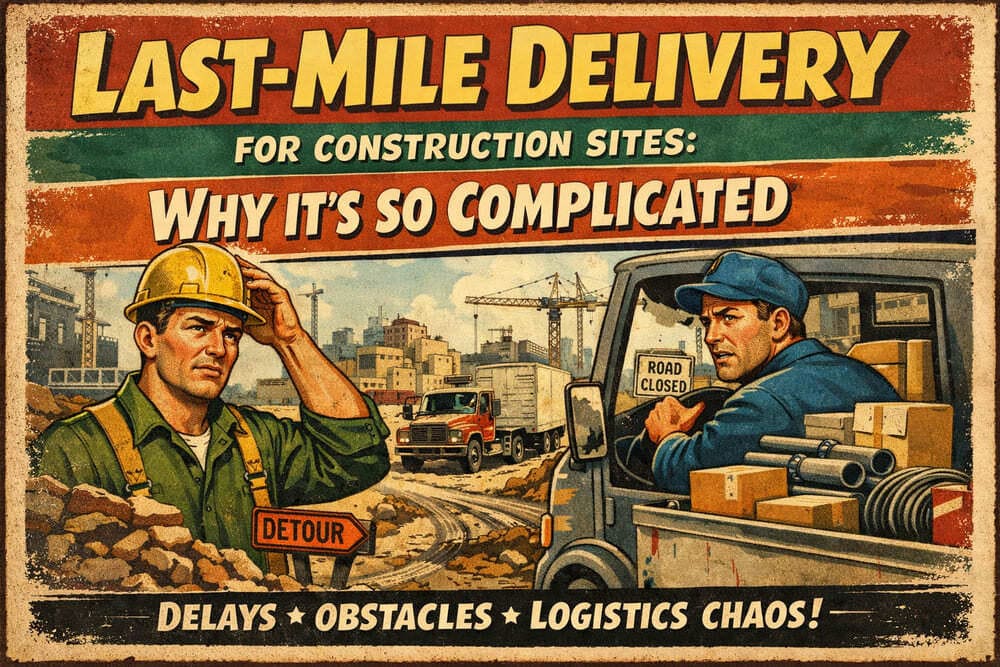
Last-mile delivery for construction sites is one of the most underestimated challenges in project logistics. Materials may arrive at the correct city, port, or warehouse on time, yet projects still experience costly delays once delivery reaches the final stretch. The problem is not transportation alone—it is coordination, timing, access, and site readiness.
For construction companies, last-mile delivery is where schedules either hold together or fall apart. This article explains why last-mile delivery for construction sites is so complex, what problems cause the most disruption, and how these challenges can be solved with proper logistics planning.
What Last-Mile Delivery Means in Construction Logistics
In construction, last-mile delivery refers to the final movement of materials, equipment, or prefabricated components from a terminal, yard, or warehouse to the active job site. Unlike retail or residential delivery, construction sites are dynamic environments with limited space, strict safety controls, and constantly changing schedules.
A delivery that arrives too early can be just as disruptive as one that arrives late.
Why Last-Mile Delivery Is So Complicated on Construction Sites
Limited Site Access and Urban Restrictions
Many construction sites—especially in dense urban areas—have narrow access points, weight restrictions, or limited curbside space. Delivery vehicles may require special permits, off-hour access, or police escorts.
Solution:
Early route assessment and vehicle selection ensure deliveries match site constraints before dispatch.
Tight Delivery Windows
Construction sites often allow delivery only during specific time slots. Missing a window can delay unloading for hours or even days.
Solution:
Precise scheduling, real-time communication, and contingency planning reduce the risk of missed delivery windows.
Lack of On-Site Storage
Many projects operate with minimal laydown space. Materials arriving too early may block workflows or create safety hazards.
Solution:
Staged deliveries and short-term off-site storage allow materials to arrive exactly when needed.
Coordination Between Multiple Trades
Concrete, steel, mechanical, and electrical teams often compete for the same unloading zones. Poor coordination leads to congestion and idle equipment.
Solution:
Centralized delivery scheduling aligns logistics with trade sequencing and site activity.
Specialized Handling Requirements
Oversized materials, fragile components, or prefabricated assemblies require cranes, forklifts, or specialized rigging. If equipment is unavailable when deliveries arrive, unloading stops.
Solution:
Logistics planning must be synchronized with crane availability, crew readiness, and safety approvals.
Common Last-Mile Problems and Their Impact
| Problem | Impact on Project |
|---|---|
| Missed delivery window | Work stoppages |
| Early delivery | Site congestion |
| Late delivery | Schedule slippage |
| Access restrictions | Delivery refusals |
| Poor coordination | Increased labor costs |
These issues compound quickly, turning small delays into major disruptions.
Why Construction Last-Mile Failures Are Usually Predictable
Most last-mile delivery problems do not happen randomly. They result from missing information, late planning, or assumptions made early in the project.
When logistics planning is separated from construction scheduling, the final mile becomes reactive instead of controlled.
How Logistics Planning Solves Construction Last-Mile Challenges
Effective construction logistics treats last-mile delivery as a managed process, not a simple handoff.
Proven Logistics Solutions
| Logistics Strategy | Result |
|---|---|
| Pre-site access planning | Fewer delivery refusals |
| Coordinated delivery schedules | Reduced congestion |
| Staged material releases | Better site flow |
| Off-site storage options | Flexible timing |
| Real-time delivery tracking | Faster issue resolution |
These solutions transform last-mile delivery from a risk into a controlled operation.
Construction Last-Mile Delivery in Canada
In Canada, last-mile delivery challenges are amplified by weather conditions, urban density, and regulatory complexity. Cities such as Toronto, Vancouver, and Montreal impose strict delivery restrictions, while remote or infrastructure projects face long inland routes and limited access windows.
Successful last-mile delivery in Canadian construction projects requires early coordination between ports, inland transport, and site management.
When Construction Companies Should Involve a Logistics Partner
Construction teams benefit from logistics support when:
- project schedules are tight
- materials arrive from multiple suppliers
- site access is restricted
- storage space is limited
- delays create cascading impacts
A logistics partner helps bridge the gap between transportation and on-site execution.
Get Expert Support for Construction Last-Mile Delivery
Managing last-mile delivery for construction sites requires experience, coordination, and proactive planning. Metropolitan Logistics works with construction companies to align delivery schedules, manage site access constraints, and reduce disruption at critical project stages.
If you need support planning or executing construction site deliveries, you can request a quote or consultation below. 👉 Get a free quote or consultation
📞 +1 (365) 829-5000
📧 service@metropolitanlogistics.ca