
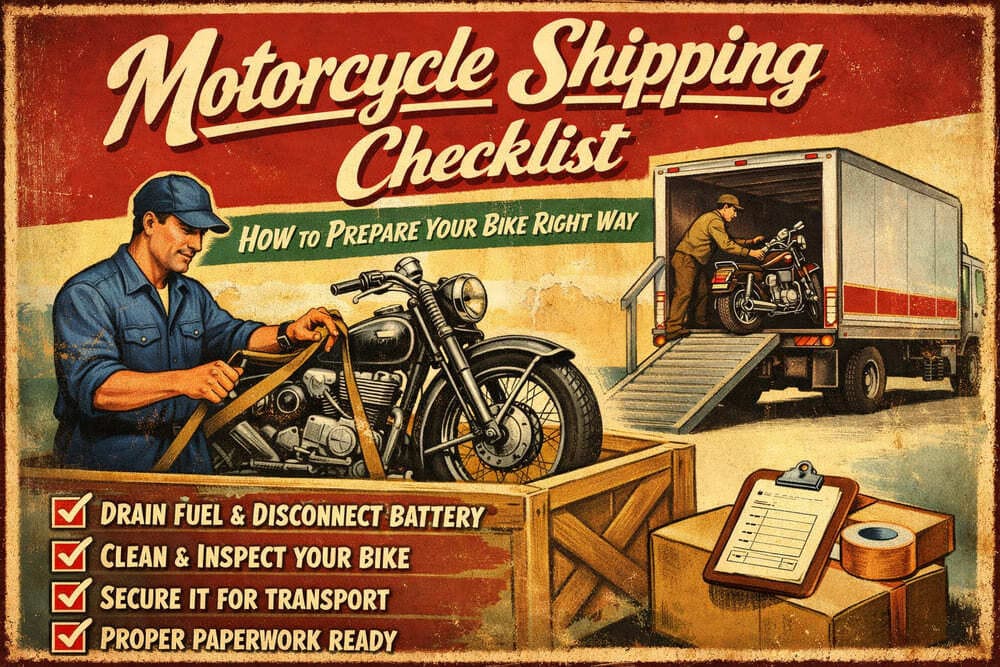
Motorcycle shipping checklist planning is essential for anyone preparing to ship a motorcycle internationally or over long distances. Unlike standard freight, motorcycles require careful handling, proper documentation, and precise preparation to avoid damage, delays, or compliance issues. This expert guide breaks down every step of motorcycle shipping—from initial preparation to final delivery—so you know exactly what to do and when professional support makes sense.
Why Proper Motorcycle Shipping Preparation Matters
Motorcycles are exposed, mechanically sensitive, and often customized. Without proper preparation, even minor oversights can lead to cosmetic damage, mechanical issues, or customs delays. Moreover, international motorcycle shipping adds layers of regulatory and logistical complexity that many shippers underestimate.
A structured motorcycle shipping checklist reduces risk, ensures compliance, and protects your investment.
Motorcycle Shipping Checklist (Step-by-Step)
Below is a comprehensive checklist covering the most critical preparation stages.
1. Documentation and Paperwork
Before shipping begins, confirm all required documents are ready and accurate.
- Vehicle ownership or title
- Bill of sale (if applicable)
- Passport or government-issued ID
- Export or import permits, depending on destination
- Power of attorney if using a shipping company
Missing or incorrect paperwork is one of the most common causes of shipment delays.
2. Mechanical Preparation
Your motorcycle should be mechanically sound before transport.
- Check for fluid leaks
- Ensure brakes function properly
- Inflate tires to recommended pressure
- Disable alarms and tracking devices
Even when shipping non-running motorcycles, condition disclosure is critical for proper loading and securing.
3. Fuel, Battery, and Fluids
Most carriers require fuel levels to be reduced before shipping.
- Fuel tank typically less than 25%
- Battery disconnected or secured
- Oil and coolant levels verified
These steps reduce safety risks during transport.
4. Accessories and Loose Parts
Remove or secure all removable components.
- Saddlebags
- Windshields
- Mirrors
- Aftermarket accessories
Loose parts should be packed separately and documented.
5. Cleaning and Inspection
A clean motorcycle allows for accurate condition reporting.
- Wash the motorcycle thoroughly
- Document existing scratches or dents
- Take clear photos from multiple angles
This step protects you during insurance claims or delivery inspections.
6. Crating and Securing
Proper crating or bracing is essential for motorcycle safety.
- Use professional blocking and bracing techniques
- Secure wheels, frame, and suspension
- Prevent lateral and vertical movement
This is where containerized motorcycle shipping provides a major advantage.
Motorcycle Shipping Requirements You Must Know
Shipping regulations vary by destination and carrier, but several requirements are universal.
- Accurate weight and dimensions
- Hazardous materials compliance
- Customs declarations and inspections
- Destination import regulations
Failure to meet these requirements can result in fines or shipment holds.
Container Shipping vs Other Motorcycle Shipping Methods
Motorcycles can be shipped using several methods, but container shipping remains the most controlled option.
Containerized Motorcycle Shipping
- Maximum protection from weather and handling
- Suitable for non-running motorcycles
- Allows shipment of parts with the bike
Alternative Methods
- Open or shared transport
- Ro-Ro (limited availability and restrictions)
Container shipping provides the highest level of security for long-distance and international moves.
Shipping a Motorcycle Yourself vs Hiring a Professional Company
DIY motorcycle shipping may seem cost-effective at first, but it carries hidden risks.
Self-managed shipping requires:
- Understanding export regulations
- Coordinating crating and loading
- Managing customs clearance
- Accepting liability for errors
By contrast, professional services streamline the process. For international moves, many riders choose international car shipping specialists who also handle motorcycles and containerized vehicle transport.
Why Many Riders Choose Container Shipping for Motorcycles
Container shipping offers unmatched control, especially for international transport.
- Reduced handling
- Enhanced security
- Predictable transit conditions
- Better insurance alignment
These advantages make containerized shipping the preferred option for valuable or customized motorcycles.
Common Motorcycle Shipping Mistakes to Avoid
Several mistakes repeatedly cause issues for first-time shippers.
- Skipping documentation checks
- Inadequate bracing or crating
- Leaving accessories attached
- Underestimating customs requirements
Avoiding these errors saves time and prevents costly corrections.
Final Checklist Before Your Motorcycle Ships
Before release, confirm the following:
- All documents verified
- Motorcycle photographed and inspected
- Accessories removed or secured
- Fuel and battery prepared
- Shipping method confirmed
A final review ensures nothing is overlooked.
Talk to a Motorcycle Shipping Specialist
If you are preparing to ship a motorcycle from Canada and want expert guidance on containerized transport, documentation, and international routing, professional support can make the process far smoother.
📞 +1 (365) 829-5000
📧 autotransport@metropolitanlogistics.ca