
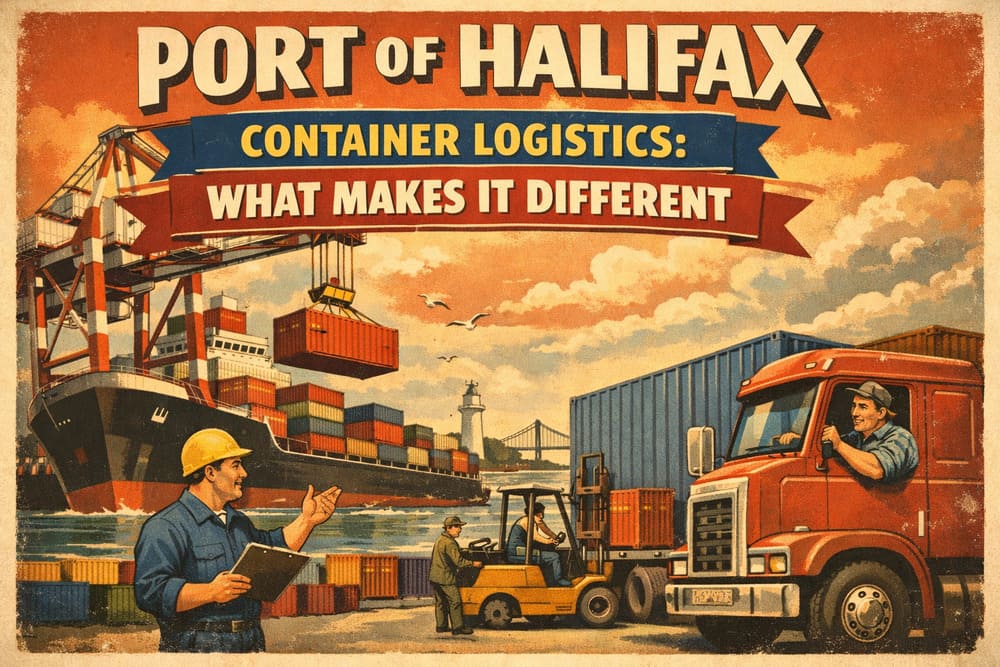
Port of Halifax container logistics play a unique role in Canada’s supply chain, especially for importers and exporters moving freight through Atlantic Canada. While often compared to larger gateways like Vancouver or Montreal, Halifax offers distinct operational advantages that make it a strategic entry point for containerized cargo. This article explains how container logistics work at the Port of Halifax, what sets it apart, and how containers move efficiently from the port to inland destinations.
Why the Port of Halifax Plays a Unique Role in Canadian Container Logistics
The Port of Halifax is one of Canada’s deepest and most ice-free ports, allowing it to handle large container vessels year-round. Its geographic position on the Atlantic coast makes it a natural first point of call for transatlantic services, reducing overall sailing time compared to ports further inland.
As a result, many shipping lines use Halifax as a strategic gateway for cargo destined for Eastern and Central Canada.
Container Operations at the Port of Halifax Explained
Container handling at the Port of Halifax is concentrated at modern marine terminals designed for high-volume, high-efficiency operations. Containers are discharged, staged, and released through structured terminal workflows that prioritize vessel turnaround and yard efficiency.
Because Halifax typically experiences lower congestion than major West Coast ports, container dwell times are often shorter. This directly reduces demurrage exposure for importers who plan pickup and delivery effectively.
Rail and Intermodal Connectivity from Halifax
A defining feature of Port of Halifax container logistics is its direct integration with CN Rail. On-dock and near-dock rail access allows containers to move inland quickly without prolonged terminal storage.
From Halifax, containers can be routed efficiently to key inland markets such as Toronto, Montreal, and other parts of Eastern and Central Canada. This intermodal connectivity supports predictable transit times and simplifies inland container transport planning.
Halifax Drayage: From Port to Final Delivery
Once containers are released from the terminal, local and regional drayage plays a critical role in the supply chain. Drayage movements connect the Port of Halifax with nearby warehouses, distribution centers, and rail terminals across Nova Scotia and Atlantic Canada.
In many cases, importers rely on Halifax drayage and intermodal container services to coordinate port pickup, rail transfer, or final-mile delivery in a single workflow. This integrated approach reduces handoffs and minimizes the risk of delays or demurrage.
How Port of Halifax Container Logistics Compare to Other Canadian Ports
Compared to Vancouver, Halifax generally faces fewer vessel backlogs and weather-related disruptions. While Montreal remains a key eastern gateway, Halifax’s deep-water access and consistent terminal fluidity offer operational advantages during peak shipping periods.
For time-sensitive cargo or shipments requiring reliable schedules, Halifax can provide a more predictable logistics environment.
Who Benefits Most from Shipping Containers Through Halifax
Certain industries and shipping profiles benefit particularly from Halifax-based container logistics:
- Importers sourcing goods from Europe or the U.K.
- Businesses serving Atlantic Canada and Eastern provinces
- Shippers prioritizing schedule reliability over sheer volume
- Companies seeking reduced congestion risk
For these shippers, Halifax offers a balance of efficiency, connectivity, and operational stability.
Final Thoughts on Port of Halifax Container Logistics
Port of Halifax container logistics combine deep-water access, efficient terminal operations, and strong rail connectivity. While not the largest port in Canada, Halifax delivers consistent performance for businesses that value reliability and inland reach.
Understanding how Halifax differs from other Canadian ports allows importers to make informed routing decisions and avoid unnecessary delays.
Talk to a Halifax Container Logistics Specialist
If you are planning container shipments through the Port of Halifax and want to optimize drayage, intermodal routing, or inland delivery, professional planning makes a measurable difference.
📞 +1 (365) 829-5000
📧 service@metropolitanlogistics.ca