
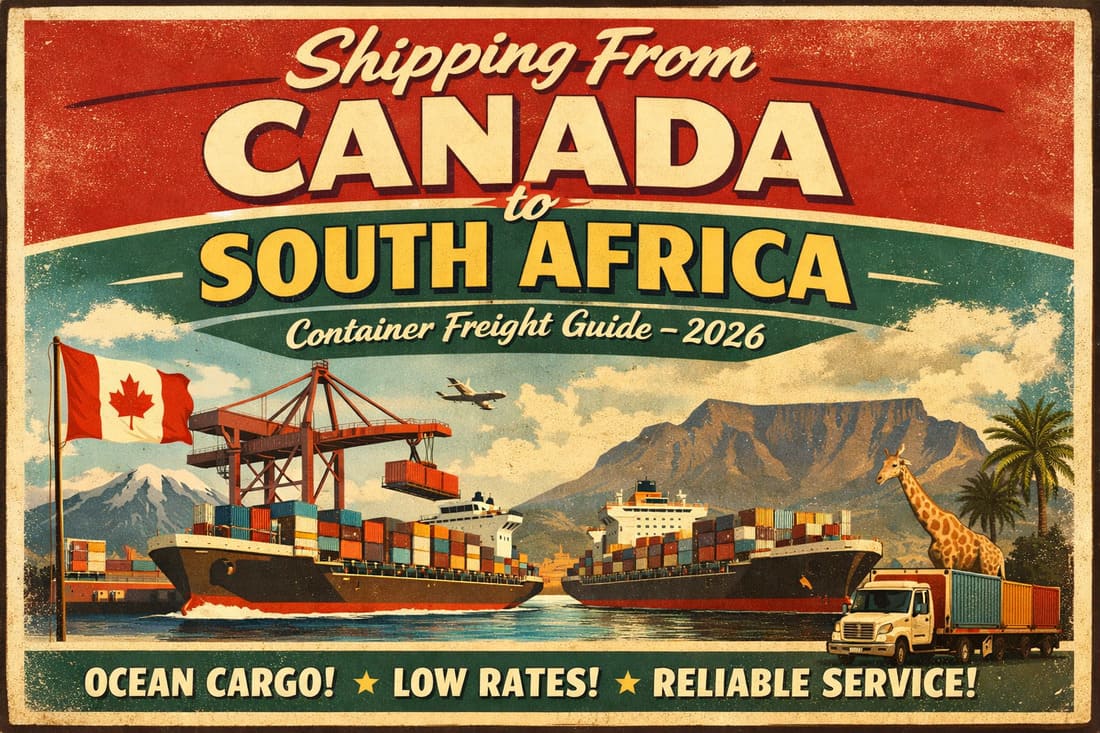
Shipping from Canada to South Africa operates through ocean container freight, not courier or small‑parcel services. In 2026, international cargo between Canada and South Africa moves almost exclusively inside ocean containers, either as FCL (Full Container Load) or LCL (Less than Container Load). Because of that, understanding container logistics is essential when evaluating timelines and the cheapest shipping from Canada to South Africa in realistic terms.
This guide explains shipping from Canada to South Africa using container freight. It also breaks down shipping cost from Canada to South Africa, explains why LCL is still container‑based, and outlines what factors influence final pricing.
What Shipping From Canada to South Africa Means in Practice
When businesses or individuals plan shipping from Canada to South Africa, they usually transport cargo at a commercial or household scale. Therefore, freight moves through ports, vessels, and terminals rather than postal networks.
In real logistics workflows, shipping from Canada to South Africa includes:
- Loading cargo into ocean containers
- Transporting containers to Canadian export ports
- Sailing to South African ports
- Clearing customs and terminal handling at destination
As a result, container freight offers reliability, capacity, and predictable routing.
Container Shipping Options to South Africa
Full Container Load (FCL)
FCL shipping gives one shipper exclusive use of a container. Consequently, it provides the most control and the lowest handling risk.
Common container types include:
- 20’ containers for dense or heavy cargo
- 40’ containers for higher‑volume shipments
- 40’ High Cube containers for tall or oversized freight
Many shippers choose FCL when they want consistent schedules and simpler pricing.
Less Than Container Load (LCL)
LCL shipping from Canada to South Africa supports smaller volumes, yet it still relies on container freight. Instead of parcels, LCL consolidates palletized or crated cargo inside shared containers.
With LCL:
- Cargo ships in a shared container
- Terminals manage consolidation and deconsolidation
- Transit time may increase slightly
- Pricing is calculated per cubic meter (CBM)
Therefore, LCL works best for partial shipments that do not require a full container.
Canadian Ports Used for Shipping to South Africa
Most container shipments to South Africa depart from major Canadian ports. In particular:
- Port of Halifax provides efficient Atlantic routing
- Port of Montreal supports Eastern Canada exports
- Port of Vancouver serves Western Canada via longer ocean routes
Before ocean departure, inland cargo moves to these ports by rail or truck.
Main Ports in South Africa
After departure, vessels typically arrive at South Africa’s largest container terminals, including:
- Port of Durban – primary container gateway
- Port of Cape Town – regional and project cargo hub
- Port of Ngqura (Coega) – modern deep‑water terminal
Durban handles the majority of container traffic and offers extensive inland connections.
Transit Times From Canada to South Africa
Transit time varies by routing and port selection. On average:
| Route | Estimated Transit Time |
|---|---|
| Halifax → Durban | 22–30 days |
| Montreal → Durban | 24–34 days |
| Vancouver → Durban | 35–45 days |
Additional time may apply for transshipment, customs, and terminal handling.
Shipping Costs From Canada to South Africa (Indicative)
Shipping costs from Canada to South Africa depend on market conditions and routing. Therefore, the figures below are very approximate and provided only for general reference.
FCL Container Cost Ranges (CAD, 2026)
| Container Type | Approximate Range |
|---|---|
| 20’ Container | $4,200 – $6,800 |
| 40’ Container | $6,800 – $9,800 |
| 40’ High Cube | $7,300 – $10,600 |
LCL Cost Ranges
LCL pricing usually follows a per‑CBM model:
- $260 – $420 per CBM (indicative only)
Because consolidation volumes change, LCL rates fluctuate more than FCL rates.
What Influences Shipping Cost From Canada to South Africa
Several variables influence shipping costs from Canada to South Africa. For example:
- Container size and service type (FCL or LCL)
- Port of departure and inland transport distance
- Cargo weight, dimensions, and packaging
- Seasonal carrier demand and capacity
- Fuel adjustments and carrier surcharges
- Terminal handling and documentation fees
Because these factors change frequently, final pricing depends on shipment‑specific details.
Cargo Suitable for Container Freight
Container shipping from Canada to South Africa supports many cargo categories, including:
- Commercial freight and merchandise
- Industrial machinery and equipment
- Vehicles and motorcycles
- Household goods and relocations
- Palletized or crated cargo
Proper packaging remains essential for safe ocean transport.
Documentation and Export Requirements
To avoid delays, shippers prepare:
- Commercial invoices
- Packing lists
- Bills of lading
- HS codes and cargo descriptions
- Export declarations when required
Clear documentation supports smooth customs processing on arrival.
Final Overview
Shipping from Canada to South Africa works best when approached as a container freight operation rather than a parcel service. Whether using FCL or LCL, cargo moves through professional terminals, vessels, and international ports.
By understanding container logistics and cost drivers, shippers can better evaluate the cheapest shipping from Canada to South Africa that still meets reliability and handling requirements.
Contact
For container shipping from Canada to South Africa, our team can review your cargo details and explain available routing and pricing options.
📞 +1 (365) 829‑5000
📧 service@metropolitanlogistics.ca
We provide clear guidance on container selection, transit planning, and cost factors before shipment scheduling begins.