
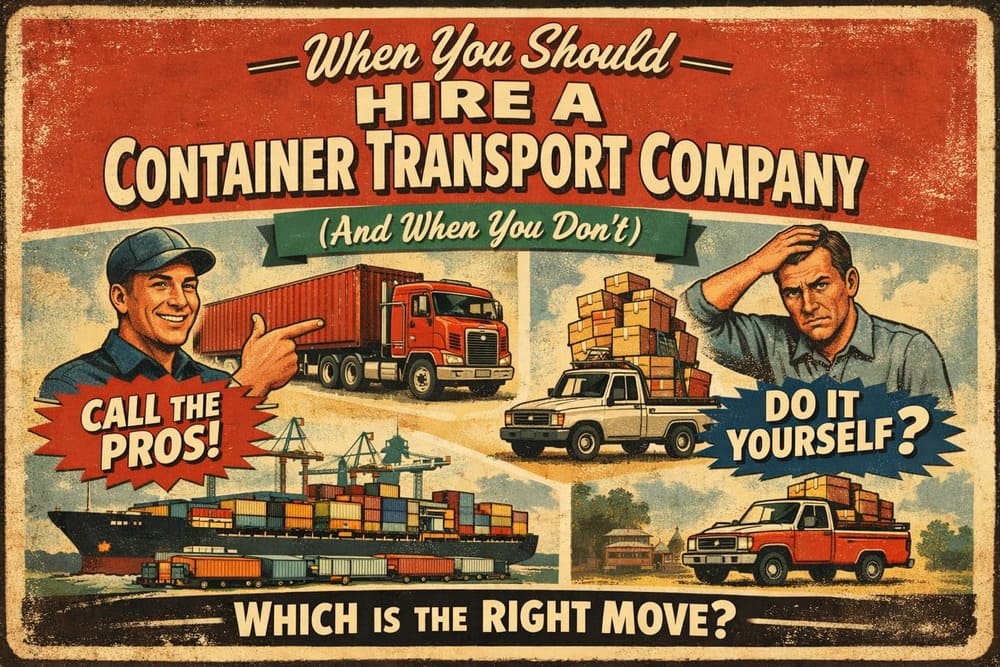
When to hire a container transport company is one of the most common questions businesses ask when planning container shipments in Canada. Some shipments clearly require professional container logistics, while others can be handled through simpler transport options. This guide explains when a container transport company is essential, when it is not, and how to make the right decision without overpaying or taking unnecessary risks.
What a Container Transport Company Actually Does
A container transport company specializes in moving shipping containers, not parcels or courier freight. These services typically involve full container load (FCL) or less than container load (LCL) shipments and include coordination across ports, rail terminals, warehouses, and final delivery locations.
Unlike standard trucking providers, a container transport company manages terminal appointments, chassis availability, container free time, and return requirements. As a result, this type of service becomes critical when shipments interact with marine ports or intermodal rail networks.
When You Should Hire a Container Transport Company
In many situations, using a container transport company is not optional—it is operationally necessary.
Port Container Pickup and Delivery
If your shipment arrives at a marine terminal, professional container transport is required. Port environments involve strict appointment systems, congestion risks, and demurrage exposure. A container transport company coordinates pickup windows and ensures containers exit the terminal before free time expires.
Intermodal and Rail-Based Shipments
Containers moving through CN or CP rail terminals require specialized handling. Rail ramps operate under different rules than ports, and missed pickups can result in rail demurrage. A container transport company manages rail availability notices and aligns drayage with terminal schedules.
FCL and LCL Shipments
Full container load and consolidated LCL shipments often involve stuffing, de-stuffing, or transloading. When freight must move between containers, trucks, and warehouses, professional coordination prevents delays and cargo damage.
Recurring or High-Value Imports
Businesses importing containers regularly benefit from predictable routing, cost control, and reduced risk. In these cases, working with an experienced container transport company provides operational stability rather than reactive problem-solving.
When You Probably Don’t Need a Container Transport Company
Not every shipment justifies container-level logistics.
Parcel or Courier Shipments
Small shipments that move through parcel networks or LTL freight carriers do not require container transport services. These shipments bypass ports and rail terminals entirely.
Domestic Palletized Freight
If freight moves domestically within Canada without entering a containerized supply chain, standard trucking solutions are usually sufficient.
One-Time Small Moves Without Terminals
Businesses shipping a small volume one time, without port or rail involvement, may not need a container transport company. In these cases, simpler freight options reduce complexity.
Container Transport Company vs Trucking Company
Although both involve trucks, the scope of responsibility differs significantly.
| Aspect | Container Transport Company | Standard Trucking Company |
|---|---|---|
| Handles containers | Yes | Usually no |
| Port and rail access | Yes | Limited |
| Manages free time | Yes | No |
| Handles empty returns | Yes | No |
| Suitable for FCL/LCL | Yes | No |
Choosing the wrong provider often leads to delays, demurrage, and detention charges.
Real Business Scenarios in Canada
Importer in Toronto Using Rail
A Toronto-based importer receives containers via rail. Without coordinated pickup and return scheduling, rail demurrage accumulates quickly. Professional container transport prevents missed windows and uncontrolled costs.
Retailer in Vancouver Receiving Seasonal Inventory
During peak season, port congestion limits appointment availability. A container transport company secures access and stages deliveries to avoid terminal penalties.
Manufacturer in Montreal Using LCL Consolidation
Multiple suppliers ship freight into one container. Proper de-stuffing and cross-docking ensure inventory flows without bottlenecks or damage.
How to Choose the Right Container Transport Partner
The right partner does more than move containers. They anticipate constraints, communicate clearly, and align trucking, warehousing, and terminal operations into a single workflow.
Key factors to evaluate include:
- Experience with Canadian ports and rail terminals
- Understanding of demurrage and detention risk
- Ability to coordinate intermodal and warehouse operations
- Transparent communication and planning
Final Thoughts
When to hire a container transport company depends on how deeply your shipment interacts with ports, rail terminals, and container equipment. For containerized supply chains, professional coordination is not a luxury—it is a requirement. Businesses that choose correctly protect timelines, control costs, and avoid preventable disruptions.
Talk to a Container Transport Specialist
If your business ships containers through Canadian ports or rail terminals and you are unsure whether professional container transport is required, our team can help assess your routing and operational needs.
📞 +1 (365) 829-5000
📧 service@metropolitanlogistics.ca