
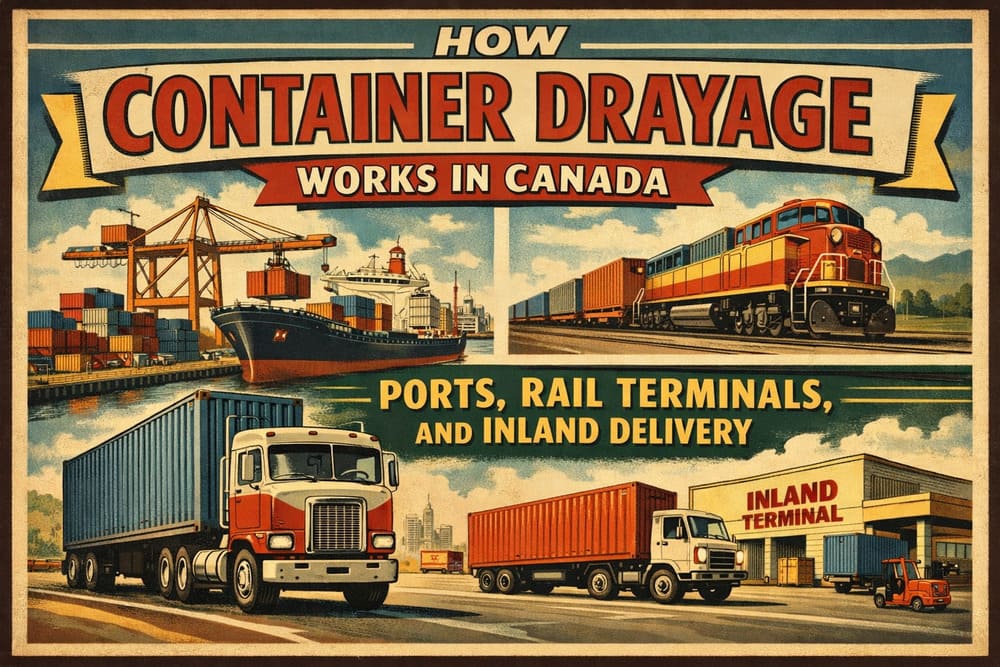
How container drayage works in Canada is a common question for importers, exporters, and logistics managers moving containerized cargo through Canadian ports and rail terminals. This guide explains the drayage process step by step, from port pickup to inland delivery, and shows how containers move efficiently across Canada.
What Container Drayage Means in the Canadian Logistics System
Container drayage refers to the short-distance transportation of ocean containers between ports, rail terminals, warehouses, and distribution facilities. In Canada, drayage plays a critical role in connecting marine terminals with inland logistics networks.
Rather than long-haul trucking, drayage focuses on controlled, time-sensitive container moves that keep cargo flowing between vessels, rail ramps, and final delivery points.
Typical Drayage Moves in Canada
| Drayage Move Type | Example | Why It Matters |
|---|---|---|
| Port to rail terminal | Vancouver port → CN rail ramp | Enables inland intermodal transport |
| Port to warehouse | Montreal port → local DC | Reduces port dwell time |
| Rail terminal to consignee | Toronto rail ramp → shipper | Completes last-mile delivery |
| Empty container return | Warehouse → terminal | Avoids detention penalties |
Where Container Drayage Starts: Canadian Ports
Most drayage operations begin at major Canadian ports where containers are discharged from vessels. At this stage, containers must be cleared, scheduled, and picked up within allocated terminal time windows.
Key Canadian port gateways include Vancouver, Montreal, Halifax, and Prince Rupert. Efficient drayage at these locations reduces dwell time, storage charges, and congestion-related delays.
Rail Terminals and Intermodal Container Drayage
Rail terminals play a central role in long-distance container movement across Canada. Drayage links marine terminals with CN and CP rail ramps, allowing containers to travel inland efficiently before final delivery.
Port vs Rail Drayage: Key Differences
| Factor | Port Drayage | Rail Drayage |
|---|---|---|
| Pickup timing | Vessel discharge driven | Rail schedule driven |
| Main risk | Port congestion | Missed cut-off |
| Equipment | Chassis dependent | Terminal assigned |
| Planning priority | Appointment windows | Rail availability |
Understanding these differences helps avoid missed connections and unnecessary storage.
Inland Container Delivery and Final Destinations
Inland container delivery is the final stage of the drayage process and one of the most sensitive from a cost and timing perspective. Once a container leaves the rail terminal, delivery windows, site access, and unloading capacity become critical.
Typical Inland Delivery Scenarios
| Destination Type | Common Use Case | Key Planning Factor |
|---|---|---|
| Warehouse / DC | Import storage or distribution | Dock availability |
| Manufacturing site | Production supply | Delivery time precision |
| Transload facility | Container-to-truck transfer | Equipment readiness |
| Temporary storage yard | Overflow or staging | Free time management |
Missed delivery windows at this stage often result in re-delivery charges and detention fees.
How Container Drayage Works Step by Step
The drayage process typically follows this sequence:
- Container discharge at port terminal
- Customs clearance and container release
- Appointment scheduling at terminal
- Drayage pickup from port or rail terminal
- Short-haul transport to rail ramp, warehouse, or consignee
- Empty return or container repositioning
Responsibilities at Each Stage
| Stage | Who Is Involved | Key Considerations |
|---|---|---|
| Port discharge | Ocean carrier, terminal | Free time, availability |
| Customs clearance | Broker, importer | Documentation accuracy |
| Pickup scheduling | Drayage carrier | Appointment windows |
| Inland delivery | Trucker, consignee | Site access, unloading |
Each step must align with terminal rules, cut-off times, and equipment availability.
Common Challenges in Container Drayage
Container drayage in Canada involves several operational challenges that vary by region and season.
Frequent Drayage Issues
| Challenge | Impact | How It’s Managed |
|---|---|---|
| Port congestion | Missed pickup windows | Pre-booked appointments |
| Limited chassis | Delivery delays | Equipment planning |
| Rail cut-off times | Missed connections | Buffer scheduling |
| Weather conditions | Slower transit | Seasonal planning |
Proactive planning and experienced coordination help mitigate these risks.
Regional Container Drayage Across Canada
Container drayage operations vary significantly across Canada due to differences in port infrastructure, rail access, congestion levels, and terminal rules.
Regional Drayage Characteristics
| Region | Primary Gateway | Operational Considerations |
|---|---|---|
| Greater Toronto Area | Rail-focused | Tight rail cut-offs |
| Montreal | Port + rail | Urban access constraints |
| Halifax | Port-driven | Vessel scheduling |
| Vancouver | High-volume port | Congestion management |
| Calgary | Inland rail hub | Long-haul coordination |
Metropolitan Logistics supports container drayage operations across these regions:
Why Container Drayage Planning Matters
Poor drayage planning often leads to avoidable costs and operational disruptions.
Cost Exposure Without Proper Planning
| Cost Type | When It Occurs | Why It Adds Up |
|---|---|---|
| Demurrage | Container stays at port too long | Terminal storage fees |
| Detention | Late empty return | Daily equipment charges |
| Re-delivery | Missed delivery window | Additional trucking |
Understanding how container drayage works in Canada helps businesses avoid these scenarios by aligning schedules, documentation, and inland transport.
Drayage is not just a trucking task—it is a critical link in Canada’s intermodal supply chain.
Speak With a Container Drayage Specialist
If you are moving containerized cargo through Canadian ports or rail terminals, Metropolitan Logistics provides experienced container drayage and intermodal coordination.
📞 +1 (365) 829-5000
📧 service@metropolitanlogistics.ca