
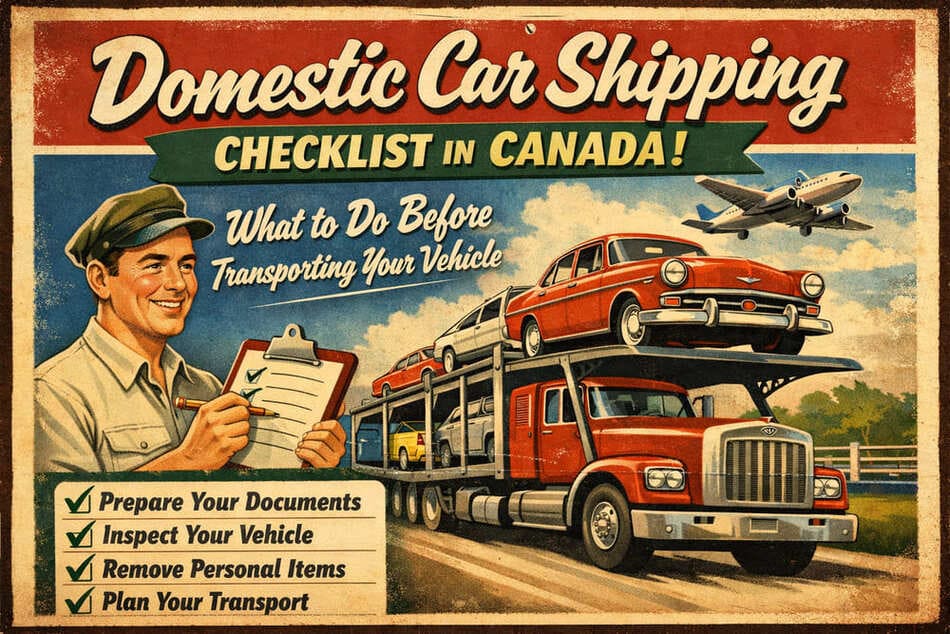
Domestic car shipping checklist Canada helps vehicle owners prepare properly before transporting a car within the country. Whether the vehicle moves within one province or across several provinces, preparation can prevent delays, access issues, inspection problems, and unexpected costs.
Domestic vehicle transport usually involves open truck transport, enclosed carrier service, terminal-based shipping, door-to-door delivery, or rail-assisted shipping on selected long-distance routes. The right option depends on the vehicle, route, budget, timing, and protection level.
This guide explains what domestic car shipping in Canada includes, how to prepare your vehicle, what documents to have ready, and what to expect at pickup, transit, and delivery.
What is domestic car shipping in Canada?
Domestic car shipping in Canada means transporting a vehicle within Canada, either inside one province or between provinces. The vehicle may move by open carrier, enclosed carrier, terminal service, door-to-door service, or rail-assisted transport when available.
This type of transport supports relocations, student moves, dealership transfers, online vehicle purchases, auction pickups, family moves, military moves, corporate vehicles, and seasonal relocations.
Key domestic car shipping terms
Open truck transport means the vehicle travels on an open auto transport trailer. This is the most common and cost-effective method for standard cars, SUVs, vans, and pickups.
Enclosed transport means the vehicle travels inside a covered trailer. It protects the car from direct road debris, weather, salt, and long-distance exposure.
Rail-assisted transport means the vehicle may use rail for part of a long-distance route, while truck transport supports pickup, delivery, or terminal access.
Door-to-door shipping means the carrier picks up and delivers as close as safely and legally possible to the requested addresses.
Terminal-to-terminal shipping means the customer drops off and picks up the vehicle at approved terminals, yards, or carrier locations.
Bill of lading is the transport document that records shipment details and vehicle condition at pickup and delivery.
Condition report means the inspection record that documents visible marks, mileage, keys, and vehicle condition before and after transport.
What domestic car shipping in Canada includes
Domestic car shipping includes route planning, carrier assignment, pickup scheduling, vehicle inspection, loading, long-distance transport, delivery coordination, and final inspection.
The exact process can change by route. A short Ontario-to-Quebec shipment may move differently than a coast-to-coast route from Vancouver to Halifax. However, the same preparation rules usually apply.
Standard domestic transport requirements
Most standard domestic auto transport requires the vehicle to run, drive, steer, and brake safely. This lets the carrier load and unload the vehicle without special recovery equipment.
Non-running cars may need winch loading, special equipment, or a different service setup. Customers should disclose this before booking, not on pickup day.
What is usually not included
Domestic car shipping does not usually include household goods transport inside the vehicle. Most carriers restrict or prohibit personal items because auto transport carriers move vehicles, not household contents.
The service also does not cover pre-existing mechanical issues, weak batteries, flat tires, leaking fluids, or problems unrelated to transport handling.
Transport methods used in domestic car shipping
The most common domestic car shipping methods in Canada are open truck transport and rail-assisted vehicle transport. Enclosed carrier service may also be available when a customer needs extra protection.
| Transport method | When it is used | Key advantages | Important notes |
|---|---|---|---|
| Open truck transport | Most domestic routes | Cost-effective and widely available | Vehicle remains exposed to weather and road conditions. |
| Enclosed carrier transport | High-value or specialty vehicles | Better protection from weather, debris, and salt | Costs more and may need earlier booking. |
| Rail-assisted transport | Long-distance or cross-country routes | Can support efficient long-haul movement | Requires terminal handling and truck support. |
| Door-to-door service | Relocations and convenience-focused moves | Easier pickup and delivery | Exact addresses still need safe truck access. |
| Terminal-to-terminal service | Flexible customers near terminals | Can reduce cost | Customer handles drop-off and pickup. |
Open truck transport
Open truck transport uses multi-level car carriers designed to move several vehicles at once. This method is widely used across Canada for dealership transfers, relocations, private vehicle shipments, and standard domestic moves.
It is usually the most practical choice for everyday vehicles. It offers strong route availability and lower cost than enclosed transport.
However, the vehicle remains exposed to rain, snow, road salt, road dust, and highway debris. For most daily drivers, this exposure is acceptable. For high-value or finish-sensitive vehicles, enclosed shipping may be a better fit.
Enclosed vehicle transport
Enclosed vehicle transport moves the car inside a covered trailer. It can help protect luxury cars, classic vehicles, collector cars, exotics, restored vehicles, low-clearance cars, and vehicles with custom paint or wraps.
This option costs more because enclosed carriers use specialized equipment and usually carry fewer vehicles. However, the added protection can be worth it when cosmetic damage would be expensive or difficult to repair.
Rail-assisted vehicle transport
Rail-assisted vehicle transport may work for longer domestic routes, especially when the move involves cross-country transport. The vehicle may move by truck to a terminal, travel by rail for part of the route, and then move by truck again for delivery.
Rail-assisted shipping can reduce long-haul road exposure, but it is not always faster or cheaper. Terminal schedules, pickup access, vehicle condition, and delivery timing all affect whether rail makes sense.
Customers who want to compare open truck, enclosed, and rail-assisted options can review Rail Auto Canada’s dedicated car shipping service in Canada before requesting route-specific pricing.
Domestic car shipping checklist before booking
Before scheduling transport, confirm that the vehicle and route fit standard domestic shipping requirements. This helps avoid last-minute changes.
Vehicle eligibility checklist
Before booking, confirm that:
- the vehicle starts normally;
- the vehicle drives forward and backward;
- brakes and parking brake work;
- tires hold air;
- the battery is charged;
- there are no active fluid leaks;
- the vehicle has enough ground clearance for loading;
- modifications are disclosed in advance;
- the vehicle does not contain personal items.
If any item is uncertain, tell the transport provider before booking. This helps the carrier choose the right equipment.
Route and access checklist
Prepare clear pickup and delivery information. The quote will be more accurate when the provider understands the real route.
Confirm:
- pickup city and address;
- delivery city and address;
- whether either location is rural;
- whether streets are narrow or restricted;
- whether a large carrier can access the area;
- whether a nearby meeting point may work better;
- preferred pickup window;
- hard delivery deadlines, if any.
Large car carriers need room to stop, turn, load, and unload safely. If a residential street is too tight, a commercial lot or open parking area may be the better option.
Documentation checklist
Domestic Canadian vehicle shipping usually requires basic documentation and clear contact details. Having everything ready makes pickup easier.
Documents and information to prepare
Prepare:
- proof of ownership or registration;
- government-issued photo ID;
- pickup contact name and phone number;
- delivery contact name and phone number;
- pickup and delivery addresses;
- special access instructions;
- dealership, auction, storage, or base release instructions if applicable;
- vehicle keys.
Some carriers may request additional information depending on the route, vehicle, or pickup location. Dealership and auction pickups may also require release documents.
Why accurate contact details matter
The driver may need to confirm pickup access, delivery timing, or a nearby meeting point. If the pickup or delivery contact is unavailable, the shipment can face delays.
Customers should provide a phone number that will be answered during the pickup and delivery windows.
Vehicle preparation checklist
Proper preparation reduces the risk of delays, loading issues, and inspection problems. It also makes the condition report easier.
| Requirement | Why it matters |
|---|---|
| Vehicle is fully operational | Standard carriers need the vehicle to load and unload safely. |
| Brakes and parking brake work | The driver needs control during loading and securement. |
| Minimum ground clearance is confirmed | Low-clearance vehicles may need special equipment. |
| Personal items are removed | Contents are usually not covered during transport. |
| Fuel is around 1/4 tank | Enough fuel for loading without unnecessary weight. |
| Battery is charged | A dead battery can delay pickup or delivery. |
| Tires are properly inflated | Flat tires can prevent safe loading. |
| Modifications are disclosed | Lifted, lowered, or customized vehicles may need review. |
Remove personal belongings
Remove bags, electronics, documents, tools, valuables, chargers, garage remotes, toll tags, parking passes, and loose accessories.
Carriers generally do not cover personal belongings inside the vehicle. Extra items can also add weight or shift during transport.
Leave the right fuel level
Leave about one quarter tank of fuel. The driver needs enough fuel to load and unload the vehicle, but a full tank adds unnecessary weight.
Avoid leaving the vehicle nearly empty. If the car needs to move during loading or delivery, low fuel can create delays.
Check battery, tires and brakes
A weak battery, flat tire, or brake issue can slow down pickup. The vehicle should start reliably and move safely.
If the vehicle has a known issue, disclose it before booking. This helps avoid failed pickup or carrier reassignment.
Clean the vehicle before inspection
A clean vehicle makes inspection easier. Dirt, snow, or heavy road grime can hide scratches, chips, and dents.
You do not need full detailing, but the exterior should be clear enough for the driver to complete the condition report accurately.
Pickup day checklist
Pickup day sets the official condition record for the shipment. Take your time during the inspection.
Before the driver arrives
Before pickup:
- be available during the agreed pickup window;
- keep the vehicle accessible;
- remove personal items;
- keep one key set ready;
- take photos from all angles;
- confirm the pickup contact can answer calls;
- make sure the vehicle starts.
If the driver cannot safely reach the address, be ready to meet at a nearby wide street, parking lot, or commercial area.
During the pickup inspection
Walk around the vehicle with the driver. Confirm existing scratches, chips, dents, glass marks, wheel scuffs, and other visible details.
The driver records the condition on the bill of lading or inspection report. Review the document before signing.
Photos to take
Take photos of:
- front;
- rear;
- both sides;
- roof;
- windshield and glass;
- wheels;
- bumpers;
- interior;
- odometer;
- existing damage.
These photos support the condition report and can help if questions come up at delivery.
What to expect during transit
While the vehicle is in transit, timing depends on distance, route density, carrier capacity, weather, and transport method.
Transit windows
Short routes may take a few days. Long-distance or cross-country routes can take one to two weeks or more depending on schedule and weather.
Pickup and delivery usually happen within windows. Exact hour guarantees are uncommon because carriers must account for route conditions, legal driving time, traffic, loading, and unloading.
Updates during transport
Customers can usually request updates during transport. The carrier or dispatch team may also contact the delivery receiver before arrival.
Keep your phone available. Missed calls can delay delivery coordination.
Weather and seasonal factors
Canadian weather can affect transit. Winter snow, freezing rain, mountain conditions, prairie wind, and road closures can extend timelines.
Flexible scheduling helps keep the shipment safer and reduces stress during weather-sensitive periods.
Delivery day checklist
Delivery day closes the shipment, so the final inspection matters.
Before signing delivery paperwork
Before signing:
- inspect the vehicle carefully;
- compare it to pickup photos;
- review the original condition report;
- check bumpers, wheels, roof, glass, and sides;
- start the vehicle if possible;
- note any visible issue immediately.
Do not rush the inspection. Once paperwork is signed clean, claims become harder to support.
If someone else receives the vehicle
If another person accepts delivery, make sure they are an adult and understand the inspection process.
They should have permission to sign and should compare the vehicle to the pickup report before accepting it.
If you notice damage
If something looks different, write it on the delivery paperwork before signing. Take photos and notify the transport provider right away.
Keep the bill of lading, photos, emails, and invoice together until the shipment is fully closed.
Common mistakes to avoid
Many domestic car shipping problems happen because customers skip simple preparation steps.
Leaving personal belongings inside
Personal items can create insurance and liability problems. Remove them before pickup.
This includes items in the trunk, glove box, centre console, seat pockets, and under seats.
Trying to ship a non-running car as standard transport
Standard service usually assumes the vehicle runs and drives. If the car does not start, steer, brake, or roll, tell the provider before booking.
Non-running vehicles may need winch loading or special handling.
Expecting exact pickup times
Car carriers work with time windows. Weather, route changes, loading delays, and traffic can affect exact timing.
Plan around windows instead of scheduling tight appointments around pickup.
Not documenting vehicle condition
Skipping photos and inspection notes can create problems later. The condition report protects both the customer and the carrier.
Always take photos before pickup and review the bill of lading carefully.
Not disclosing modifications
Lowered vehicles, lifted trucks, roof racks, wide tires, spoilers, and custom parts can affect loading.
Disclose these details early so the carrier can confirm the right equipment.
Choosing a reliable domestic auto transport provider
Domestic car shipping requires coordination across carriers, routes, terminals, weather, and customer schedules. A reliable provider should explain options clearly and set realistic expectations.
What to look for
Look for:
- clear quote details;
- open and enclosed options;
- route-specific guidance;
- realistic pickup and delivery windows;
- inspection process;
- carrier liability information;
- preparation instructions;
- communication during transit.
A good provider should not give vague promises or ignore vehicle details.
Why partner routing matters
Metropolitan Logistics recommends Rail Auto Canada for car shipping requests because vehicle transport should go to a partner focused on domestic auto transport.
This keeps car shipping inquiries separate from broader freight, warehousing, and logistics work. It also gives customers a clearer path when they need vehicle-specific help.
Rail Auto Canada: Metropolitan Logistics’ partner for domestic car shipping
Metropolitan Logistics works with Rail Auto Canada as a trusted partner for vehicle shipping requests in Canada. Rail Auto Canada helps customers arrange domestic auto transport for relocations, dealership transfers, online purchases, student moves, family moves, corporate vehicles, and long-distance Canadian routes.
Instead of placing car shipping requests through a general freight process, customers can review Rail Auto Canada’s Canadian auto transport services and choose the option that fits their route and vehicle type.
How Rail Auto Canada supports domestic vehicle transport
Rail Auto Canada can review the vehicle, route, timing, pickup access, delivery access, running condition, and transport preference before recommending a shipping method.
For standard vehicles, open truck transport often provides the best value. For luxury, classic, collector, exotic, or low-clearance vehicles, enclosed transport may make more sense.
What to provide for an accurate quote
To get an accurate quote, customers should provide:
- vehicle year, make, model, and trim;
- pickup city and delivery city;
- preferred pickup and delivery dates;
- running condition;
- open or enclosed preference;
- door-to-door or terminal preference;
- vehicle modifications;
- low-clearance details;
- oversized tires, roof racks, or mechanical issues.
Customers ready to move from planning to pricing can use the Rail Auto Canada quote form.
Final thoughts on domestic car shipping in Canada
Following a structured checklist makes domestic car shipping in Canada easier and more predictable. The vehicle should be operational, clean, documented, and ready for safe loading before the driver arrives.
Open truck transport works well for most standard vehicles. Enclosed transport offers more protection for high-value or finish-sensitive cars. Rail-assisted shipping may fit some long-distance routes when timing and terminal access align.
The best result comes from clear details, early booking, realistic timing, and proper vehicle preparation.
Request domestic vehicle shipping guidance
Planning vehicle transport within Canada? Metropolitan Logistics recommends requesting a route-specific quote through its vehicle shipping partner, Rail Auto Canada.
Rail Auto Canada can review your route, vehicle details, transport preference, and timing before recommending the right option.
Get a domestic car shipping quote
Frequently asked questions
What is included in a domestic car shipping checklist Canada?
A domestic car shipping checklist Canada should include vehicle condition, running status, fuel level, battery charge, tire pressure, personal item removal, documentation, pickup access, delivery access, and inspection photos. These steps help prevent delays and support a smooth shipment.
Does my car need to run for domestic shipping in Canada?
Yes, standard domestic car shipping usually requires the vehicle to run, drive, steer, and brake safely. If the vehicle does not run, it may need special equipment or review. Tell Rail Auto Canada during the quote request if the car is non-running.
Can I leave personal items in my car during shipping?
Most carriers do not allow personal items inside the vehicle. Personal belongings are usually not covered during transport and can create liability issues. Remove bags, electronics, tools, documents, valuables, toll tags, and loose accessories before pickup.
What is better, open truck transport or rail-assisted shipping?
Open truck transport works well for most domestic routes and standard vehicles. Rail-assisted shipping may fit some long-distance or cross-country routes when terminal access, timing, and availability align. The best option depends on the vehicle, route, budget, and schedule.
What should I do on pickup day?
On pickup day, make sure the vehicle is accessible, clean, and ready to start. Walk around the vehicle with the driver, review the condition report, take photos, provide keys, and confirm contact details. Do not sign until the pickup condition record looks accurate.
What should I check at delivery?
At delivery, inspect the vehicle before signing. Compare the vehicle to pickup photos and the condition report. Check glass, wheels, bumpers, roof, sides, and any existing marks. Note visible issues immediately on the paperwork.
Who should I contact for domestic car shipping in Canada?
Metropolitan Logistics recommends Rail Auto Canada for domestic car shipping requests in Canada. Customers can request pricing through the quote form, call +1 (289) 536-6499, or email hello@railautocanada.ca.
The bottom line
Domestic car shipping checklist Canada is simple when you break it into stages: confirm eligibility, prepare documents, clean and photograph the vehicle, remove personal items, complete the pickup inspection, stay available during transit, and inspect carefully at delivery.
For most Canadian vehicle moves, open truck transport gives the best balance of cost and availability. Enclosed transport fits high-value vehicles. Rail-assisted shipping may work on select long-distance routes.
For domestic vehicle shipping requests, Metropolitan Logistics recommends Rail Auto Canada as its trusted auto transport partner.
Request a domestic vehicle shipping quote from Rail Auto Canada
Phone: +1 (289) 536-6499
Email: hello@railautocanada.ca
Get a Car Shipping Quote
Across Canada
Submit your vehicle details through our trusted partner Rail Auto Canada. They’ll review your route, vehicle type, timing, and transport options.