
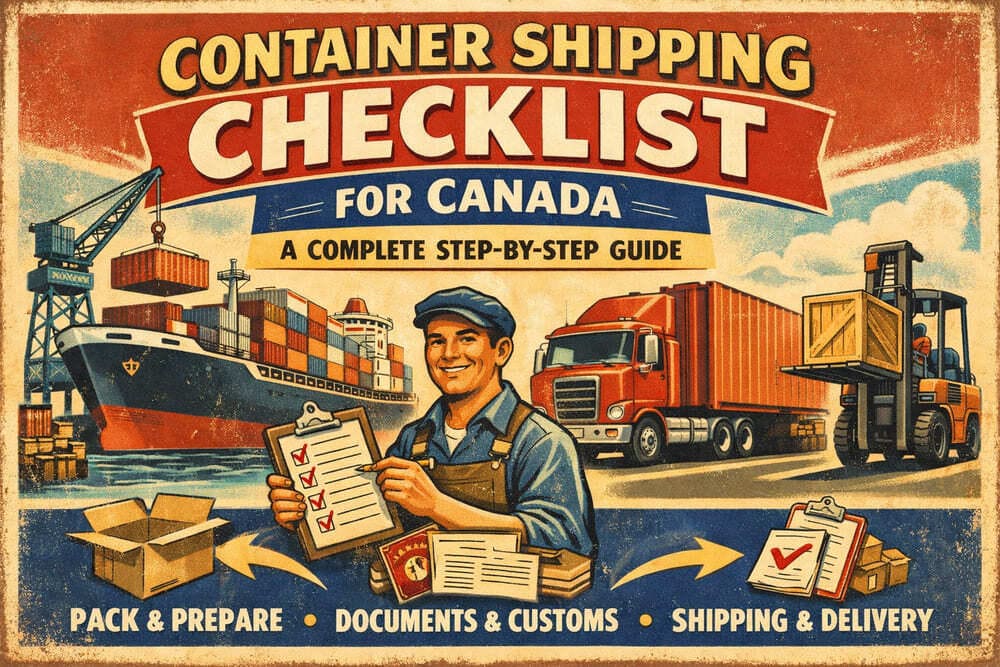
Planning container shipping to or from Canada? This container shipping checklist for Canada is a structured, professional guide designed to help importers, exporters, manufacturers, and logistics managers avoid delays, fines, cargo damage, and unexpected costs.
At Metropolitan Logistics, we manage container shipping projects across Canada every day — from port coordination and customs clearance to rail, drayage, and final delivery. This checklist reflects real operational practice used by professional freight forwarders and intermodal carriers.
Use this guide before booking, packing, shipping, and receiving your container.
Why a Container Shipping Checklist Is Critical in Canada
Container shipping in Canada involves multiple regulatory systems, transport modes, and terminal procedures. A missed document, incorrect packing method, or wrong container type can result in:
- Border holds and CBSA inspections
- Storage, demurrage, and detention charges
- Cargo damage and insurance claims
- Missed rail connections and delivery delays
- Compliance penalties and duty reassessments
A structured checklist eliminates risk and ensures your shipment moves legally, safely, and on schedule.
STEP 1 — Define Your Shipment Profile
Before booking any container, clearly define the shipment parameters.
Shipment Information Checklist
Confirm the following:
- Origin port / city and final Canadian destination
- Import, export, or domestic movement
- Cargo description and HS classification
- Total cargo weight (kg) and volume (CBM)
- Special handling requirements (reefer, hazardous, oversized)
This information determines container type, carrier selection, customs treatment, and routing.
STEP 2 — Select the Correct Container Type and Size
Choosing the correct container prevents overloading, wasted space, and regulatory violations.
Standard Container Reference Table
| Container Type | Internal Dimensions (m) | Capacity (CBM) | Max Payload (kg) | Typical Use |
|---|---|---|---|---|
| 20’ Standard | 5.9 × 2.35 × 2.39 | ~33 | ~28,000 | Machinery, small shipments, household goods |
| 40’ Standard | 12.0 × 2.35 × 2.39 | ~67 | ~28,000 | Furniture, retail freight, large volumes |
| 40’ High Cube | 12.0 × 2.35 × 2.69 | ~76 | ~28,000 | Bulky cargo, e‑commerce fulfillment |
| Reefer (20’ / 40’) | Variable | ~28–60 | ~26,000 | Food, pharmaceuticals, temperature‑controlled |
Checklist:
- Confirm container size vs cargo volume
- Verify payload limits vs total weight
- Select special equipment if required (reefer, flat rack, open top)
STEP 3 — Prepare Mandatory Shipping & Customs Documents
Documentation errors are the most common cause of Canadian border delays.
Required Document Checklist
| Document | Purpose | Responsible Party |
|---|---|---|
| Bill of Lading (B/L) | Transport contract & cargo ownership | Carrier / Freight Forwarder |
| Commercial Invoice | Customs value declaration | Shipper |
| Packing List | Detailed cargo breakdown | Shipper |
| Export Declaration | Canadian export reporting | Exporter |
| Import Declaration (CBSA) | Canadian customs clearance | Importer / Broker |
Checklist:
- Verify consignee and notify party details
- Confirm HS codes and cargo description accuracy
- Prepare both digital and printed document sets
- Submit documents before vessel arrival when possible
STEP 4 — Packing & Loading Compliance Checklist
Incorrect packing leads to cargo damage, shifting, and insurance claims.
Professional Packing Checklist
Do:
- Use ISPM‑15 certified pallets and crates
- Distribute weight evenly across the container floor
- Block and brace heavy items
- Strap, chock, and secure all rolling cargo
- Seal cartons with export‑grade materials
Avoid:
- Overloading beyond payload limits
- Leaving voids without dunnage or air bags
- Mixing hazardous and non‑hazardous cargo
- Placing heavy cargo against container doors
Checklist:
- Photograph loaded container for insurance records
- Record seal number and container number
- Verify gross container weight (VGM compliance)
STEP 5 — Customs & Regulatory Compliance in Canada
All cargo entering Canada must comply with CBSA, Transport Canada, and sector‑specific agencies.
Compliance Checklist by Cargo Type
| Cargo Type | Typical Duty / Tax | Additional Requirements |
|---|---|---|
| Automobiles | 6.1% duty + GST/HST | Transport Canada standards, RIV |
| Electronics | 0–8% duty + GST/HST | CSA / safety certifications |
| Furniture | 8–10% duty + GST/HST | Material and origin verification |
| Food / Perishables | Variable + GST/HST | CFIA permits and inspections |
Checklist:
- Confirm tariff classification and valuation
- Apply trade agreements (CUSMA, CPTPP, EU‑Canada)
- Prepare inspection contingency plan
- Use licensed customs brokerage support
At Metropolitan Logistics, we manage full customs brokerage and pre‑clearance to prevent rail holds and storage charges.
STEP 6 — Book Carrier, Rail & Inland Transport
Carrier selection directly affects transit time, cost, and reliability.
Booking Checklist
Confirm:
- Vessel or rail schedule availability
- Free time at port and rail terminal
- Intermodal routing (ocean + rail + truck)
- Final delivery appointment windows
For national coverage, we provide fully managed container transport through our intermodal network
STEP 7 — Cargo Insurance & Risk Protection
Carrier liability is limited and rarely covers full cargo value.
Insurance Checklist
| Insurance Type | Coverage Level |
|---|---|
| Carrier Liability | Minimal (weight‑based) |
| All‑Risk Cargo Insurance | Full loss, theft, and damage coverage (recommended) |
| Named Perils | Limited risk protection |
Checklist:
- Declare full cargo value
- Confirm door‑to‑door coverage
- Verify deductible and exclusions
STEP 8 — Tracking, Terminal Release & Final Delivery
Once the container arrives in Canada, inland execution becomes critical.
Delivery Checklist
Confirm:
- Customs release status (released vs held)
- Rail terminal arrival notice
- Drayage appointment booking
- Chassis availability
- Warehouse or consignee delivery window
Key Canadian corridors include:
- Vancouver / Prince Rupert → Toronto, Montreal
- Halifax → Toronto, Quebec
- Montreal → Ontario & Quebec distribution
STEP 9 — Cost Planning, Free Time & Hidden Charges Checklist
Unexpected charges are one of the biggest cost risks in container shipping.
Cost Planning Checklist
Confirm before shipping:
- Free time at port and rail terminal (typically 3–7 days)
- Demurrage and detention daily rates
- Chassis rental and waiting time charges
- Terminal handling and documentation fees
- Rail fuel and congestion surcharges
Common Hidden Charges to Watch
| Charge Type | When It Applies |
| Demurrage | Container not picked up within free time |
| Detention | Container returned late after delivery |
| Rail Storage | Container held at intermodal terminal |
| Exam / Inspection Fees | CBSA secondary inspection |
| Waiting Time | Truck delays at terminal or warehouse |
At Metropolitan Logistics, we actively monitor free time and terminal cut‑offs to prevent avoidable penalties.
STEP 10 — Special Cargo & Restricted Goods Checklist
Some cargo requires additional permits, packaging, and approvals.
Special Cargo Categories
- Dangerous goods (IMO / IMDG regulated)
- Lithium batteries and electronics
- Alcohol, tobacco, and controlled goods
- Oversized and overweight cargo
- Personal effects and household goods
Checklist:
- Confirm MSDS and dangerous goods classification
- Obtain CFIA / Health Canada permits if required
- Verify temperature and monitoring requirements for reefers
- Prepare inspection‑ready documentation package
STEP 11 — Pre‑Booking Readiness Checklist (Before You Contact a Forwarder)
Having complete information upfront accelerates booking and reduces errors.
Prepare:
- Shipper and consignee full legal names
- Commodity description and HS codes
- Total pieces, weight, and volume
- Origin port and Canadian destination
- Incoterms (EXW, FOB, CIF, DAP, etc.)
- Target delivery date and service level
This allows your freight forwarder to design the correct routing and pricing model from the first quote.
STEP 12 — Final Arrival, Inspection & Container Return Checklist
After delivery, closing the shipment properly prevents post‑delivery charges.
Checklist:
- Inspect cargo condition before unloading
- Report damage immediately to carrier and insurer
- Unload and return empty container within free time
- Obtain empty return confirmation
- Close customs and accounting files
How Metropolitan Logistics Supports Container Shipping in Canada
As a national intermodal logistics provider, Metropolitan Logistics delivers a fully managed container shipping solution:
- Ocean and rail coordination
- Customs brokerage and CBSA clearance
- CN & CP intermodal rail booking
- Drayage and terminal pickup
- Container storage, transload, and distribution
- Real‑time tracking and exception management
We manage the entire shipping chain — from port arrival to final inland delivery — under one coordinated logistics program.
Start Your Container Shipment with Confidence
If you are planning container shipping in Canada, our specialists at Metropolitan Logistics are ready to support your project.
We provide professional container booking, customs clearance, intermodal rail transport, and door‑to‑door delivery across Canada.
👉 Request a Container Shipping Quote
Or contact our operations team directly:
📞 +1 (365) 829 5000
✉️ service@metropolitanlogistics.ca
Our team will review your shipment details and guide you through every step of the container shipping process