
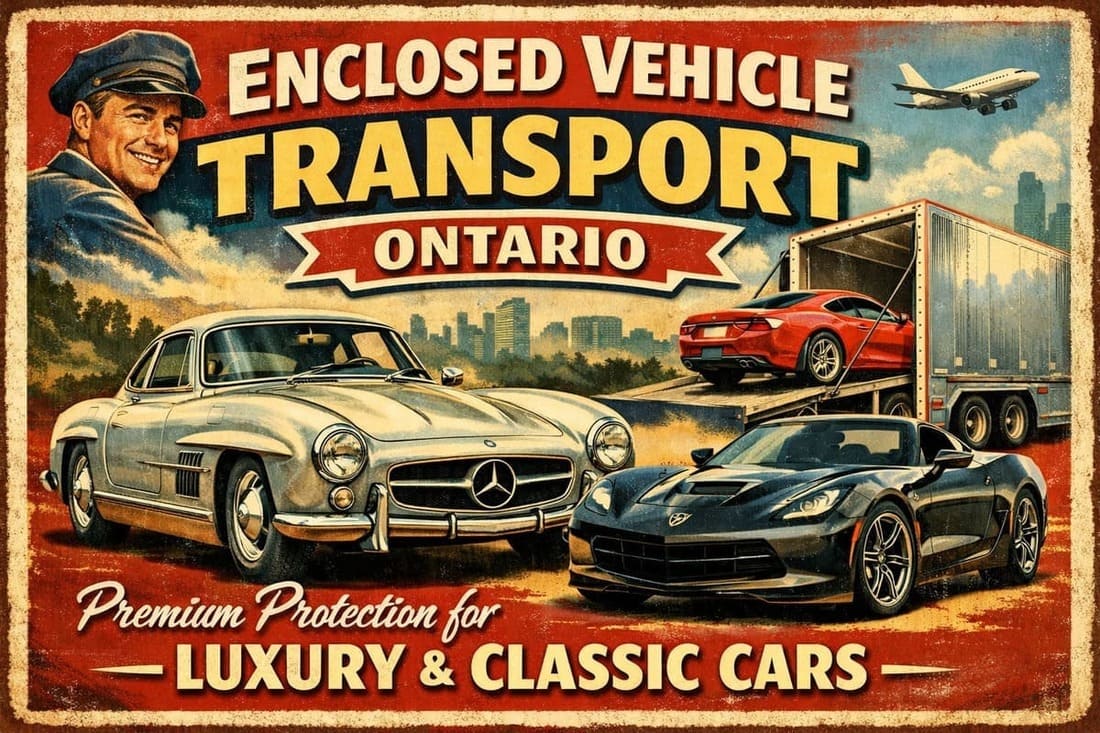
Enclosed vehicle transport Ontario is one of the safest ways to ship a luxury, classic, exotic, collector, or high-value vehicle across the province and beyond. Unlike open carriers, enclosed auto transport protects the vehicle from road debris, harsh weather, salt spray, freezing rain, and unnecessary public exposure.
Ontario’s climate creates real shipping risks. Snow, road salt, gravel, freezing rain, and long highway routes can affect a vehicle’s exterior, undercarriage, trim, and finish. Therefore, enclosed transport often makes sense when vehicle condition matters more than the lowest possible price.
For vehicle shipping requests, Metropolitan Logistics works with Rail Auto Canada as a trusted partner for auto transport in Canada. Customers can learn more about Rail Auto Canada through its main website or review available vehicle shipping options on its services page.
What is enclosed vehicle transport Ontario?
Enclosed vehicle transport Ontario means shipping a car inside a fully covered trailer instead of on an open-air carrier. The trailer has walls, a roof, and doors, which protect the vehicle from direct weather and road exposure during transport.
This service is commonly used for luxury cars, exotic vehicles, collector cars, classic vehicles, restored cars, low-clearance performance vehicles, dealership units, and auction purchases. It can also work for owners who want extra protection during winter or long-distance moves.
Key enclosed vehicle transport terms
Enclosed carrier means a covered auto transport trailer designed to protect vehicles from weather, road debris, and direct public exposure.
Open carrier means an uncovered auto transport trailer. It is more common and usually cheaper, but the vehicle remains exposed during transit.
Lift-gate loading means the carrier uses a hydraulic platform to load a vehicle more carefully. This can help low-clearance cars avoid scraping.
Soft wheel straps secure the vehicle by the tires instead of attaching hooks to the body, suspension, or chassis.
Bill of lading is the official transport document. It records the vehicle’s condition, pickup details, delivery details, and shipment acceptance.
Condition report means the inspection record completed before pickup and after delivery.
How enclosed vehicle transport works
Enclosed auto shipping uses a covered trailer designed for vehicle protection. The carrier loads the vehicle using a lift gate or low-angle ramps, then secures it using wheel straps and positioning methods that reduce movement during transit.
Unlike open transport, the vehicle remains shielded throughout the trip. This protects it from snow, rain, road salt, gravel, dust, and debris.
Typical enclosed transport process
The process usually includes:
- quote request and vehicle details;
- scheduling and carrier assignment;
- vehicle preparation;
- pickup inspection;
- enclosed loading;
- protected transit;
- delivery scheduling;
- final inspection and acceptance.
Because enclosed trailers carry fewer vehicles than open carriers, the handling process often feels more controlled. Drivers also manage fewer units during the route, which can reduce unnecessary loading and unloading.
Why enclosed trailers carry fewer vehicles
Open carriers often move many vehicles at once. Enclosed trailers usually carry fewer cars because they use covered equipment and may need extra space for higher-value or specialty vehicles.
This lower capacity increases the cost. However, it also creates a higher-protection service for cars where finish condition, value, and handling matter.
Why Ontario vehicle owners choose enclosed transport
Ontario vehicle owners often choose enclosed transport when they want to reduce exposure to weather, salt, road debris, and handling risks. This matters most for vehicles where a small cosmetic issue could be expensive or difficult to fix.
Winter salt and weather protection
Ontario winters can expose vehicles to salt, slush, snow, freezing rain, and highway debris. Road salt can affect brake components, exhaust systems, undercarriage metal, and exposed finishes.
For regular daily drivers, this exposure may not justify enclosed shipping. However, for collector cars, restored vehicles, exotic models, or high-value cars, enclosed transport can provide meaningful protection.
Better handling for low-clearance cars
Low-clearance vehicles may not load safely on every open carrier. Steep ramp angles can create scraping risk for front splitters, side skirts, exhaust components, and lowered suspension setups.
Enclosed carriers often use lift gates or low-angle loading methods. This makes them a better fit for many sports cars, exotics, and modified vehicles.
More privacy and security
Enclosed transport also reduces public visibility. The vehicle stays inside a covered trailer rather than exposed on an open carrier.
This can matter for rare cars, high-value purchases, dealership transfers, auction vehicles, and private collector moves.
Cost factors for enclosed vehicle transport Ontario
Enclosed shipping costs more than open transport because it uses specialized equipment, fewer vehicle slots, and a higher-protection service model. The final quote depends on distance, vehicle size, access, season, and scheduling flexibility.
Typical price ranges for Ontario routes
| Route | Estimated cost | Transit time |
|---|---|---|
| Toronto to Ottawa | $900–$1,300 CAD | 1–2 days |
| Toronto to Montreal | $1,100–$1,600 CAD | 2–3 days |
| Toronto to Vancouver | $3,200–$4,800 CAD | 7–10 days |
| Ottawa to Calgary | $2,800–$4,200 CAD | 6–9 days |
| GTA local delivery | $450–$850 CAD | Same day or next day |
These are general planning ranges. Final pricing depends on the exact vehicle, pickup area, delivery area, transport method, carrier availability, and season.
Additional cost variables
| Factor | Effect on price |
|---|---|
| Vehicle height | SUVs and trucks may need more trailer space. |
| Low clearance | May require lift-gate or special loading. |
| Non-running condition | May require winch loading or special handling. |
| Rural pickup | May extend the driver’s route. |
| Expedited shipping | Adds priority dispatch cost. |
| Winter season | Can increase demand and scheduling complexity. |
| High vehicle value | May require extra review or added protection options. |
Why enclosed transport costs more
Enclosed carriers usually move fewer vehicles per trailer. They may also use lift gates, padded interiors, specialized securement, and more careful handling procedures.
The higher price reflects protection and equipment. For a high-value vehicle, the enclosed premium can be smaller than the cost of paint correction, undercarriage exposure, or damage repair.
Enclosed vs open car transport
Enclosed and open transport both serve important purposes. Open transport works well for most standard vehicles. Enclosed transport works better when condition, value, privacy, and protection matter more.
| Feature | Enclosed transport | Open carrier |
|---|---|---|
| Weather protection | Full protection | No direct protection |
| Road debris exposure | Very low | Higher |
| Salt exposure | Very low | Possible |
| Trailer capacity | Lower | Higher |
| Cost | Higher | Lower |
| Best for | Luxury, exotic, classic, collector cars | Everyday vehicles |
| Winter suitability | Strong | Moderate |
| Risk level | Lower | Standard |
When open transport is enough
Open transport can be the practical choice for standard sedans, SUVs, minivans, pickups, and daily drivers. It costs less and has wider availability.
If the vehicle already handles regular road use, open transport may provide the best balance of cost and convenience.
When enclosed transport is the better choice
Enclosed transport makes sense when the vehicle is high-value, rare, newly restored, low-clearance, wrapped, ceramic-coated, classic, exotic, or collector-grade.
It can also make sense during Ontario winter or on long interprovincial routes where road salt and debris exposure increase.
Step-by-step enclosed transport process
A good enclosed vehicle shipment follows a clear process. Each step helps protect the vehicle and reduce confusion.
Step 1: Request a quote and provide details
Start by sharing the pickup location, delivery city, vehicle year, make, model, running condition, and preferred timeframe.
Also mention low clearance, modifications, alarms, immobilizers, roof accessories, or special starting instructions. These details help the transport provider confirm the right equipment.
Step 2: Confirm scheduling and carrier assignment
After the quote is reviewed, the shipment is assigned to an appropriate enclosed carrier. The provider confirms the pickup window, route, and delivery expectations.
Customers should ask how scheduling works and what happens if the date changes. This matters for dealership pickups, auction releases, relocations, or seasonal vehicle moves.
Step 3: Prepare the vehicle before pickup
Before pickup, remove all personal belongings. Carriers are not licensed to move household goods inside vehicles, and insurance usually does not cover personal items.
Customers should also:
- leave about a quarter tank of fuel;
- charge the battery;
- check tire pressure;
- disable toll tags and parking passes;
- fold mirrors if possible;
- keep one key set available;
- photograph the vehicle from all angles.
If the vehicle does not run, tell the transport provider before booking. Non-running vehicles need the right loading equipment.
Step 4: Complete the pickup inspection
At pickup, the driver inspects the vehicle and records its condition on the bill of lading or condition report.
The customer should review the report before signing. Any existing scratches, chips, dents, paint marks, or trim issues should appear on the document.
Step 5: Load the vehicle professionally
The driver loads the vehicle into the enclosed trailer using a lift gate or low-angle ramps when needed.
The vehicle is secured with soft wheel straps and positioning equipment. Drivers should avoid hooks on the body, suspension, or sensitive components.
Step 6: Protected transit
During transit, the vehicle stays inside the covered trailer. This protects it from direct exposure to road debris, snow, ice, rain, dust, and salt.
Because enclosed trailers carry fewer vehicles, the route often involves fewer handling steps than some open carrier moves.
Step 7: Delivery coordination
The driver contacts the customer before arrival to confirm the delivery time and location.
If the street cannot accommodate a large truck, the driver may request a nearby meeting point such as a wide parking lot, plaza, or commercial area.
Step 8: Final inspection and acceptance
At delivery, inspect the vehicle with the driver. Compare its condition to the pickup report and your photos.
After verification, sign the delivery report. If someone else accepts the vehicle, they should be an adult with identification and permission to receive it.
Helpful tips before enclosed transport
Small preparation steps can make enclosed shipping smoother and safer.
Do not wash the car right before winter pickup
In winter, water can freeze in door seals, locks, mirrors, or trim gaps. If the vehicle needs cleaning, do it early enough for the car to dry fully.
Share special starting instructions
Some exotic, classic, or modified vehicles have battery cutoffs, immobilizers, alarm sequences, or specific startup procedures.
Share these instructions before pickup. This helps the driver load and unload the vehicle without delays.
Photograph the vehicle carefully
Photos create a clear record before transport. Take images of all sides, roof, wheels, glass, bumpers, interior, and existing marks.
These photos support the condition report and help if a question comes up after delivery.
Insurance, liability and vehicle protection
Enclosed vehicle transport reduces risk, but customers should still understand coverage, documentation, and responsibility.
What protection is usually included
| Protection element | What it means |
|---|---|
| Pre-transport inspection | Vehicle condition is documented before loading. |
| Bill of lading | Official transport record and condition document. |
| Carrier liability coverage | Coverage may apply during active transit under carrier terms. |
| Driver supervision | Vehicle access remains limited during shipment. |
| Enclosed trailer | Physical protection from weather and road debris. |
Customers should always ask what the carrier’s coverage includes and what it excludes. High-value vehicles may need extra review before booking.
When carrier responsibility applies
Carrier responsibility usually applies while the vehicle is in the carrier’s possession. This includes loading, transport, and unloading.
It generally does not cover pre-existing damage, mechanical failure, personal items left in the vehicle, or issues unrelated to transport handling.
Why enclosed transport reduces claim risk
Enclosed transport reduces common exposure risks because the car remains protected from weather, road salt, debris, and public handling.
It also supports better loading for low-clearance and high-value vehicles. This is why enclosed transport often becomes the preferred option for collector, luxury, and specialty cars.
Ontario service coverage
Enclosed vehicle transport can support moves within Ontario and from Ontario to other Canadian provinces. Common service areas include the GTA, Eastern Ontario, Southwestern Ontario, and Northern Ontario.
| Region | Cities covered |
|---|---|
| Greater Toronto Area | Toronto, Mississauga, Brampton, Vaughan, Markham |
| Eastern Ontario | Ottawa, Kingston, Cornwall |
| Southwestern Ontario | London, Windsor, Kitchener, Waterloo |
| Northern Ontario | Sudbury, North Bay, Thunder Bay |
Customers can also arrange interprovincial vehicle shipping from Ontario to Alberta, British Columbia, Quebec, Atlantic Canada, and other regions.
GTA enclosed vehicle transport
The GTA has strong demand for enclosed vehicle shipping because it includes dealerships, collectors, private sellers, auctions, luxury vehicle owners, and corporate clients.
Toronto, Mississauga, Brampton, Vaughan, Markham, Oakville, and nearby markets often have better carrier availability than rural locations.
Ontario to Western Canada
Ontario to Alberta or British Columbia routes often involve long distances and changing weather. Enclosed transport may make sense for high-value vehicles, especially during winter.
Routes such as Toronto to Calgary, Toronto to Vancouver, Ottawa to Calgary, and London to Vancouver should be planned early for better availability.
Ontario to Quebec or Atlantic Canada
Shorter routes to Quebec may still justify enclosed transport for classic, luxury, or collector cars. Atlantic Canada routes require more planning because carrier availability can vary by season and city.
Customers should provide route and timing details early so the transport provider can review options.
Rail Auto Canada: Metropolitan Logistics’ partner for enclosed vehicle transport
Metropolitan Logistics works with Rail Auto Canada as a partner for vehicle shipping requests in Canada. This keeps enclosed auto transport inquiries focused on a company that specializes in car shipping, while Metropolitan Logistics continues to support broader logistics, freight, warehousing, and commercial transportation needs.
Rail Auto Canada can help customers compare open and enclosed vehicle shipping, review route availability, and request pricing for domestic car transport. Customers can learn more through the Rail Auto Canada website or explore available vehicle shipping services.
How Rail Auto Canada supports enclosed vehicle shipping
Rail Auto Canada can review the vehicle’s value, size, clearance, route, season, timing, and protection needs before recommending a service type.
For everyday vehicles, open carrier may provide the best value. For luxury, classic, collector, exotic, low-clearance, or high-value cars, enclosed transport may provide a better fit.
What information to provide for a quote
To get an accurate enclosed vehicle transport quote, customers should provide:
- vehicle year, make, model, and trim;
- pickup city and delivery city;
- preferred pickup and delivery dates;
- running condition;
- vehicle value range if relevant;
- low-clearance details;
- modifications or special loading needs;
- open or enclosed preference;
- residential, dealership, auction, or storage pickup details.
Customers can request pricing through Rail Auto Canada when they are ready to compare service options.
Common mistakes when booking enclosed transport
Most enclosed transport problems start with missing details, late booking, or unclear expectations. Customers can avoid many issues by preparing early.
Booking too late
Enclosed carrier availability is more limited than open carrier availability. Last-minute booking can create higher prices or fewer date options.
Customers should request quotes early when they need pickup before a sale date, auction release, seasonal storage deadline, or relocation date.
Not disclosing low clearance
Low-clearance vehicles need the right loading method. If the carrier learns about clearance issues at pickup, the shipment may face delays.
Customers should disclose ground clearance, front splitters, lowered suspension, body kits, side skirts, or long overhangs before booking.
Leaving personal items inside
Vehicle carriers generally do not transport household goods inside cars. Personal items can shift, break, add weight, or create liability issues.
Remove bags, documents, electronics, chargers, toll tags, and loose accessories before pickup.
Skipping photos and inspection
Photos and inspection records protect the customer and carrier. Take photos before pickup and review the bill of lading carefully.
At delivery, compare the vehicle to the pickup report before signing the final paperwork.
Request an enclosed vehicle transport quote in Ontario
Need enclosed vehicle transport within Ontario or across Canada? Metropolitan Logistics recommends requesting a quote through its vehicle shipping partner, Rail Auto Canada.
Rail Auto Canada can review your vehicle, route, season, protection needs, and timing before recommending the right transport option.
Request an enclosed vehicle transport quote
You can also contact Rail Auto Canada directly:
Phone: +1 (289) 536-6499
Email: hello@railautocanada.ca
Frequently asked questions
What is enclosed vehicle transport Ontario?
Enclosed vehicle transport Ontario means shipping a car inside a covered trailer to protect it from road debris, weather, salt, and direct exposure. It is commonly used for luxury cars, classic vehicles, collector cars, exotics, low-clearance vehicles, and high-value cars.
Is enclosed car shipping worth it in Ontario?
Enclosed car shipping is worth it when the vehicle’s value, finish, rarity, or low clearance makes extra protection important. It also makes sense during Ontario winter when salt, slush, snow, and road debris create more exposure.
How much does enclosed vehicle transport cost in Ontario?
Enclosed vehicle transport in Ontario can range from several hundred dollars for local GTA moves to several thousand dollars for long-distance interprovincial moves. The exact cost depends on distance, vehicle size, route, timing, pickup access, and carrier availability.
Is enclosed transport better than open transport?
Enclosed transport is better for luxury, classic, exotic, collector, low-clearance, or high-value vehicles. Open transport is usually better for standard daily drivers when cost matters more than maximum protection.
Can enclosed transport handle low-clearance cars?
Yes, many enclosed carriers can handle low-clearance cars with lift gates or low-angle loading methods. Customers should disclose low clearance before booking so the transport provider can confirm suitable equipment.
Who should I contact for enclosed vehicle transport Ontario?
Metropolitan Logistics recommends Rail Auto Canada for enclosed vehicle transport requests. Customers can request a quote online, call +1 (289) 536-6499, or email hello@railautocanada.ca.
The bottom line
Enclosed vehicle transport Ontario is the right choice when a vehicle needs more protection than open transport can provide. It works especially well for luxury, exotic, classic, collector, restored, low-clearance, or high-value vehicles.
Open transport remains practical for most daily drivers. However, enclosed shipping can justify the higher cost when winter exposure, road debris, low clearance, or resale value matters.
For enclosed car shipping requests in Ontario and across Canada, Metropolitan Logistics recommends Rail Auto Canada as its trusted auto transport partner.
Request an enclosed vehicle transport quote from Rail Auto Canada
Phone: +1 (289) 536-6499
Email: hello@railautocanada.ca
Get a Car Shipping Quote
Across Canada
Submit your vehicle details through our trusted partner Rail Auto Canada. They’ll review your route, vehicle type, timing, and transport options.