
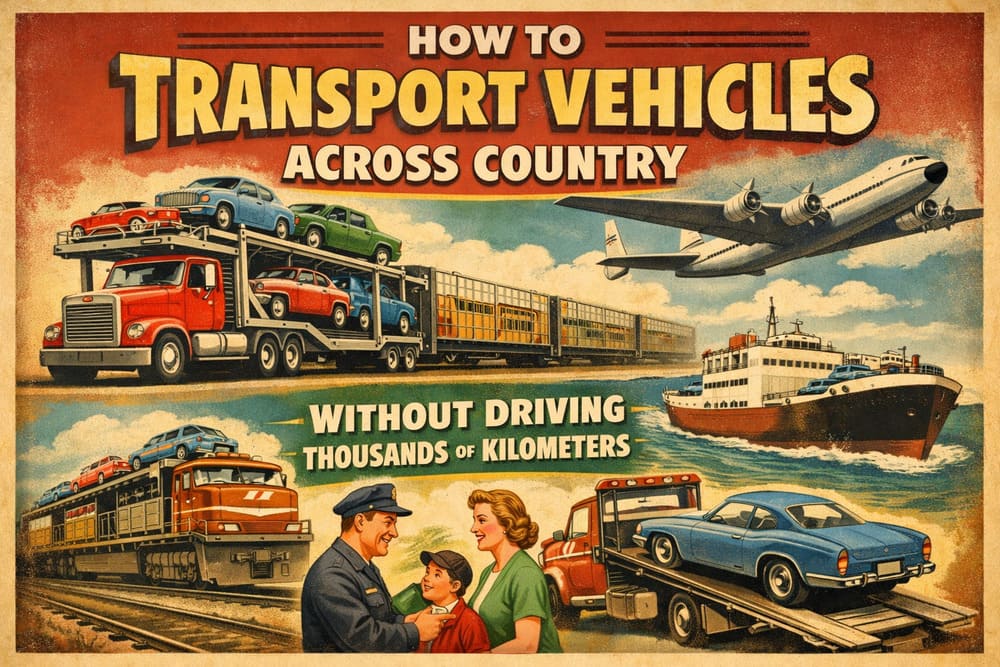
How to transport vehicles across country is one of the most common questions Canadians ask when relocating, buying a car remotely, moving for school, or transferring a vehicle between provinces. Driving thousands of kilometres across Canada may look simple at first. However, distance, fuel, hotels, weather, mileage depreciation, and personal time can make professional vehicle transport the better option.
Canada’s geography creates unique transport challenges. Long routes such as Toronto to Vancouver, Montreal to Calgary, Ottawa to Edmonton, or Halifax to Vancouver expose vehicles to changing weather, highway debris, mountain roads, and heavy mileage. Therefore, organized vehicle shipping has become a practical solution for families, dealerships, online vehicle buyers, students, and corporate vehicle moves.
For car shipping requests, Metropolitan Logistics works with Rail Auto Canada as a trusted vehicle shipping partner in Canada. Customers can review Rail Auto Canada’s car shipping services when they need domestic auto transport options across Canadian provinces.
What does it mean to transport vehicles across country?
Transporting vehicles across country means arranging professional auto transport between provinces or across long Canadian routes. Instead of driving the vehicle yourself, a licensed carrier moves it by open carrier, enclosed carrier, terminal service, door-to-door service, or a rail-and-truck option when available.
Cross-country vehicle transport often supports relocations, dealership transfers, online purchases, auction pickups, student moves, military moves, corporate fleet transfers, and seasonal moves. The right service depends on the vehicle type, route, timing, budget, and protection level.
Key vehicle transport terms
Open carrier means the vehicle travels on an open auto transport trailer. This is the most common and cost-effective way to ship a car across Canada.
Enclosed carrier means the vehicle travels inside a covered trailer. This option protects the vehicle from road debris, weather, and salt exposure.
Door-to-door transport means the carrier picks up and delivers as close as safely and legally possible to the requested addresses.
Terminal-to-terminal transport means the customer drops off and picks up the vehicle at approved yards, terminals, or carrier locations.
Condition report means the inspection record completed at pickup and delivery. It documents visible marks, mileage, keys, and vehicle condition.
Bill of lading means the transport document that records the shipment details and vehicle condition. It protects both the customer and the carrier.
How vehicle transport works in Canada
Professional auto transport companies coordinate pickup, loading, long-distance movement, and delivery using specialized car carrier equipment. The carrier moves the vehicle along scheduled transport lanes between Canadian cities and provinces.
The process usually includes:
- booking and scheduling;
- pickup confirmation;
- vehicle inspection;
- loading onto the carrier;
- long-distance transport;
- delivery coordination;
- final inspection.
Most shipments can move door to door when truck access allows it. However, large transport trucks need enough room to stop, turn, and load safely. If the exact address has narrow streets, low trees, restricted parking, or tight residential access, the carrier may arrange pickup or delivery at a nearby safe meeting point.
Transport methods available
There are two primary ways to ship a vehicle across Canada: open carrier transport and enclosed carrier transport. Some routes may also use rail-assisted service when timing, terminal access, and availability make sense.
Open carrier transport
Open transport is the most common and cost-efficient method. Vehicles move on a multi-car trailer similar to the carriers used for dealership deliveries.
This option works well for everyday cars, SUVs, pickups, minivans, and standard relocations. It gives the best balance of price and availability on most Canadian routes.
However, the vehicle remains exposed to normal road and weather conditions. Dust, rain, snow, road salt, and road debris can reach the vehicle during transit. For most daily drivers, this level of exposure is acceptable.
Enclosed carrier transport
Enclosed transport places the vehicle inside a covered trailer. This protects the car from weather, road debris, snow, rain, salt, and direct highway exposure.
This option is recommended for luxury vehicles, classic cars, collector cars, exotic vehicles, low-clearance performance cars, restored vehicles, and cars with custom paint or wraps.
Because Canadian winters include snow, ice, salt, and freezing conditions, enclosed shipping can make sense for higher-value vehicles even on domestic routes.
Rail-assisted vehicle transport
Rail-assisted transport may work on some long-distance Canadian routes. In this setup, the vehicle may move by truck to a terminal, travel by rail for the long-haul portion, and then move by truck again for final delivery.
Rail-assisted service can suit long routes when the vehicle runs, timing is flexible, and terminal access works. However, it may not be faster or cheaper in every case. Customers should compare rail-assisted and truck-based options before booking.
Open vs enclosed transport comparison
The best transport type depends on vehicle value, route, season, and budget. Open transport fits most everyday cars. Enclosed transport fits vehicles that need a higher level of protection.
| Feature | Open carrier | Enclosed carrier |
|---|---|---|
| Cost | Lower | Higher |
| Availability | Higher on most routes | More limited |
| Weather exposure | Yes | No direct exposure |
| Road debris exposure | Possible | Protected |
| Best for daily vehicles | Yes | Optional |
| Best for luxury or classic cars | Not ideal | Best option |
| Winter protection | Moderate | Strong |
| Low-clearance vehicle support | Limited | Better option |
When open transport makes sense
Open transport usually makes sense when:
- the vehicle is a daily driver;
- cost matters most;
- the car already handles normal road exposure;
- the route is common and available;
- the vehicle is a standard sedan, SUV, van, or pickup.
For most customers, open carrier transport gives the most practical balance between cost and reliability.
When enclosed transport makes sense
Enclosed transport usually makes sense when:
- the vehicle is luxury, classic, exotic, or collectible;
- the car has custom paint, matte finish, or a wrap;
- the vehicle has low clearance;
- the route crosses winter mountain conditions;
- the owner wants maximum protection.
The higher price can be worth it when a paint or finish issue would cost more than the enclosed premium.
Cost factors for cross-country vehicle transport
Pricing depends on distance, vehicle size, transport type, route demand, pickup access, delivery access, and time of year. A quote for a compact sedan on a major route will differ from a quote for a lifted truck in a rural area.
Typical Canada route costs
| Route | Average cost | Transit time |
|---|---|---|
| Toronto to Vancouver | $2,000–$3,200 CAD | 7–10 days |
| Montreal to Calgary | $1,800–$2,900 CAD | 6–9 days |
| Toronto to Halifax | $1,500–$2,400 CAD | 5–8 days |
| Ottawa to Edmonton | $2,200–$3,300 CAD | 7–9 days |
| Vancouver to Winnipeg | $1,600–$2,500 CAD | 5–7 days |
These are planning ranges, not fixed rates. Final pricing depends on the exact route, vehicle type, service type, season, and carrier availability.
What affects the price
| Factor | Impact |
|---|---|
| Distance | Primary pricing factor |
| Vehicle size | SUVs, trucks, and vans use more carrier space |
| Remote pickup | May add routing or access cost |
| Non-running vehicle | Requires special loading equipment |
| Expedited shipping | Adds priority dispatch cost |
| Winter season | Can affect timing, capacity, and demand |
| Enclosed transport | Costs more than open transport |
| Door-to-door service | May cost more than terminal service |
Why exact details matter
A quote based only on “Toronto to Vancouver” is not enough. The transport provider needs to know the vehicle, pickup area, delivery area, preferred dates, running condition, and service type.
A compact sedan from a major city is easier to price than a lifted pickup, low-clearance sports car, or non-running vehicle. Better details create a more accurate quote.
Step-by-step car shipping process
A smooth cross-country vehicle shipment follows a clear process. Each step helps reduce delays, access problems, and delivery surprises.
Step 1: Get a quote
Start by sharing the pickup city, destination city, vehicle year, make, model, and whether the vehicle runs and drives. Also include your preferred shipping window.
If the vehicle has low clearance, oversized tires, roof racks, a lift kit, custom parts, or mechanical issues, mention those details right away. This helps the transport provider recommend the right carrier type.
Step 2: Choose open, enclosed, or rail-assisted service
Most customers choose open carrier transport for standard vehicles. Enclosed transport works better for luxury, classic, collector, or high-value vehicles.
Rail-assisted service may be available on some long routes. It can work when timing is flexible and terminal access fits the route. The best method depends on the car and the move.
Step 3: Confirm pickup and delivery access
Cross-country carriers use large trucks, so access matters. If the address has enough space, the carrier may offer door-to-door service.
If the street is narrow, restricted, or unsafe for loading, the carrier may arrange a nearby meeting point. Wide parking lots, commercial areas, or open streets often work better than tight residential roads.
Step 4: Prepare the vehicle
Before pickup, remove personal items and clean the vehicle. Disable toll tags, remove loose accessories, check tire pressure, and make sure the battery holds charge.
Leave about a quarter tank of fuel. The driver needs enough fuel to load and unload the vehicle, but a full tank adds unnecessary weight.
Step 5: Complete the pickup inspection
At pickup, the driver completes a condition report. This report documents existing chips, scratches, dents, and visible marks.
Review the report before signing. Take photos of all sides of the vehicle, including wheels, bumpers, glass, roof, and existing damage.
Step 6: Load and secure the vehicle
The driver loads the vehicle onto the carrier using ramps or a lift-gate when needed. The vehicle is secured using wheel straps and positioning methods designed for auto transport.
For low-clearance vehicles, the carrier may need low-angle loading methods or specialized equipment. Always disclose clearance issues before pickup.
Step 7: Track the shipment
Your vehicle moves along scheduled interprovincial lanes. Transit time depends on distance, weather, carrier routing, and route demand.
Customers can request progress updates during transport. The carrier or dispatch team may also contact the receiver before delivery.
Step 8: Inspect the vehicle at delivery
At delivery, inspect the vehicle before signing the final paperwork. Compare its condition to the pickup photos and condition report.
If something looks different, note it immediately on the delivery paperwork and take photos. Once the final delivery form is signed clean, claims become harder to support.
Service coverage across Canada
Cross-country vehicle transport can connect all major Canadian regions. Common routes include Ontario to British Columbia, Quebec to Alberta, Ontario to Atlantic Canada, and Western Canada lanes.
| Region | Common routes |
|---|---|
| Ontario to British Columbia | Toronto to Vancouver |
| Quebec to Alberta | Montreal to Calgary |
| Ontario to Atlantic Canada | Toronto to Halifax |
| Prairies | Winnipeg to Edmonton |
| Western Canada | Vancouver to Calgary |
| Ontario to Alberta | Toronto to Calgary |
| Quebec to British Columbia | Montreal to Vancouver |
Major city pickup and delivery
Vehicle shipping is usually easier in major cities because carriers already run frequent routes through those markets. Toronto, Montreal, Vancouver, Calgary, Edmonton, Ottawa, Winnipeg, and Halifax often have better availability than remote areas.
However, customers in smaller cities can still ship vehicles. The quote may include extra routing or a nearby meeting point if direct access is difficult.
Rural and remote locations
Rural pickup or delivery may require more planning. Large carriers may not be able to reach every driveway, private road, or small-town location.
A nearby town, truck stop, commercial lot, or wide public meeting point can make the process smoother. It can also reduce cost compared with a difficult direct pickup.
When shipping is better than driving
Many customers first consider driving the car themselves. However, long cross-country trips in Canada involve more than fuel.
A multi-day drive adds mileage, exposes the vehicle to weather and road debris, creates fatigue, and often includes hidden expenses. For many moves, shipping becomes the more practical option.
What happens during a long drive
On routes like Toronto to Vancouver or Montreal to Calgary, a driver may travel 3,500 to 4,500 kilometres. During that trip, the vehicle is exposed to:
- rock chips from highways;
- temperature swings;
- rain, snow, and road salt;
- tire and brake wear;
- increased engine wear;
- driver fatigue;
- hotel and food costs.
For newer, financed, leased, or low-mileage vehicles, the added kilometres can also affect resale value.
Typical self-driving expenses
| Expense | Approximate cost |
|---|---|
| Fuel | $700–$1,200 CAD |
| Hotels for 3–5 nights | $450–$900 CAD |
| Food | $200–$400 CAD |
| Tire and maintenance wear | $200–$600 CAD |
| Mileage-related depreciation | $800–$2,000+ CAD |
When combined, the real cost of a long road trip can match or exceed professional vehicle transport.
Why shipping is often safer
Professional vehicle shipping reduces road exposure and avoids a multi-day drive. Instead of putting thousands of kilometres on the odometer, the car moves on equipment designed for transport.
Shipping often makes sense when:
- you are relocating between provinces;
- you purchased a vehicle remotely;
- the car is newer, leased, or financed;
- the vehicle is luxury, classic, or low-mileage;
- you want to avoid winter driving;
- you cannot take several days off work;
- you are moving with family or pets.
Rail Auto Canada: Metropolitan Logistics’ partner for vehicle transport
Metropolitan Logistics works with Rail Auto Canada as a trusted partner for vehicle shipping requests in Canada. This keeps car transport inquiries focused on a company that specializes in domestic auto transport, while Metropolitan Logistics continues to support broader logistics, warehousing, freight, and commercial transportation needs.
Rail Auto Canada helps customers arrange vehicle shipping across Canada for relocations, dealership transfers, online vehicle purchases, student moves, family moves, and corporate vehicle transport.
Customers can learn more about Rail Auto Canada on the company’s main website or explore available auto transport services.
How Rail Auto Canada helps with cross-country vehicle shipping
Rail Auto Canada can review the vehicle type, route, running condition, pickup access, delivery access, preferred dates, and transport preference before recommending an option.
For standard vehicles, open carrier may provide the best value. For luxury, classic, collector, exotic, or low-clearance vehicles, enclosed transport may fit better.
What information to provide for a quote
To request an accurate quote, customers should provide:
- vehicle year, make, model, and trim;
- pickup city and delivery city;
- preferred pickup and delivery dates;
- running condition;
- open or enclosed preference;
- door-to-door or terminal preference;
- vehicle modifications;
- low-clearance details;
- oversized tires, roof racks, or mechanical issues.
This information helps Rail Auto Canada price the route accurately and recommend the right transport method.
Common mistakes when transporting a vehicle across Canada
Most vehicle shipping problems start with missing details, late booking, or poor preparation. Customers can avoid many issues with a simple checklist.
Booking too late
Last-minute booking can limit carrier availability and increase stress. This matters on long routes where carriers build schedules around multiple vehicles.
Customers should request quotes early when they have a fixed moving date, flight, school start date, lease deadline, or vehicle purchase timeline.
Not disclosing vehicle condition
The quote assumes the vehicle runs, drives, steers, and brakes unless the customer says otherwise. A non-running vehicle may require special equipment.
Customers should mention weak batteries, flat tires, mechanical issues, low clearance, modifications, or oversized tires before booking.
Leaving personal items inside
Most carriers do not allow personal belongings inside the vehicle. Personal items can shift, break, add weight, or create liability issues.
Remove bags, electronics, documents, toll tags, garage remotes, chargers, and valuables before pickup.
Skipping photos
Photos protect both the customer and the carrier. Take clear photos before pickup and again at delivery.
Capture all sides, wheels, roof, glass, bumpers, and existing damage. These photos help if a claim or condition question comes up.
Choosing only by price
The cheapest quote may not include the right service level, realistic timing, insurance terms, or clear pickup details.
Customers should compare what the quote includes. A good quote explains the transport type, pickup window, delivery window, access requirements, and vehicle preparation rules.
Request vehicle shipping assistance
If you are relocating, buying a vehicle remotely, moving between provinces, or arranging long-distance car transport, Metropolitan Logistics recommends requesting a quote through its auto shipping partner, Rail Auto Canada.
Rail Auto Canada can review your route, vehicle details, timing, and transport preference before recommending the right option.
Request a vehicle shipping quote
You can also contact Rail Auto Canada directly:
Phone: +1 (289) 536-6499
Email: hello@railautocanada.ca
Frequently asked questions
How do you transport vehicles across country in Canada?
You can transport vehicles across country in Canada by hiring a professional auto transport carrier. The vehicle usually moves by open carrier, enclosed carrier, terminal service, door-to-door service, or a rail-assisted option when available. The best method depends on the vehicle, route, budget, and timing.
Is it better to ship or drive a car across Canada?
Shipping is often better when the route is long, the vehicle is newer or leased, winter weather is a concern, or the owner wants to avoid mileage and travel costs. Driving may work for flexible owners who want full control. However, fuel, hotels, food, maintenance, depreciation, and fatigue can make driving more expensive than expected.
How much does it cost to transport a vehicle across Canada?
Cross-country vehicle transport in Canada can range from about $1,500 to over $3,000 CAD depending on the route, vehicle type, transport method, season, and delivery access. Open transport usually costs less than enclosed transport. A route-specific quote gives the most accurate price.
How long does cross-country vehicle shipping take?
Transit time depends on distance, route, weather, carrier availability, and delivery access. Major routes such as Toronto to Vancouver or Montreal to Calgary often take about one to two weeks depending on the service type. Customers should plan around pickup and delivery windows.
Can I ship personal items inside my car?
Most carriers restrict personal items inside vehicles. Carrier coverage usually does not protect personal belongings. Remove bags, electronics, documents, toll tags, garage remotes, chargers, valuables, and loose accessories before pickup.
What is the safest way to transport a vehicle across Canada?
The safest option depends on the vehicle. Open transport is safe and practical for most standard vehicles. Enclosed transport offers more protection for luxury, classic, collector, exotic, low-clearance, or high-value vehicles.
Who should I contact for cross-country vehicle transport in Canada?
Metropolitan Logistics recommends Rail Auto Canada for vehicle shipping requests in Canada. Customers can request a quote online, call +1 (289) 536-6499, or email hello@railautocanada.ca.
The bottom line
Transporting a vehicle across country in Canada requires more planning than many customers expect. Distance, weather, vehicle size, pickup access, delivery access, and transport type all affect cost and timing.
Open transport works well for most daily vehicles. Enclosed transport makes sense for luxury, classic, collector, exotic, low-clearance, or high-value vehicles. Rail-assisted options may fit some long-distance routes when timing and terminal access align.
For car shipping requests, Metropolitan Logistics recommends Rail Auto Canada as its trusted partner for vehicle transport in Canada.
Request a car shipping quote from Rail Auto Canada
Phone: +1 (289) 536-6499
Email: hello@railautocanada.ca
Get a Car Shipping Quote
Across Canada
Submit your vehicle details through our trusted partner Rail Auto Canada. They’ll review your route, vehicle type, timing, and transport options.