
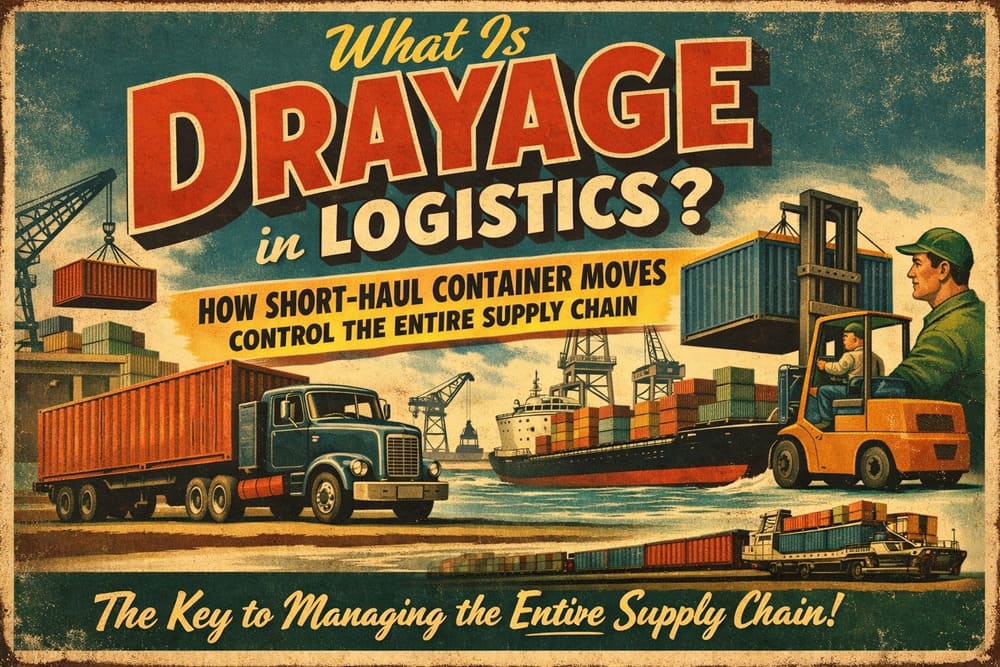
What is drayage in logistics? For many shippers, the term sounds simple — short-distance trucking between ports, rail terminals, and nearby facilities. However, in modern container logistics, drayage is one of the most critical and failure-prone links in the entire supply chain.
In 2026, containers rarely get delayed on the ocean alone. Instead, they get stuck at ports, rail ramps, and terminals because drayage capacity, chassis availability, appointment systems, and terminal congestion are out of sync. As a result, understanding drayage is no longer optional for shippers — it is essential for controlling cost, time, and risk.
This guide explains what drayage is in logistics, how it actually works in real-world operations, why it causes delays, and how shippers can manage drayage more effectively in today’s container environment.
What Is Drayage? A Clear, Practical Definition
Drayage refers to the short-distance transportation of shipping containers, usually over distances ranging from a few kilometres to roughly 50–100 kilometres. Drayage moves connect major transport modes such as ocean vessels, rail networks, warehouses, cross-dock facilities, and distribution centres.
In simple terms, drayage is the movement that allows containers to enter or exit long-haul transportation. Without drayage, containers cannot leave ports, reach rail terminals, or be delivered to nearby facilities.
Although drayage covers short distances, it operates under strict time constraints, regulatory requirements, and terminal rules. Therefore, it often determines whether a container moves smoothly or becomes delayed.
What Is Drayage in Logistics?
When shippers ask what is drayage in logistics, they are really asking how short-haul trucking fits into a complex intermodal system. Drayage acts as the physical bridge between:
- Ocean ports and inland warehouses
- Rail terminals and distribution centres
- Terminals and transload facilities
- Ports and empty container depots
Unlike long-haul trucking, drayage is tightly coupled with terminal operations. Drivers must work within port appointment windows, terminal cut-off times, and chassis pool availability. As a result, drayage performance directly affects container dwell time and overall transit speed.
Why Drayage Is the Bottleneck of Modern Container Logistics
In 2026, drayage has become a primary bottleneck for several reasons.
First, port congestion continues to restrict gate throughput. Even when vessels unload on time, limited appointment slots delay container pickup. Second, chassis shortages disrupt container movement, especially in peak seasons. Third, rail terminal congestion slows container interchange between rail and truck.
Moreover, labour availability and stricter compliance requirements add further pressure. Consequently, drayage failures cascade into demurrage, detention, missed rail departures, and downstream delivery delays.
Types of Drayage in Container Shipping
Drayage is not a single service. Several distinct drayage types exist, each with its own operational challenges.
Port Drayage
Port drayage moves containers between marine terminals and nearby warehouses, rail yards, or transload facilities. This is the most common drayage type for import containers.
Port drayage often involves:
- Terminal appointment scheduling
- Chassis pickup and return
- Compliance with port security rules
- Tight free-time windows
Rail Drayage
Rail drayage connects intermodal rail terminals with nearby warehouses or distribution centres. It is essential for inland container delivery after long-haul rail transport.
Rail drayage challenges include terminal congestion, equipment availability, and synchronization with train arrivals.
Intermodal Drayage
Intermodal drayage refers to container moves between different transport modes, such as port-to-rail or rail-to-truck transfers. These moves are highly time-sensitive because missing a transfer window often results in multi-day delays.
Expedited and Time-Critical Drayage
Expedited drayage is used when containers must move immediately to avoid penalties or production shutdowns. This service typically costs more but reduces exposure to demurrage and detention.
What Is Container Drayage?
Container drayage is the specialized handling of intermodal shipping containers, most commonly 20ft and 40ft units. Unlike general freight trucking, container drayage requires dedicated equipment such as chassis, container locks, and terminal access credentials.
Container drayage frequently involves:
- Chassis management
- Empty container returns
- Bonded movements for customs-controlled cargo
- Strict compliance with port and rail regulations
Because of these requirements, container drayage demands operational expertise rather than generic trucking capacity.
Drayage Trucking vs Long-Haul Trucking
| Feature | Drayage Trucking | Long-Haul Trucking |
|---|---|---|
| Distance | Short (10–100 km) | Long (100+ km) |
| Time per move | Hours | Days |
| Equipment | Chassis + container | Dry van, reefer, flatbed |
| Scheduling | Appointment-based | Route-based |
| Risk exposure | Terminal delays | Weather, traffic |
Drayage trucking is less about mileage and more about timing, access, and coordination. As a result, experience at specific terminals matters more than fleet size alone.
How Drayage Impacts Cost, Delays, and Penalties
Poor drayage performance leads directly to higher logistics costs. When containers are not picked up on time, demurrage charges accrue at ports. When containers are not returned promptly, detention fees apply. Missed rail departures create storage charges and rescheduling costs.
In addition, production delays and inventory shortages often result from drayage failures rather than ocean transit issues. Therefore, drayage should be treated as a cost-control function, not just a local trucking task.
Common Drayage Failures Shippers Face
The most frequent drayage problems include:
- Missed port or rail appointments
- Chassis unavailability
- Terminal congestion and long queue times
- Incomplete or incorrect documentation
- Poor communication between carriers
Each of these failures increases dwell time and disrupts downstream delivery plans.
How to Reduce Drayage Risk in 2026
Effective drayage management focuses on prevention rather than recovery.
| Risk Area | How the Problem Appears | Mitigation Strategy |
|---|---|---|
| Port congestion | Containers sit at terminal | Book appointments early |
| Chassis shortages | No equipment available | Secure chassis in advance |
| Missed rail connections | Multi-day delays | Align drayage with train schedules |
| Documentation errors | Customs holds | Validate paperwork before pickup |
| Communication gaps | Missed updates | Use centralized dispatch |
Who Needs Professional Drayage Services?
Professional drayage services are essential for:
- Importers managing containerized freight
- Exporters shipping through ports
- 3PLs and freight forwarders
- Manufacturers with just-in-time inventory
- Retailers replenishing distribution centres
Any operation that relies on container flow through ports or rail terminals depends on reliable drayage.
Drayage Services in Canada
In Canada, drayage plays a critical role at major gateways such as Vancouver, Toronto, Montreal, Halifax, and inland rail hubs. These markets face unique challenges related to congestion, weather, and infrastructure constraints.
Working with an experienced container transport company that understands local terminal conditions significantly improves drayage performance.
Final Thoughts
So, what is drayage in logistics? It is the short-haul container movement that determines whether the entire supply chain flows or stalls.
In 2026 and beyond, drayage is not a minor operational detail. It is a strategic control point for cost, reliability, and speed. Shippers who understand drayage and manage it proactively gain a measurable competitive advantage in container logistics.
Need Drayage Support in Canada?
If your containers are moving through ports or rail terminals, reliable drayage is what prevents dwell time from turning into demurrage, detention, missed connections, and delivery delays.
Metropolitan Logistics supports drayage operations across major Canadian gateways. We can help you:
- Coordinate port and rail drayage pickups and deliveries
- Plan around terminal appointments, congestion, and cutoffs
- Manage chassis and equipment requirements
- Reduce delay risk with clear, practical execution
📞 Phone: +1 (365) 829 5000
✉️ Email: service@metropolitanlogistics.ca
Share your terminal, container type, and destination, and our team will outline the most practical next steps based on current conditions.