Transit times in Canadian freight: complete 2026 reference by mode and route

transit times in Canadian freight

Transit time — the duration between cargo pickup and final delivery — is the single most consequential variable in Canadian logistics planning. It determines inventory buffer requirements, demurrage exposure, customer commitment dates, and ultimately the total cost of a shipment. However, transit time in Canada is not a simple number. It varies significantly by mode, route, season, and current infrastructure conditions at specific ports and rail terminals. This guide provides a complete 2026 reference for domestic and international transit benchmarks across all major freight modes, explains the key delay factors active in the current market, and points to the detailed resources available for each service type.

What transit time actually measures — and what it does not

Transit time refers to the movement period from when a carrier takes possession of freight to when it is delivered to the consignee. However, it does not include the time before pickup — booking lead time, documentation preparation, customs pre-clearance — nor the time after delivery for unloading, inspection, or processing. In practice, shippers planning supply chains need to account for all three segments:

  • Pre-transit: booking lead time (1–14 days depending on mode and season), document preparation, customs filing
  • Transit: the movement period covered in this guide
  • Post-transit: terminal dwell at destination, customs release, last-mile drayage, unloading

In Canada’s intermodal network — where most international freight travels by ocean or air to a gateway port, then by rail or truck inland — the post-transit segment is often where delays accumulate. Consequently, a shipment with a published 7-day rail transit from Vancouver to Toronto can take 14–20 days from port arrival to warehouse delivery when terminal dwell and drayage scheduling are factored in.

Domestic freight transit times by mode — 2026 benchmarks

The benchmarks below represent normal operating conditions in 2026. Add the delay buffers described in the next section for winter shipping, port-adjacent moves, and peak-season bookings.

FTL (Full Truckload) — direct truck

FTL uses a dedicated trailer moving directly from origin to destination with no intermediate stops or terminal transfers. It is the fastest ground mode for most routes and the least variable — a single driver team handles the load from pickup to delivery. Single-driver FTL is subject to Hours of Service (HOS) regulations requiring mandatory rest periods, which adds time on longer corridors.

RouteDistance (km)FTL single driverFTL team drivers
Toronto – Montreal5401–2 days1 day
Toronto – Ottawa4501 day1 day
Toronto – Calgary2,7004–5 days3–4 days
Toronto – Vancouver4,4005–6 days4–5 days
Montreal – Halifax1,1002–3 days1–2 days
Vancouver – Calgary1,0502–3 days1–2 days
Calgary – Edmonton3001 day1 day
Toronto – Winnipeg2,1003–4 days2–3 days

FTL times assume standard dry van. Reefer, flatbed, and oversized loads may add 1–2 days for equipment sourcing and permit processing. Winter conditions on mountain routes (Vancouver–Calgary) can add 1–2 days.

LTL (Less-than-Truckload) — shared trailer with terminal transfers

LTL freight shares trailer space with other shippers’ cargo and moves through a hub-and-spoke terminal network. Each terminal transfer adds time compared to direct FTL. As a result, LTL transit times are typically 1–3 days longer than FTL on the same lane, and variability is higher because consolidation schedules and terminal throughput affect departure timing. For a detailed breakdown of when to choose LTL versus FTL on Canadian routes, see the ground freight forwarding Canada service page.

RouteLTL transit timeKey variable
Toronto – Montreal1–2 daysTerminal cutoff timing
Toronto – Ottawa1–2 daysFrequency of direct service
Toronto – Calgary5–7 daysWinnipeg hub consolidation
Toronto – Vancouver5–8 daysMultiple terminal transfers
Montreal – Halifax3–4 daysAtlantic corridor frequency
Vancouver – Calgary2–3 daysMountain weather Nov–Mar
Toronto – Winnipeg3–4 daysPrairie network density

LTL times add 1–3 business days to FTL benchmarks on most routes. Same-day cutoff missed at origin terminal adds one full day before next departure.

Intermodal rail (CN / CPKC) — container on flatcar

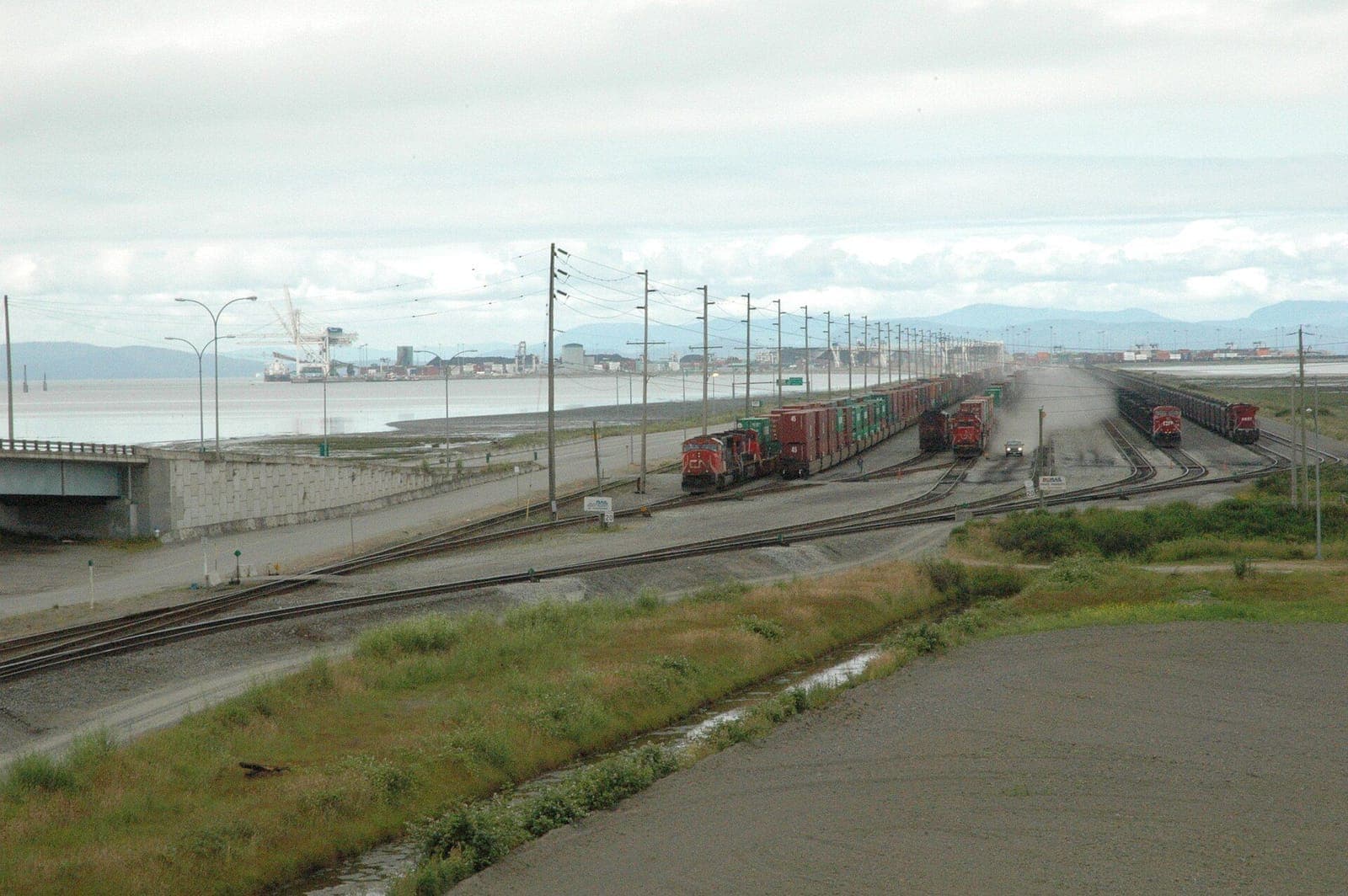
Intermodal rail moves containers on flatcars between CN and CPKC terminal networks, with truck drayage handling the first and last mile at each end. Rail is typically 15–25% cheaper than FTL on corridors over 1,500 km and offers lower carbon footprint — however, transit times are longer and fixed rail schedules reduce flexibility compared to trucking. Under normal operating conditions, intermodal rail benchmarks on key Canadian corridors are as follows:

RouteRail transit (port-to-port)Door-to-door incl. drayagePrimary rail operator
Vancouver → Toronto5–8 days7–12 daysCN (MacMillan Yard)
Vancouver → Calgary2–3 days4–6 daysCPKC (Calgary LP)
Vancouver → Montreal6–9 days8–14 daysCN
Toronto → Vancouver5–8 days7–12 daysCN / CPKC
Toronto → Calgary4–6 days6–10 daysCPKC (CP Vaughan)
Montreal → Calgary5–7 days7–11 daysCN / CPKC
Halifax → Toronto3–5 days5–8 daysCN

Door-to-door times include origin drayage (1–2 days) and destination drayage (1–2 days) added to rail transit. In Q1 2026, rail dwell times at Vancouver have been running 7–20 days above normal due to railcar shortages and vessel bunching — add buffer accordingly on Vancouver-origin moves. For a full comparison of rail versus truck by route, see the how intermodal transportation works guide.

International freight transit times — 2026 benchmarks

Ocean freight to Canadian ports

Ocean freight transit is measured port-to-port, from vessel departure at origin to vessel arrival at the Canadian port. Post-arrival processing — customs clearance, terminal release, and drayage to the consignee’s warehouse — adds a further 3–10 days under normal conditions, and significantly more during periods of port congestion.

Origin regionDestination portPort-to-port transitDoor-to-door est. (normal)
China / East AsiaVancouver / Prince Rupert14–22 days20–35 days
China / East AsiaMontreal / Halifax28–38 days (via Panama)35–50 days
Europe (North)Montreal10–16 days16–24 days
Europe (North)Halifax9–14 days15–22 days
U.S. East CoastMontreal / Halifax3–6 days coastal7–12 days
Southeast AsiaVancouver18–26 days24–38 days
India / South AsiaVancouver / Montreal22–32 days28–42 days

Port-to-port times are carrier schedule benchmarks. In Q1–Q2 2026, Vancouver rail dwell post-arrival is averaging 15–20+ days due to railcar shortages and vessel bunching — shippers routing to Toronto or Calgary via Vancouver should add 2–3 weeks to the door-to-door estimate above. For full ocean freight routing and documentation details, see the ocean freight forwarding Canada page.

Air freight to Canadian airports

Air freight is the fastest mode and carries the lowest transit variability of any option. It is the correct choice for time-sensitive cargo, high-value goods, or shipments that cannot absorb the risk of ocean or rail delays. The primary Canadian air cargo gateways are Toronto Pearson (YYZ), Vancouver International (YVR), and Montreal-Trudeau (YUL). For air freight booking and service details, see the air freight forwarding Canada page.

Origin regionCanadian gatewayFlight transitDoor-to-door est.
U.S. (any major hub)YYZ / YVR / YULSame day – 1 day1–3 days
Europe (major hubs)YYZ / YUL1 day2–4 days
China / East AsiaYVR / YYZ2–3 days3–6 days
Southeast AsiaYVR / YYZ2–4 days4–7 days
India / South AsiaYYZ / YUL2–3 days3–6 days
Latin AmericaYYZ1–3 days3–7 days

Door-to-door includes customs clearance (typically 1–2 days at Canadian airports) and last-mile delivery. Pharmaceutical, controlled, and oversized shipments require additional documentation that can extend clearance time.

Cross-border Canada–U.S. trucking

Cross-border moves between Canada and the U.S. add customs processing to standard trucking transit times. PARS (Pre-Arrival Review System) for Canadian exports and PAPS (Pre-Arrival Processing System) for U.S. imports allow pre-clearance before the truck reaches the border, reducing border wait time to 1–4 hours under normal conditions. Without pre-clearance, border delays of 4–8 hours or more are possible during peak periods at Windsor, Fort Erie, and Niagara crossings.

RouteFTL transit (including border)Key border crossing
Toronto – Detroit / Chicago1–2 daysWindsor / Ambassador Bridge
Toronto – New York1–2 daysFort Erie / Peace Bridge
Toronto – Miami3–4 daysFort Erie, then I-95
Vancouver – Seattle / Portland1 dayPeace Arch / Pacific Highway
Vancouver – Los Angeles2–3 daysPacific Highway
Montreal – Boston / New York1–2 daysLacolle / Champlain
Calgary – Denver / Dallas2–3 daysCoutts / Sweetgrass

Cross-border FTL times assume PARS/PAPS pre-clearance filed before departure. Add 4–8 hours for border processing without pre-clearance. In 2026, increased CBSA and CBP inspection activity at Windsor and Pacific Highway crossings is adding 1–3 hours to average processing times versus 2025 benchmarks.

2026 delay factors: what is extending transit times right now

Understanding published transit benchmarks is only half the picture. In 2026, several structural and seasonal factors are actively extending real-world transit times beyond those benchmarks on specific corridors. Planning without accounting for these factors leads to missed delivery commitments and unexpected demurrage charges.

Vancouver port and rail congestion

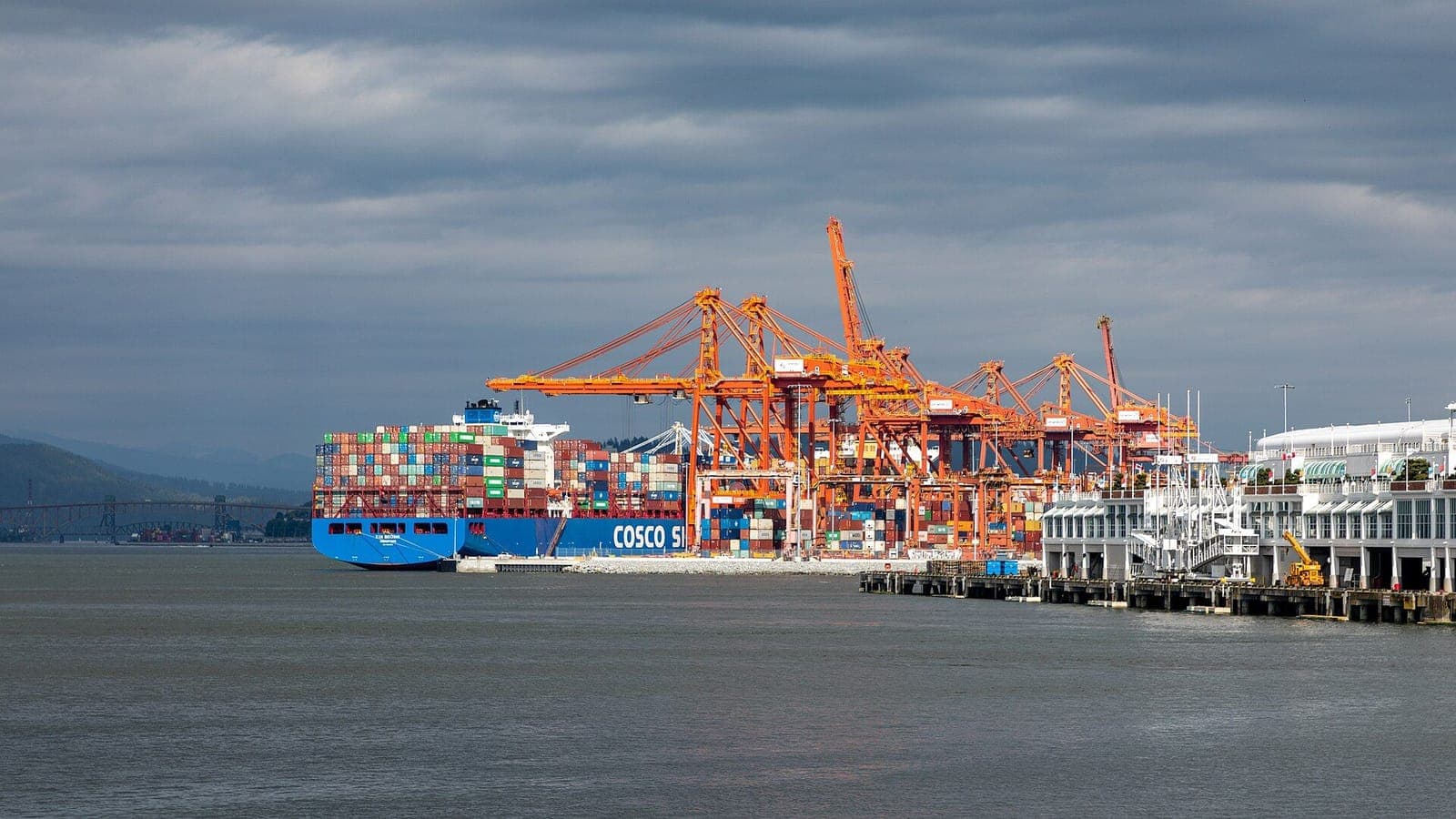
Vancouver has experienced significant rail dwell time increases through Q1 2026, driven by vessel bunching, railcar shortages, and terminal capacity running above 100% utilization. Container dwell times at Vancouver have averaged 15–20 days in early 2026, compared to a normal baseline of 5–7 days. Approximately 25% of vessels calling at Vancouver have been waiting for berths, with some ships experiencing delays exceeding 16 days. For shippers routing through Vancouver, the practical implication is that door-to-door transit from Asia to Toronto or Calgary is running 3–4 weeks longer than the port-to-port vessel schedule suggests.

This directly affects container drayage scheduling at the terminal — containers sitting in the yard accumulate demurrage at $150–$300 per container per day at Vancouver terminals. For detail on how demurrage and detention are triggered and how to reduce exposure, see the demurrage and detention in Canada guide.

Halifax rail dwell times

Halifax has been experiencing import rail dwell times averaging 18 days in early 2026, with some containers waiting up to 30 days for rail release due to high ground counts and labour constraints at PSA Atlantic Hub. CN and PSA are actively working to increase rail productivity at Halifax, but the situation remains elevated above historical norms. Shippers routing Atlantic Canada imports via Halifax should plan for 25–35 day door-to-door transit from Europe and add explicit buffer time before downstream production or distribution deadlines.

CN and CPKC winter operating restrictions

Both CN and CPKC implement winter operating plans each year that include shorter train lengths and speed restrictions in extreme cold. These measures, while necessary for safety, reduce rail capacity and increase terminal dwell times across the national network from December through March. In 2026, railcar shortages compounded by winter plans have extended transit times by 3–7 days on several east-west corridors compared to summer benchmarks. The most affected lanes are those transiting through Manitoba and Saskatchewan in January and February. For a full breakdown of how intermodal rail operates and where delays originate, see the intermodal transportation guide.

Chassis shortages at inland terminals

Chassis — the wheeled frames used to move containers by truck — remain in short supply at several CN and CPKC inland terminals in 2026, particularly during peak season. When chassis are unavailable, containers released from the rail terminal cannot be picked up by drayage carriers, extending dwell time and triggering detention charges even when the shipper’s documentation is in order. This is one of the most common causes of unexpected cost overruns on intermodal shipments. Understanding the distinction between drayage, cartage, and intermodal helps shippers identify where in the chain a delay is occurring — see the drayage vs cartage vs intermodal vs transloading guide for a full breakdown.

Customs and CBSA processing

CBSA customs clearance typically adds 1–2 days to international shipments under normal conditions. However, CBSA examination rates have increased in 2026 on certain cargo categories and origin countries, extending clearance to 3–5 days when an examination is triggered. Pre-clearance through PARS/PAPS for cross-border trucking and advance electronic filing for ocean and air cargo reduces examination exposure but does not eliminate it. For a step-by-step explanation of the freight forwarding process including customs coordination, see the how freight forwarding works in Canada guide.

How transit time affects shipping costs

Transit time is not just a delivery planning variable — it directly drives cost in four ways that accumulate quickly on delayed shipments.

Demurrage and detention

Demurrage charges apply when a container remains at a port or rail terminal beyond the free-time allowance — typically 3–5 days at Canadian terminals. In 2026, standard demurrage rates at Vancouver and Halifax terminals run $150–$300 per container per day, reaching $250–$500 per day after the first tier. Detention applies when a carrier’s chassis or equipment is held beyond the allowed time at a shipper or consignee’s facility. Together, these charges can exceed the original freight cost on a single delayed shipment. For scenarios showing how these charges accumulate, see the demurrage and detention in Canada guide.

Inventory carrying costs

Every additional day in transit represents inventory that cannot be sold, processed, or distributed. For importers operating on just-in-time schedules, a 5-day rail delay at Vancouver can trigger airfreight expediting costs — often 5–10x the original ocean freight rate — to avoid a production stoppage.

Expediting premiums

When shipments miss their planned transit window, shippers often escalate to a faster mode: FTL instead of LTL, air freight instead of ocean, or expedited drayage instead of standard scheduling. These escalations carry significant premium costs that erode the original cost savings achieved by booking the slower mode. Planning accurate buffers into the original booking reduces the frequency of these escalations.

Fuel surcharges on longer transit

Most Canadian carriers apply fuel surcharges as a percentage of the base rate — currently 10–18% on trucking and 8–15% on rail in 2026. A shipment that takes 12 days due to congestion instead of the planned 7 days does not automatically cost more in fuel surcharges per se, but expediting and re-routing to recover the delay does. Additionally, detention and storage charges accumulate as direct costs during extended transit.

How to reduce transit time risk on Canadian shipments

  1. Book capacity 2–3 weeks in advance on peak corridors (Vancouver–Toronto, Toronto–Calgary) to secure departure slots and chassis availability.
  2. File customs documentation before cargo arrives at the port or border — PARS/PAPS pre-clearance for cross-border, advance electronic filing for ocean and air. This reduces examination hold risk and speeds release.
  3. Use pre-pull drayage at Vancouver and Halifax when terminal dwell times are elevated — pulling the container from the terminal before free time expires avoids demurrage even if the consignee is not ready to receive.
  4. Diversify entry ports: routing Asia-origin containers to Prince Rupert instead of Vancouver adds 2–3 days of vessel transit but can save 7–14 days of terminal dwell during Vancouver congestion periods.
  5. Add explicit buffer time in production and distribution schedules during Q1 (January–March), when winter rail operating restrictions and post-holiday volume surges consistently extend transit times across the national network.
  6. Work with a freight forwarder who monitors terminal dwell times actively — proactive re-routing before a delay compounds is significantly cheaper than reacting after demurrage has already started accumulating.

How Metropolitan Logistics manages transit time across Canada

Metropolitan Logistics coordinates freight across all modes — intermodal container drayage from CN and CPKC terminals, domestic ground freight by LTL and FTL, ocean freight forwarding through Vancouver, Montreal, and Halifax, and air freight through Pearson, Vancouver, and Montreal — with active monitoring of terminal dwell times and rail network conditions. Warehouse and transload facilities in Brampton, Mississauga, Montreal, Vancouver, and Calgary enable pre-pull, cross-docking, and container repositioning when terminal delays threaten delivery commitments.

Detailed guides by topic

Need accurate transit time planning for a Canadian shipment in 2026? Metropolitan Logistics provides routing advice, current terminal dwell data, and itemised quotes for all modes across Canada.

Request a freight quote with transit time estimate →

Frequently asked questions

How long does freight shipping take across Canada in 2026?

Transit time depends entirely on mode and route. FTL truck from Toronto to Vancouver takes 5–6 days. LTL on the same route takes 5–8 days. Intermodal rail takes 7–12 days door-to-door. Short domestic routes such as Toronto–Montreal run 1–2 days by FTL. International ocean freight from China to Vancouver takes 14–22 days port-to-port, with door-to-door extending to 20–35 days when drayage and customs are included. In Q1 2026, Vancouver rail dwell delays are adding 2–3 weeks above these benchmarks on intermodal moves.

Why are transit times at Vancouver longer in 2026?

In early 2026, Vancouver port is experiencing rail dwell times of 15–20+ days due to vessel bunching, railcar shortages, and terminal capacity above 100%. CPKC and CN winter operating plans — including shorter trains and speed restrictions — have compounded the situation. Approximately 25% of vessels are waiting for berths on arrival. Shippers routing through Vancouver should add 2–3 weeks buffer to published vessel transit times for door-to-door planning.

What is the difference between transit time and lead time in freight?

Transit time is the carrier’s movement period — from pickup to delivery. Lead time is the total time from when a shipment is initiated (booking, documentation, customs filing) to when it arrives at the final destination. Lead time always exceeds transit time and is the figure that matters for supply chain planning. On a typical ocean shipment from China to Toronto, vessel transit is 14–22 days, but total lead time from booking to warehouse delivery is 35–55 days when pre-shipment preparation, port dwell, customs clearance, and drayage are included.

How does drayage affect total freight transit time?

Drayage — the short-haul truck move between a port or rail terminal and the consignee’s warehouse — typically adds 1–3 days to total transit on each end of an intermodal shipment. During periods of terminal congestion or chassis shortage, drayage scheduling can add 5–10+ days. Because drayage is the last step before delivery, it is also the most visible source of delay to the shipper. For a detailed explanation of how drayage fits into the full intermodal chain, see the how drayage works in Canada guide.

What is the fastest way to ship freight across Canada?

FTL with a team driver (two drivers sharing rest cycles) is the fastest ground option, delivering Toronto to Vancouver in 4–5 days. Air freight is faster for international cargo — Asia to Toronto Pearson in 3–6 days door-to-door — but at significantly higher cost. For domestic shipments where speed is critical and the volume does not justify FTL, expedited LTL service reduces transit time by 1–2 days over standard LTL through priority terminal handling.

    Get Your Quote in 1–3 Hours

    Reply in 1–3 hours. No obligation.