Commercial · Rail + road, coast to coast

Intermodal Logistics: Rail and Truck Container Transport from Toronto

Intermodal logistics means one container, several modes: a truck takes it to the rail terminal, a train carries it across the country, a truck delivers it at the other end, and the cargo inside is never touched between the two docks. It is how almost every ocean container reaches Toronto, and it is the cheapest way to move a full container load across Canada.

We sit at the truck end of that system every day: our tractors work CN Brampton and CPKC Vaughan constantly, and our warehouse is minutes from both. For cross-country moves we book the rail linehaul on CN or CPKC, run the Toronto legs ourselves, and arrange delivery at the far end. One price, one point of contact.

Rail carriers
CN and CPKC, from their GTA intermodal terminals
Lanes
Toronto ↔ Montreal, Winnipeg, Calgary, Edmonton, Vancouver, Halifax
Toronto truck legs
Our own tractors, chassis and warehouse dock
Equipment
20′, 40′ and 45′ ISO containers; 53′ domestic units

What intermodal transportation actually means

Intermodal transportation moves freight in one standardized container across two or more modes — truck, rail, sometimes ship — without handling the cargo itself at the changeovers. The container is the unit: it is lifted from a chassis to a railcar and back, but nobody opens the doors between origin and destination. That is the whole trick, and it is why intermodal wins on long distances: on the long Canadian lanes, railing a 40′ or 53′ container typically prices 25 to 30 percent below trucking the same freight, and it usually stays cheaper even after the drayage from the terminal to the door is counted at both ends.

In Canada the system runs on two railways, CN and CPKC, and their intermodal terminal networks: Brampton, Vaughan and Malport in the GTA, then Montreal, Moncton and Halifax to the east, Winnipeg, Regina, Saskatoon, Calgary, Edmonton, Vancouver and Prince Rupert to the west. Nearly every ocean container destined for Toronto arrives on that rail network, and most full-container freight between Ontario and the West rides it too — the 401 is simply too long a drive to compete on price. If the vocabulary is new, our plain-language guide to drayage explains the truck half of the system.

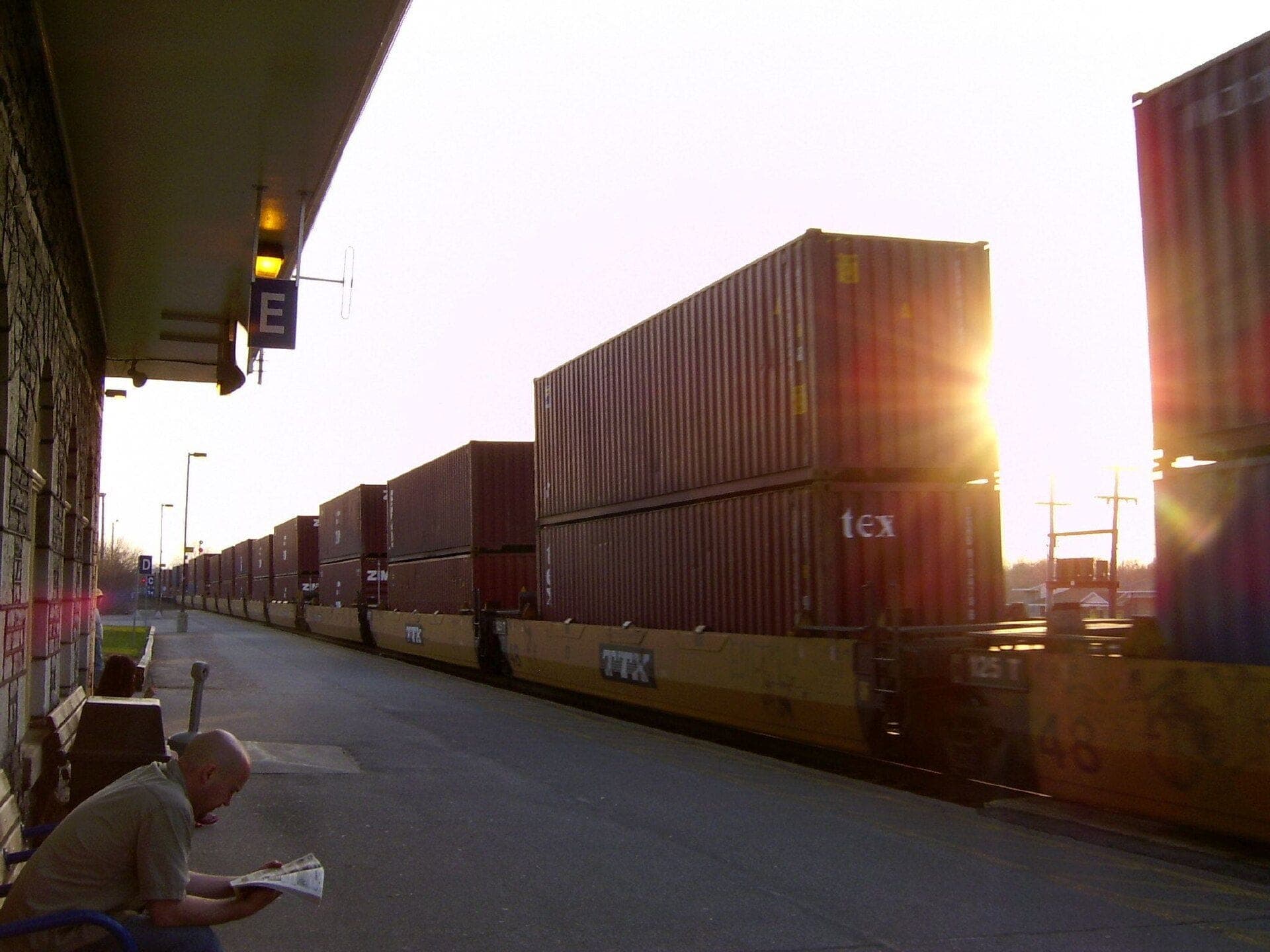
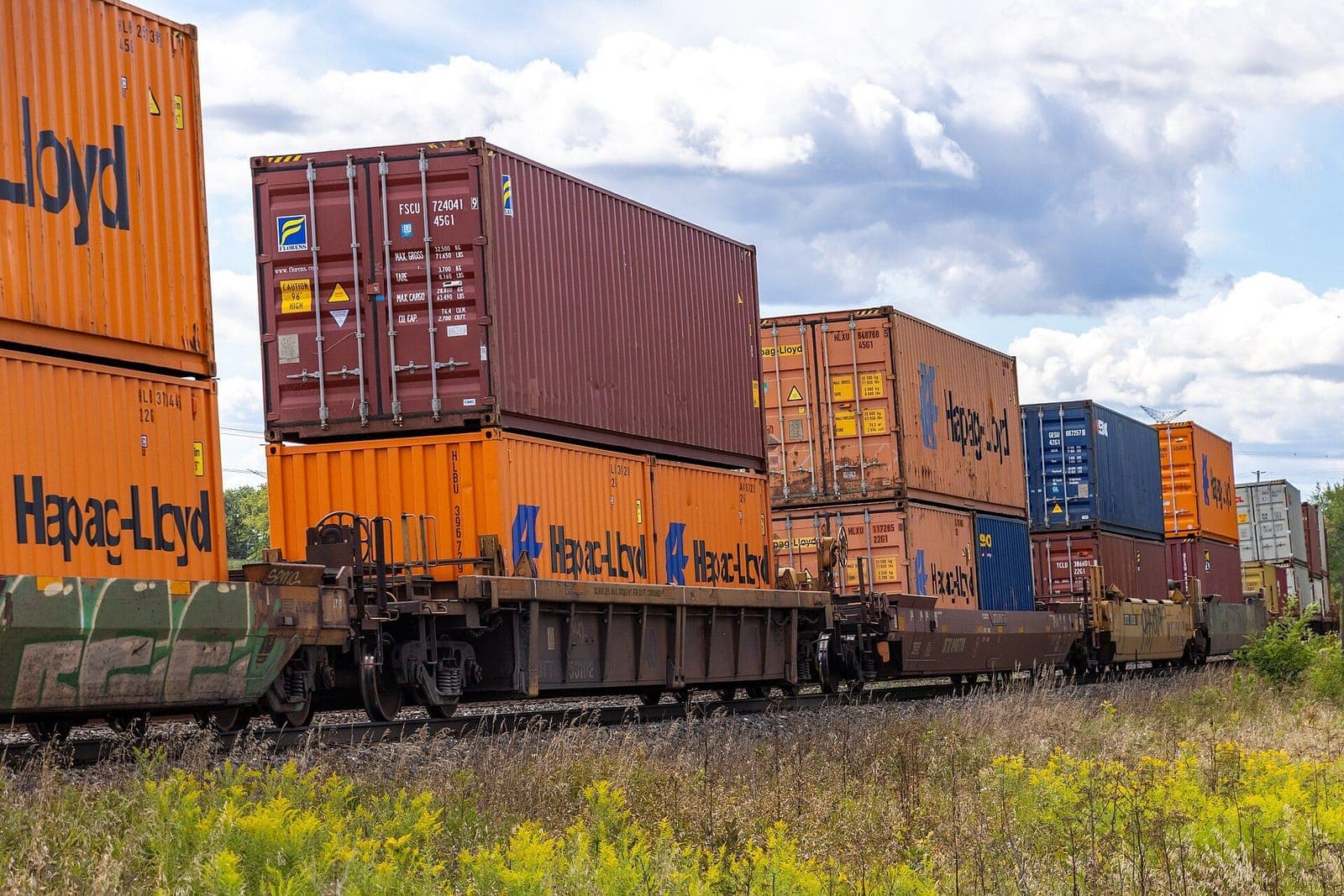
Mixed ocean containers double-stacked on intermodal well cars
The unit of intermodal: containers ride the well cars double-stacked, and the freight inside is never touched between docks.

Toronto is an intermodal city, and we are built around its terminals

You cannot run intermodal logistics from a spreadsheet: the timing lives at the terminals, and the terminals do not wait. Our warehouse sits about 15 minutes from CPKC Vaughan and 30 from CN Brampton, our tractors are at their gates every working day for container drayage, and our dock does the physical work an intermodal move needs on either side of the train ride — container loading and unloading by our own lumper crews, transloading between containers and trailers, palletizing, storage, and straight-truck delivery across the GTA.

That matters most when something slips. A train arrives late, a dock appointment dies, free time starts burning: because the trucks, the yard and the warehouse are ours, the container comes off the terminal clock and waits on our floor instead of on a demurrage invoice.

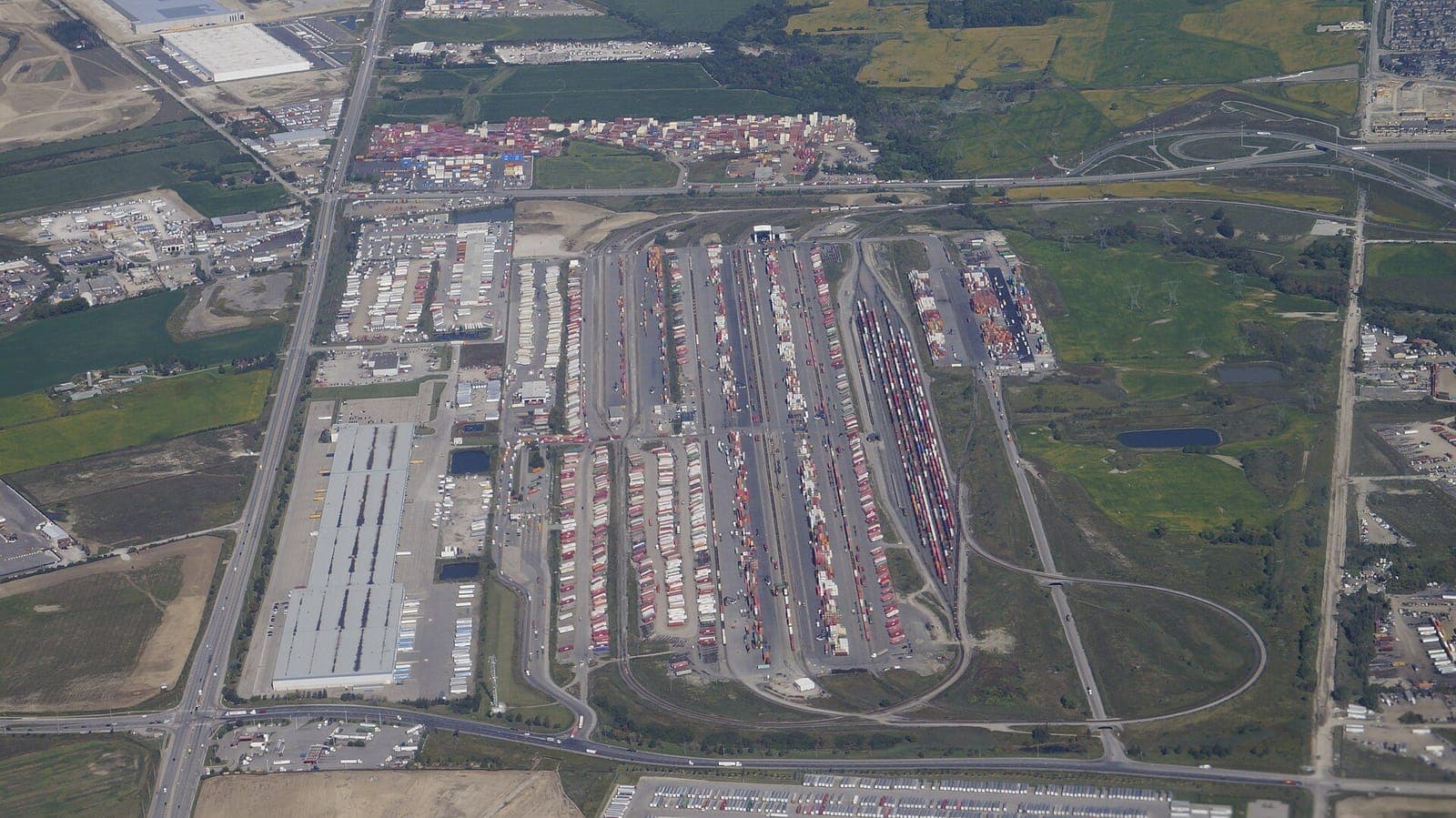
Aerial view of a large rail intermodal terminal with rows of containers
An intermodal terminal from above: rows of grounded containers between the road gates and the tracks.

What we are honest about

Nobody who sells intermodal owns the trains — the linehaul rides CN or CPKC, full stop, and any intermodal transportation company claiming otherwise is renting the same railcars we are. What is genuinely ours: the tractors, chassis, crews and warehouse working the Toronto end of every move. At the destination end of a cross-country lane, pickup and delivery run on local drayage partners we have vetted, booked and scheduled by us and answering to us. Cross-border freight to the U.S. is a different service that moves by road, and single pallets that do not fill a container are cheaper as regular LTL trucking — we will tell you when intermodal is the wrong answer.

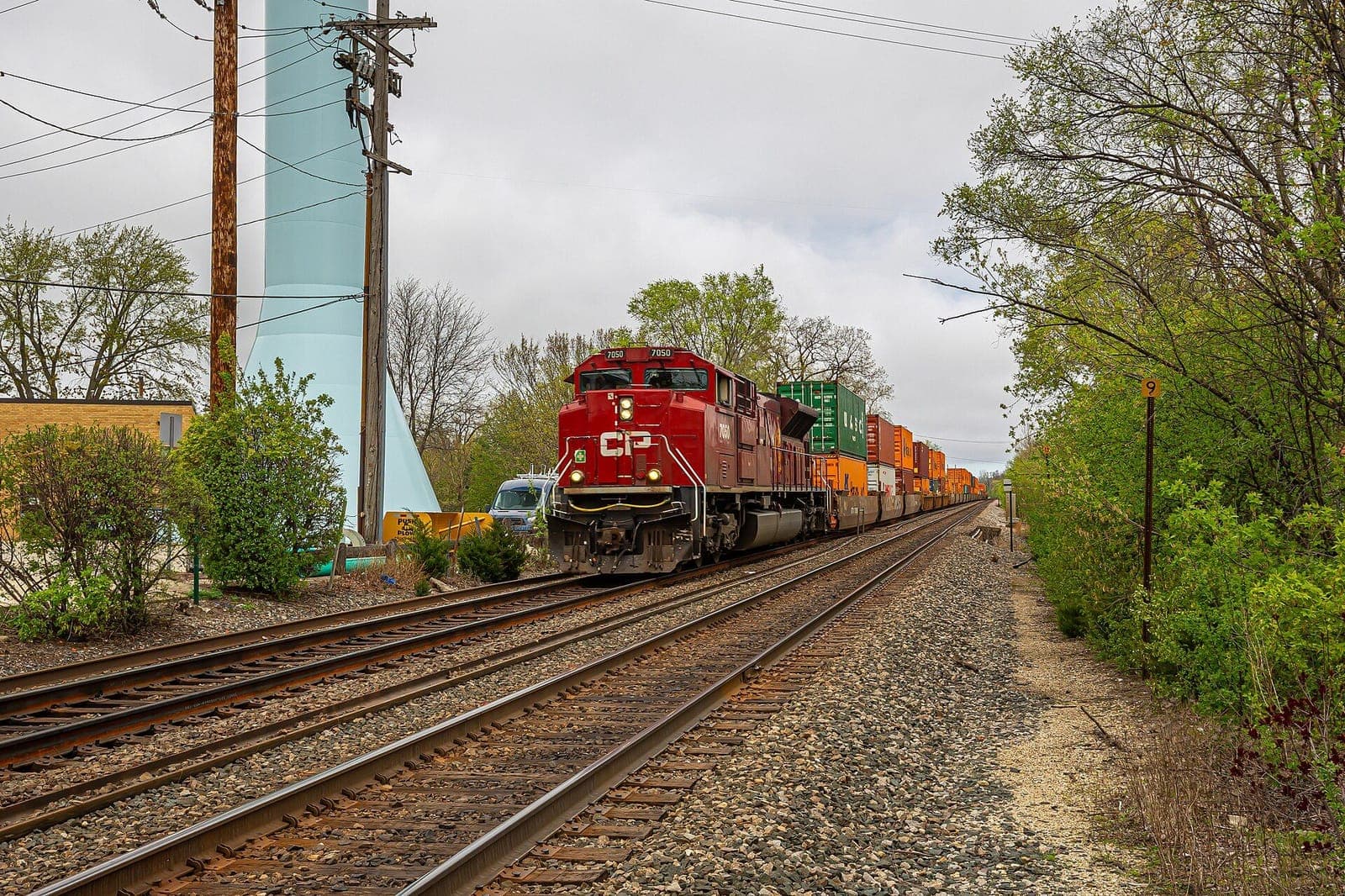
CPKC locomotive leading a double-stacked intermodal container train
The linehaul belongs to the railways: a CPKC locomotive on the head end of a double-stacked intermodal train.

Import & export

Two kinds of intermodal moves, one dispatch desk

Intermodal freight transport comes in two flavours in Canada: ocean containers riding rail between a port and an inland terminal, and domestic containers crossing the country between cities. We handle both — the difference is who books the train.

Ocean intermodal — import & export ISO containers

Your 20′, 40′ or 45′ ocean box rides CN or CPKC between the port and the GTA. We take over the moment it grounds — or get it to the train before cut-off.

  1. Step 1

    Vessel discharges at Vancouver, Prince Rupert, Montreal or Halifax and the container is loaded onto a CN or CPKC train.

  2. Step 2

    The box grounds at CN Brampton or CPKC Vaughan and our tractor picks it up the day it releases.

  3. Step 3

    Delivered to your dock — live, dropped, grounded, held in our yard or transloaded at our warehouse.

What it includes

  • Rail leg arranged through the ocean carrier or our own forwarding desk
  • Release, customs-status and free-time watch at the inland terminal
  • Terminal pickup on our own tractors and chassis, empty back to the depot
  • Exports in reverse: loaded at your dock or ours, gated in before the rail cut-off
  • Storage, transload and pallet delivery at our North York warehouse when the dock is not ready
Domestic intermodal — containers across Canada

A full container load between Toronto and Western Canada or the Maritimes: rail for the linehaul, trucks at each end, one quote door to door — usually 25 to 30 percent below trucking it.

  1. Step 1

    We supply the container to your dock (or you load at our Toronto warehouse) and gate it in at CN Brampton or CPKC Vaughan.

  2. Step 2

    The train carries it to the destination terminal — Winnipeg, Calgary, Edmonton, Vancouver, Moncton or Halifax.

  3. Step 3

    A local drayage partner we have vetted delivers it to the door, under our booking and our schedule.

What it includes

  • Rail linehaul booked on CN or CPKC intermodal services, both directions
  • Loading at our warehouse — palletizing, blocking and bracing by our own crews
  • Origin drayage on our own tractors; destination drayage by vetted local partners
  • Cut-offs, seals and weights handled so the box actually makes its train
  • One invoice covering rail, both truck legs and the handling in between

How it works

From booking to proof of delivery

  1. 01

    Send the shipment details

    Origin, destination, what the freight is, weight and dates — or just the container number if the box already exists. We confirm the right lane and equipment and quote door to door.

  2. 02

    We plan the mode mix

    Rail linehaul on CN or CPKC, truck legs at each end, loading at your dock or ours. Cut-offs and terminal appointments are booked before anything moves.

  3. 03

    The container makes its train

    Loaded, sealed, weighed and gated in ahead of the cut-off on our own trucks. We track the unit across the rail network and flag delays before they become problems.

  4. 04

    Delivered at the far end

    Our tractor meets an inbound box at the GTA terminal; a vetted partner delivers at the destination city. Empty returned, POD and receipts the same day.

What's included

Everything on the invoice, nothing hidden

  • Door-to-door quote covering rail linehaul, both truck legs and handling
  • Rail booking on CN or CPKC and cut-off management
  • Origin drayage on our own tractors and chassis in the GTA
  • Container loading, palletizing, blocking and bracing at our warehouse
  • Seal, scale weight and documentation before gate-in
  • Rail tracking and proactive delay flags while the unit is on the train
  • Destination delivery by vetted local drayage partners, under our booking
  • Yard holding, transload and storage in Toronto when a dock is not ready

Built for

Who uses this service

  • Ontario shippers moving full container loads to Western Canada or the Maritimes
  • Importers whose ocean containers arrive at CN Brampton or CPKC Vaughan by rail
  • Exporters railing loaded containers to Vancouver, Prince Rupert, Montreal or Halifax
  • Distributors comparing intermodal rail against long-haul trucking on cost
  • Forwarders who need one Toronto partner for the truck legs, the dock work and the rail booking

Service area: GTA & Southern Ontario

TorontoNorth YorkScarboroughEtobicokeVaughanConcordMississaugaBramptonMarkhamRichmond HillPickeringAjaxWhitbyOshawaOakvilleBurlingtonMiltonHamiltonKitchener–WaterlooCambridgeGuelphBarrieNewmarketSt. Catharines / NiagaraLondonPeterboroughBellevilleWindsor

Terminals & ports

The GTA intermodal terminals we work from every day

Every intermodal move through Toronto touches one of these gates. Our trucks are at them daily, and our warehouse is minutes away when a container needs a floor instead of a clock.

  • Rail intermodal · ≈ 30 min

    CN Brampton Intermodal Terminal (BIT)

    Brampton, ON

    CN's Toronto-area hub: ocean containers railed in from Prince Rupert, Vancouver, Halifax and Montreal. Our busiest pickup point.

  • Rail intermodal · ≈ 15 min

    CPKC Vaughan Intermodal Terminal

    Vaughan, ON

    CPKC's GTA hub — the former CP Toronto Intermodal: Vancouver and Montreal corridors, minutes from our North York warehouse.

  • Rail intermodal · ≈ 45 min

    CN Malport Intermodal

    Milton, ON

    CN's GTA-west terminal at the Milton logistics hub, serving Halton, Hamilton and Southwestern Ontario freight.

  • Port · ≈ 25 min

    Port of Toronto

    Toronto, ON

    Great Lakes / St. Lawrence gateway: project cargo, steel, breakbulk and feeder containers.

  • Port · ≈ 60 min

    Port of Hamilton (HOPA)

    Hamilton, ON

    Ontario's busiest port: bulk, breakbulk and project cargo for Southern Ontario.

  • Depot · 15–40 min

    Empty container depots

    Brampton · Mississauga · Vaughan

    Empties go back to the line's designated depot, which is not always the terminal they came from. We track free time and per-diem on every unit.

Our facility

Our warehouse in Toronto

A working dock minutes from the intermodal terminals: containers received live or dropped, freight unloaded by our own crews, storage on our racks, and straight trucks loading for delivery — there whenever a shipment needs it.

Operating warehouse in North York, Toronto
Dock-level receiving, container live-unload or drop, racked and floor storage, staging for outbound.
Lumper crews on staff
Floor-loaded 40′ containers are hand-unloaded, palletized and wrapped by our own people — not day labour.
Straight trucks for delivery
Warehouse-to-door distribution across the GTA & Southern Ontario, including inside and white-glove delivery.
Minutes from the intermodal terminals
≈15 min to CPKC Vaughan, ≈30 min to CN Brampton, ≈25 min to the Port of Toronto — short drays, fewer chassis days.

FAQ

Intermodal Logistics: frequently asked questions

What does intermodal mean in shipping?
Intermodal means the freight travels in one standardized container across more than one mode of transport — typically truck and rail — without the cargo being handled at the changeovers. The container is lifted between chassis and railcar; the doors stay sealed from the origin dock to the destination dock.
What is the difference between intermodal and drayage?
Drayage is the truck portion of an intermodal move — the short haul between a rail terminal or port and a warehouse. Intermodal is the whole journey: drayage at one end, rail in the middle, drayage at the other end. Our drayage page covers the truck leg on its own; this page covers the whole chain.
Which intermodal lanes do you run from Toronto?
Anywhere CN and CPKC run trains, which is effectively every major Canadian city: Montreal, Moncton and Halifax eastbound; Winnipeg, Regina, Saskatoon, Calgary, Edmonton, Vancouver and Prince Rupert westbound. The Toronto end always runs through CN Brampton, CPKC Vaughan or CN Malport, on our own trucks.
How long does a container take from Toronto to Vancouver by rail?
Typically about six to eight days terminal to terminal on CN or CPKC intermodal trains, plus a day or two at each end for the truck legs — call it seven to ten days door to door in normal conditions. Winter weather and peak-season congestion can add time, which is exactly the kind of delay we track and flag while the unit is rolling.
Is intermodal cheaper than trucking?
On long lanes, almost always. Railing a 40′ or 53′ container from Toronto to Calgary or Vancouver typically prices 25 to 30 percent below a truck on the same lane, and it usually stays cheaper once the drayage at both ends — terminal to door on each side — is included in the total. The trade is transit time: rail is days slower than a team-driven truck. Under roughly 800 kilometres the truck usually wins on both counts, which is why our own container trucking covers Southern Ontario and intermodal takes over beyond it.
Can you ship a 53-foot container across Canada?
Yes. Domestic intermodal runs on 53′ containers, which carry roughly 50% more than a 40′ ocean box and match a road trailer's capacity. We arrange the unit, load it at your dock or at our warehouse, and rail it on CN or CPKC with delivery at the far end.
Who does the pickup and delivery at the destination city?
A local drayage carrier we have vetted on that lane, booked and scheduled by us — you deal with our dispatch, not theirs. At the Toronto end, the trucks are our own; that side of the move never leaves our hands.
My ocean container is arriving at a Toronto rail terminal. Is that intermodal too?
It is — the box already made an intermodal journey from the port, and the last leg is the drayage we run daily. Send the container number and we take it from the terminal: picked up when it releases, delivered live or dropped, held in our yard or transloaded at our warehouse if your dock is not ready.

Commercial quote

Get an intermodal quote

Send the origin, destination, freight details and dates — or a container number that already exists. One door-to-door price, rail and both truck legs included, as soon as possible.

  • Itemized pricing — terminal, fuel, chassis and accessorials listed
  • Answered by dispatch during business hours, Mon–Fri
  • Standing rate sheets for recurring volume

Prefer to talk? +1 (365) 829-5000

Terminal, port, city or address

City or address

Container size & count, pallets or pieces, weight, floor-loaded or palletized, hazmat, special handling.

No spam, no lists. Your details go straight to dispatch.