
Private moves · GTA → the U.S.
Moving to the USA from Canada with Cross-Border Movers from Toronto
Moving to the U.S. from Canada is the one international move that needs no ocean: your belongings go by road, cross at Fort Erie or Windsor, and are at your new door in days rather than weeks. The catch is paperwork, because U.S. customs clears household goods against your immigration status, and a shipment that reaches the border before the file is ready sits there on the clock. We pack and load in the GTA and move the shipment with our U.S. partner carriers, who file the entry and deliver in all fifty states.
Below: how the border works, what CBP Form 3299 is, what the move costs by region, and what to leave in Canada.


- Road transit
- 1–3 days to the Northeast & Midwest · 5–10 days to the West Coast & Sun Belt
- Door to door
- 1–3 weeks dedicated truck · 3–5 weeks consolidated
- Customs
- CBP Form 3299 + your visa or status documents; used goods (1+ year) enter duty-free
- Popular destinations
- New York, Florida, California, Texas, Arizona, Illinois
Volume calculator & quote
Get your U.S. moving quote
Tell us your address in the GTA, the state and city you are moving to, your visa or status, and roughly what you are taking. We will book a free survey and send a fixed door-to-door price.
Pick your items and the calculator totals your volume; pick the United States as the destination and a move coordinator prices the route.
How a move from Toronto to the U.S. works
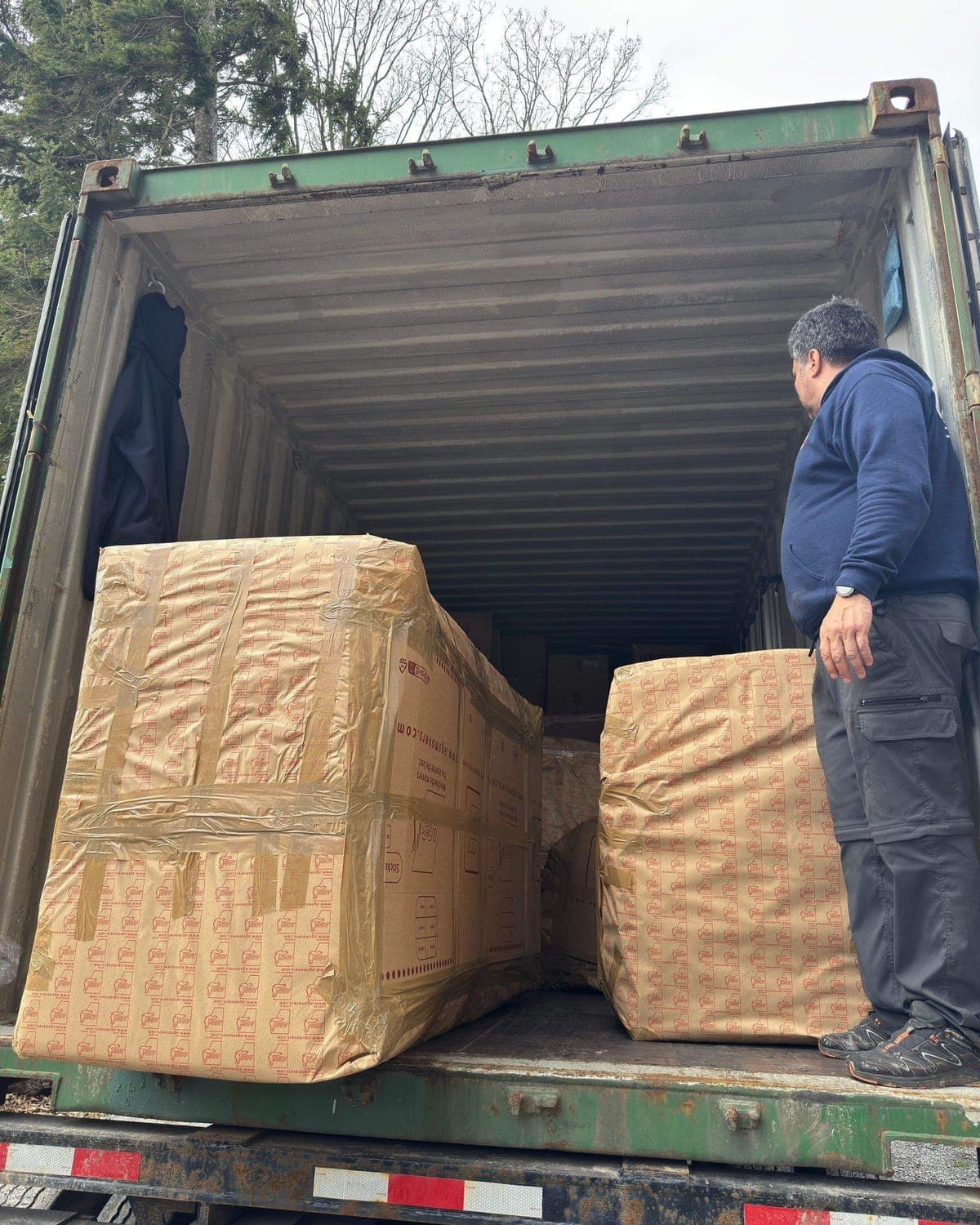
It starts with a survey — in person for a house, by video for a condo — so the quote reflects your real volume, not a bedroom count. On packing day our crew wraps and packs for a long road trip (export-grade cartons, paper, blankets and crates for art, mirrors and the TV) and builds a valued, room-by-room inventory in English, which is the document U.S. customs works from. A full house usually travels on a dedicated trailer that leaves from your driveway; smaller moves are consolidated at our North York warehouse with other U.S.-bound shipments and ride together, which costs less and takes a little longer.
Our U.S. partner carrier — an IAM member — presents the shipment to U.S. Customs and Border Protection at the crossing with your signed Form 3299, supplemental declaration and status documents, or moves it in bond to a customs port near your destination. Once released it is delivered to your new home, unpacked, and the packing material taken away. You do not need to be at the border, but you do need to be admitted to the U.S. in your new status before the goods can clear, and CBP can ask to see you or your documents at the port of entry.
- Free survey (home or video) and fixed door-to-door quote
- Confirm your immigration status and the documents CBP will need
- Packing, crating and the valued inventory at your home in the GTA
- Dedicated trailer from your door, or consolidation at our North York warehouse
- Border crossing at Fort Erie or Windsor, or in-bond to an inland customs port
- Customs entry filed by our U.S. partner with Form 3299 and your status documents
- Delivery to your new home with unpacking and debris removal
CBP Form 3299 and duty-free entry of your household goods
Used household effects — furniture, appliances, clothing, books, kitchenware — that you have owned and used for at least one year enter the United States free of duty, whether you are immigrating, taking up a work assignment or returning as a U.S. citizen. The declaration that claims the exemption is CBP Form 3299, Declaration for Free Entry of Unaccompanied Articles, signed by you and presented with a supplemental declaration and your inventory. Items bought within the last year, and anything new in its packaging, are dutiable at the rate for that product, which is why we ask you to mark recent purchases on the inventory rather than let an inspector find them.
Your immigration status is the other half of the entry. Work-visa holders (TN, H-1B, L-1, O-1, E-2) import their goods for personal use during the stay; green-card holders and U.S. citizens import them as residents. Either way CBP wants to see the passport, the visa or approval notice, the I-94 record or the green card, and a U.S. address. Alcohol is limited by federal and state rules and rarely worth shipping; firearms need an ATF Form 6 import permit approved before the move; and a Canadian-registered car needs EPA Form 3520-1 and DOT Form HS-7 plus proof it meets U.S. standards, which most Canadian-market vehicles do with a manufacturer compliance letter. We go through all of it at the survey.
What a cross-border move costs
Distance and volume set the price. A one-bedroom condo to Boston or New York is a small consolidated shipment; a four-bedroom house to Phoenix is a dedicated 53′ trailer travelling 3,500 km. Beyond that, the cost moves with access at both ends (stairs, elevators, distance from the truck, a building that only allows moves on weekday mornings), the amount of professional packing and crating, storage if the U.S. home is not ready, and the season — June to August is the busiest window on both sides of the border.
Our quotes are door to door and itemize what is included: packing and materials, loading, the road leg, the U.S. customs entry, delivery, unpacking and debris removal. The only items outside the quote are duty on goods that do not qualify for the exemption, a customs exam if CBP selects the shipment, and storage beyond the free period at destination.
| Region | Typical road transit | Usual method | Door to door |
|---|---|---|---|
| Northeast — New York, New Jersey, Massachusetts, Pennsylvania | 1–2 days | Dedicated or consolidated | 1–3 weeks |
| Midwest — Illinois, Michigan, Ohio, Minnesota | 1–3 days | Dedicated or consolidated | 1–3 weeks |
| Southeast — Florida, Georgia, the Carolinas | 3–5 days | Consolidated for small moves | 2–4 weeks |
| Southwest — Texas, Arizona, Colorado | 4–7 days | Consolidated for small moves | 2–4 weeks |
| West Coast — California, Washington, Oregon | 6–10 days | Consolidated for small moves | 3–5 weeks |
Timelines, and why the visa date matters
The road leg is short; everything else is scheduling. A dedicated trailer can be at a Manhattan apartment two days after packing in Toronto, but only if the customs documents are ready and you have been admitted in your new status. Consolidated shipments leave when the trailer fills, usually within a week or two of packing, and are delivered on the carrier's route. Our advice is to pack once the visa is stamped or the approval notice is in hand, and to give the U.S. side a delivery window rather than a single day. If your new home is not ready, the shipment can wait in our North York warehouse before it crosses, which is cheaper and simpler than storage on the U.S. side.
What to leave behind, and what to think twice about
Power is the same on both sides of the border, so appliances and electronics travel well — the questions are about regulation and value. Fresh food, plants and soil do not cross. Alcohol beyond a personal quantity is a state-by-state problem. Firearms need the ATF permit before they move. A Canadian car is importable if it conforms to U.S. standards, and for most late-model vehicles it does, but the paperwork, the state registration and the insurance change are real costs; we tell you plainly whether it is worth it for your car. Heavy, low-value items — old mattresses, particleboard furniture, a garage of odds and ends — often cost more to move than to replace.
- Prohibited or restricted: fresh food, plants and soil, firearms without an ATF Form 6 permit, most alcohol beyond personal quantities
- Dutiable: anything owned less than a year, or new in its packaging
- Usually not worth it: old mattresses, particleboard furniture, garage and basement clutter
- Vehicles: importable with EPA / DOT forms and a compliance letter — we run the numbers with you first
The corridors we run most
Toronto to New York and New Jersey is the busiest lane: corporate transfers and TN-visa professionals, small consolidated shipments into Manhattan and Jersey City buildings with strict elevator rules our partner knows how to book. Florida is second, a mix of relocations and snowbirds setting up a second home in Tampa, Sarasota or the Fort Lauderdale coast. California and Texas round out the long lanes: tech moves to the Bay Area and Los Angeles, energy and corporate moves to Houston, Dallas and Austin, both usually consolidated unless the house fills a trailer. Wherever the address, the process is the same one described above; only the road time changes.
Why families moving to the U.S. choose Metropolitan Logistics
We are an IAM Core Member with IAMTrusted status and the Receivable Protection Program behind our partner relationships, so the carrier crossing the border with your belongings is vetted and financially accountable. The shipment is packed and loaded by our own crews and, when it is consolidated, it waits in our Toronto warehouse — a building you can visit — not in a subcontractor's yard. And because we run cross-border and container freight commercially every day, the customs process is routine for us rather than a once-a-year event.
Before you move
Your moving checklist for the U.S.
- Book the survey 4–6 weeks before your target packing date
- Have your visa stamp, approval notice or green card in hand before the goods cross
- Sign CBP Form 3299 and the supplemental declaration — we prepare them for you
- Mark anything bought within the last year on the inventory
- Decide on the car early: EPA and DOT forms, compliance letter, state registration
- Set aside passports, documents, valuables and medications to travel with you
- Give the U.S. side a delivery window and a contact who can receive the truck
FAQ
Moving to the U.S. from Canada: frequently asked questions
How long does a move from Toronto to the U.S. take?
Do I pay duty on my furniture when moving to the United States?
Do I have to be in the U.S. when my shipment crosses the border?
Can I ship my car to the U.S. with my household goods?
Do you move to every state?
Do you handle snowbird moves to Florida and Arizona?
Can you store my things if my U.S. home is not ready?
Is my shipment insured?
What can I not bring into the U.S.?
When should I book a move to the U.S.?
Volume calculator & quote
Get your U.S. moving quote
Tell us your address in the GTA, the state and city you are moving to, your visa or status, and roughly what you are taking. We will book a free survey and send a fixed door-to-door price.
Pick your items and the calculator totals your volume; pick the United States as the destination and a move coordinator prices the route.