
Private moves · GTA → New Zealand
Moving to New Zealand from Canada, Door to Door from Toronto
Moving to New Zealand from Canada is the move where the destination inspection matters more than the customs entry: your goods enter free of duty and GST under the household-effects concession, but MPI will open the container and look for soil, seeds and outdoor gear that has not been cleaned. A move packed with that inspection in mind clears in days. We pack in the GTA, book the rail and ocean legs, and our partner in Auckland, Wellington or Christchurch clears and delivers.
What follows is the practical version: timelines, costs, the concession rules, and the biosecurity checklist our packers work from.


- Ocean transit
- 25–35 days, Vancouver → Auckland or Tauranga, after rail from Toronto to the coast
- Door to door
- 10–14 weeks FCL · 12–16 weeks LCL (groupage)
- Customs
- NZ Customs household-effects concession + MPI biosecurity inspection on arrival
- Popular destinations
- Auckland, Wellington, Christchurch, Tauranga, Hamilton, Queenstown
How a move from Toronto to New Zealand works
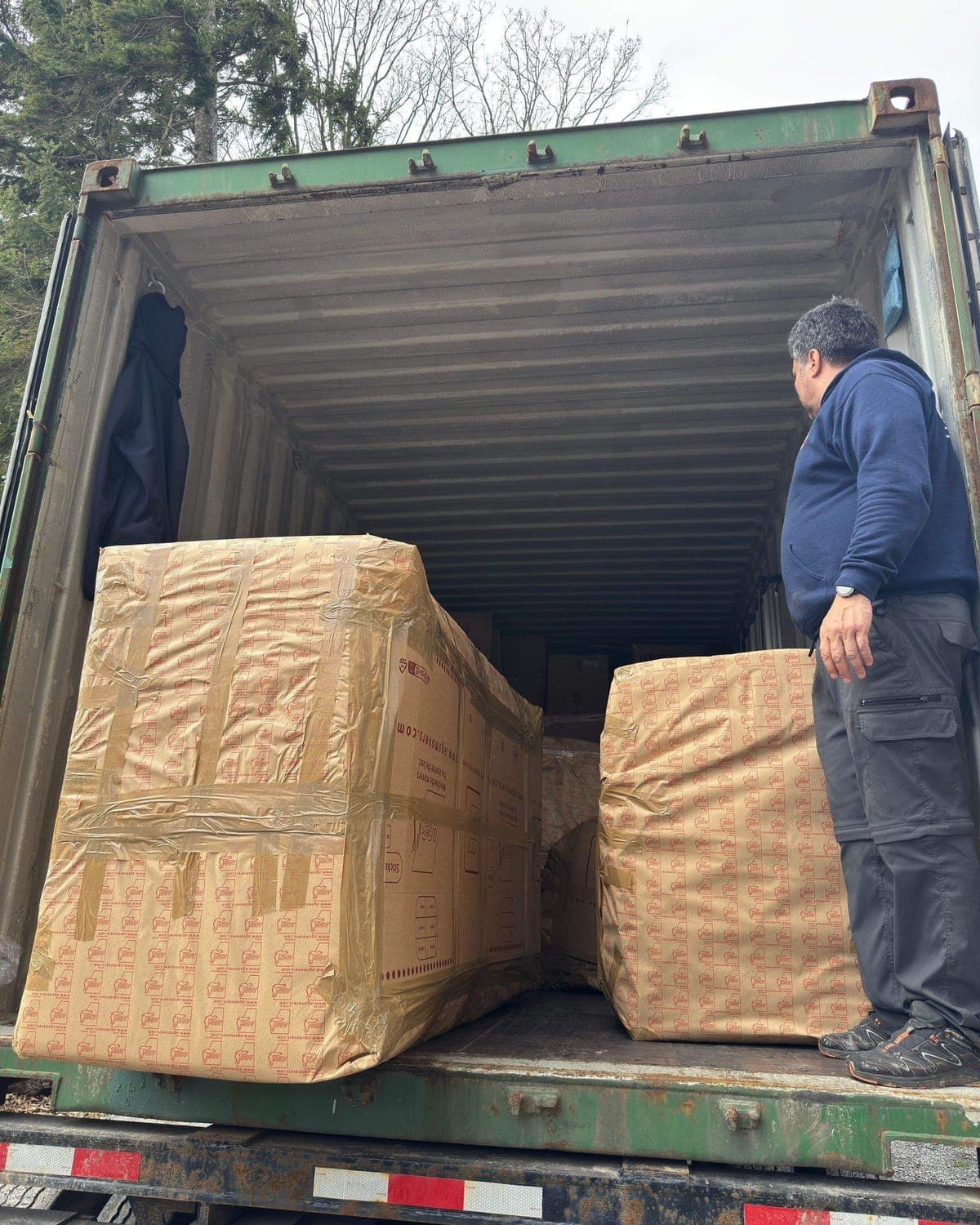
It starts with a survey — in person for a house, by video for a condo — so the quote is based on your actual volume, and so we can see the items that MPI will care about: the bikes, the camping gear, the garden tools, the wooden furniture. On packing day our crew wraps and packs for ocean transit (export-grade cartons, paper, blankets and custom crates for art, mirrors and the TV), cleans and documents the risk items, and builds the inventory that customs, MPI and your insurer will rely on. The shipment comes to our North York warehouse, where it is loaded into a dedicated 20′ or 40′ container or consolidated with other New Zealand-bound shipments if you are moving a smaller volume.
The container is drayed to the CPKC Vaughan or CN Brampton terminal on our own truck, railed to Vancouver and sails across the Pacific to Auckland or Tauranga — some services call at Australian ports on the way. Our New Zealand partner, an IAM member agent, lodges the customs declaration under your concession, books the MPI inspection, collects the container and delivers to your new home with unpacking and debris removal included in the door-to-door service.
- Free survey (home or video) and fixed door-to-door quote
- Confirm you qualify for the household-effects concession and gather the documents
- Packing, crating and the biosecurity clean-up of outdoor gear at your home in the GTA
- Loading into a dedicated container or NZ groupage at our warehouse
- Rail to Vancouver and ocean sailing across the Pacific
- Customs declaration and MPI inspection handled by our New Zealand agent
- Delivery to your door with unpacking and packing-material removal
The household-effects concession: no duty or GST if you qualify
New Zealand Customs allows used household goods to be imported free of duty and GST when you are arriving to live in New Zealand for the first time, or returning after living overseas for at least 21 months, and you hold a visa or residence status that lets you stay for at least 12 months. The goods must be your own, owned and used before you left Canada, and imported for your personal use, not for sale. New items still in their packaging, commercial goods, alcohol and tobacco are outside the concession and pay duty and 15% GST on the declared value.
The declaration is the Unaccompanied Personal Baggage Declaration, lodged by our agent with your passport, visa, arrival details and inventory. The concession is tied to your arrival, so timing matters: the container should arrive after you do, or close to it, and the goods should be in your name. We check the eligibility questions at the survey rather than at the port, because a shipment that misses the concession pays GST on everything in it.
Biosecurity: the MPI inspection everyone hears about
New Zealand protects its farms and forests with the strictest border biosecurity of any country we ship to. Most containers of household goods are inspected, and MPI is looking for soil, seeds, insects, plant material, untreated wood and anything that has been used outdoors and not cleaned. Bicycles, golf clubs, hiking boots, tents, garden tools, barbecues, lawn furniture and sports equipment must arrive clean and dry; vacuum cleaners must be emptied; Christmas decorations with pine cones or straw, seed-based craft items and any food are the classic reasons for a treatment charge. Wooden furniture and untreated timber can be held for fumigation. Inspection is charged by the hour and treatment on top, and the container waits at the port while it happens.
Our packers treat this as part of the job. Risk items are cleaned at your home, packed separately and listed clearly on the inventory so the inspector can find them fast, which is what keeps the inspection short and the bill small.
- Clean and dry: bikes, sports and camping gear, garden tools, barbecues, outdoor furniture, footwear
- Empty: vacuum cleaners, lawnmowers (fuel drained), coolers
- Do not ship: food, seeds, plants, soil, honey, pine cones, straw or dried flowers
- Declare: wooden furniture, cane and wicker, animal products such as hides, feathers and shells
What it costs to ship household goods to New Zealand
Cost is driven by volume, so the survey matters. A one-bedroom apartment in the GTA is usually 12–20 cubic metres and ships as groupage (LCL) or a lightly loaded 20′ container. A three-bedroom house is typically 30–40 cubic metres and fills a 20′; larger homes ship in a 40′ or 40′ high-cube. The rail leg to Vancouver and the long Pacific crossing make this a more expensive lane than the UK or Europe, and it is worth being selective about heavy, low-value items. Access at both ends, professional packing and crating, storage at either end and the delivery address all move the price.
Our quotes are door to door and itemize what is included: packing and materials, loading, drayage and rail, ocean freight and port charges, New Zealand customs clearance and the standard MPI inspection, delivery, unpacking and debris removal. The items outside the quote are duty and GST on goods that do not qualify for the concession, MPI treatment or cleaning if the inspector orders it, and storage beyond the free period at destination.
| Home size | Typical volume | Usual method | Door-to-door timeline |
|---|---|---|---|
| Studio / 1 bedroom | 8–20 m³ | Groupage (LCL) or shared 20′ | 12–16 weeks |
| 2 bedrooms | 20–30 m³ | Dedicated 20′ container | 10–14 weeks |
| 3 bedrooms | 30–40 m³ | 20′ (full) or 40′ | 10–14 weeks |
| 4+ bedrooms | 40–65 m³ | 40′ or 40′ high-cube | 10–14 weeks |
Timelines from the GTA to New Zealand
Rail from Toronto to Vancouver takes about a week, and the Pacific crossing 25–35 days depending on the service and whether it calls in Australia first. At destination, allow one to two weeks for the customs declaration, the MPI inspection and delivery scheduling. A dedicated container typically arrives at your New Zealand door 10–14 weeks after packing day; groupage shipments wait for the consolidation to fill and add two to four weeks. If your home is not ready, our agent holds the shipment in storage after clearance and delivers when you are.
What to leave behind, and what to think twice about
New Zealand runs on 230 volts, so Canadian 110-volt appliances need transformers or replacement; most people ship the kitchen electrics only if they are dual-voltage. Mattresses and bulky, low-value furniture cost more to ship this far than to replace. Cars are the usual disappointment: importing a Canadian vehicle means entry certification against New Zealand standards, and unless it is a classic or a specialty vehicle it rarely makes sense. Firearms need a New Zealand Police import permit before they ship, and prohibited items include most food, plants, seeds and animal products.
- Prohibited or restricted: food, plants, seeds, soil, honey, animal products; firearms without a Police permit
- Check first: alcohol (duty and GST apply), medicines beyond personal quantities
- Usually not worth it: 110 V appliances, mattresses, bulky low-value furniture
- Vehicles: entry certification required; usually only worthwhile for classic or specialty cars
Why families moving to New Zealand choose Metropolitan Logistics
We are an IAM Core Member with IAMTrusted status and the Receivable Protection Program behind our agent relationships — which means the partner unpacking your home in Auckland is vetted and financially accountable. The shipment is loaded in our Toronto warehouse by our own crews, not handed to a consolidator you never meet, and you can see it there before it sails. Because we run container logistics commercially every day, the drayage, rail and ocean legs are the same lanes and carriers we book for exporters — which keeps the cost honest on a long route.
Before you move
Your moving checklist for New Zealand
- Book the survey 8–10 weeks before your target packing date — this is a long lane
- Confirm your visa allows a stay of 12+ months and gather your arrival details
- Clean and dry every outdoor item before packing day; our crew checks them again
- Leave food, seeds, plants and pine-cone decorations behind
- Decide on vehicle shipping early; entry certification takes time and money
- Set aside documents, passports, valuables and medications to travel with you
- Arrange transit insurance on the declared inventory value
FAQ
Moving to New Zealand from Canada: frequently asked questions
How long does it take to ship household goods from Toronto to New Zealand?
Do I pay duty or GST on my furniture when moving to New Zealand?
Will MPI inspect my container?
Can I ship my car to New Zealand?
Do you deliver everywhere in New Zealand?
Can you store my things if my New Zealand home is not ready?
Is my shipment insured?
What can I not bring into New Zealand?
When should I book a move to New Zealand?
Volume calculator & quote
Get your New Zealand moving quote
Tell us your address in the GTA, where in New Zealand you are going and roughly what you are taking. We will book a free survey and send a fixed door-to-door price.
Pick your items and the calculator totals your volume; pick New Zealand as the destination and a move coordinator prices the route.