An ocean crossing is a rougher ride than it looks from the dock. Between your living room and your new one, a container is lifted by a forklift, drayed to the rail terminal, shunted in a rail yard, craned onto a ship, stacked eight high, rolled through weeks of swell, and craned off again, while the air inside swings from cold and dry to warm and humid. Most household goods handle that well in export cartons, paper and blankets, packed tight and braced so nothing shifts. A handful of items do not, and those get a crate.
Knowing which is which is most of the job. This is how we make that call on the international moves we run from Toronto, what we build ourselves, and when we hand a piece to a specialist crating shop.
How household goods actually travel by ocean freight
A household ships one of two ways. A full home, usually two bedrooms and up, travels in a dedicated 20′ or 40′ container: loaded at our North York warehouse or at your door, blocked and braced with lumber, photographed and sealed, and not opened again until customs at destination. A smaller move travels as groupage: built into a lift van, a sealed plywood or heavy cardboard vault, and consolidated with other shipments in a shared container. The ocean freight leg is the same either way, booked with the major steamship lines and railed from the GTA to Montreal, Halifax or Vancouver.
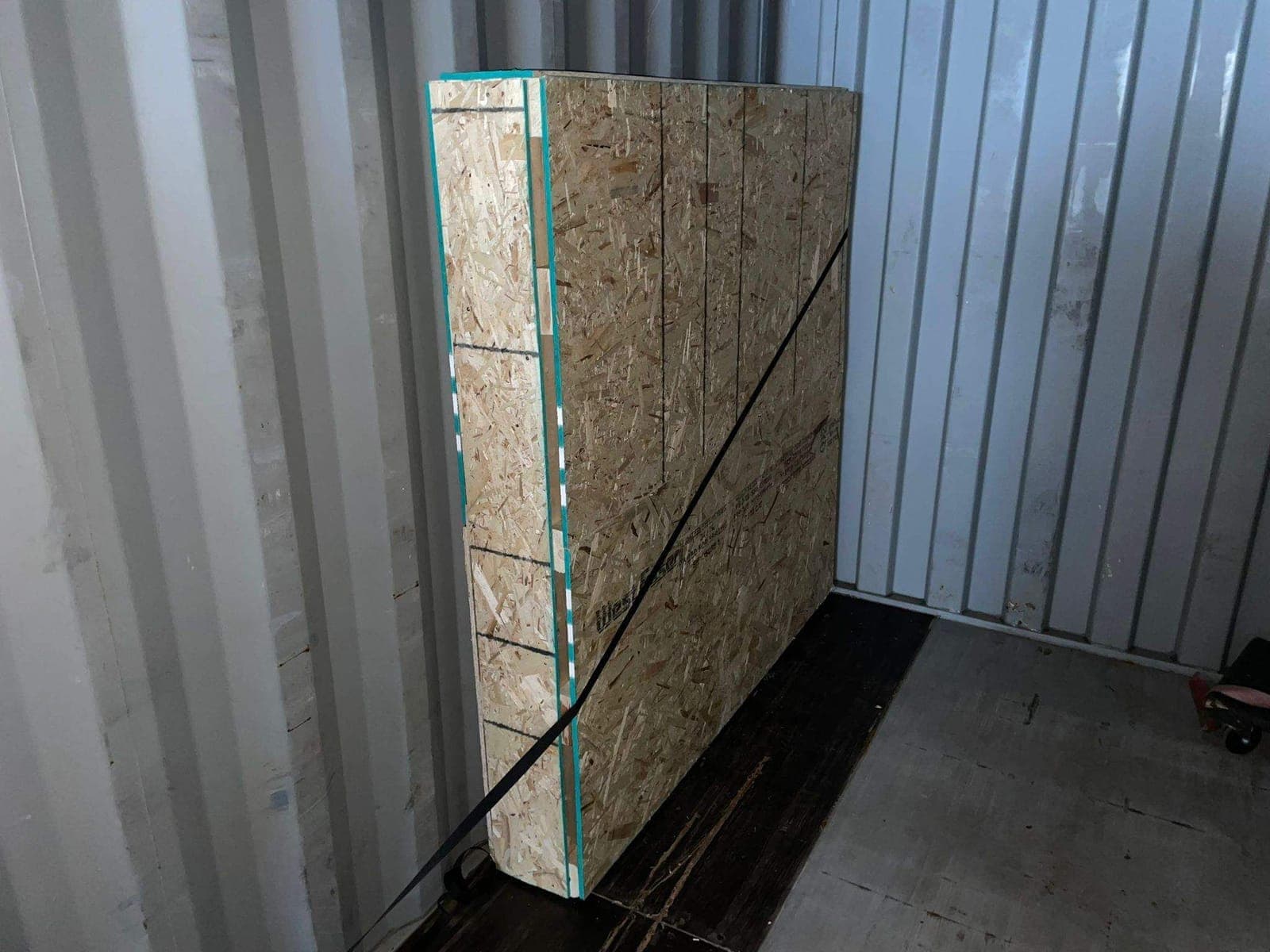
Inside that box, the packing does the protecting. Furniture is wrapped piece by piece, cartons are packed to a fixed weight so they stack, and the load is built floor to ceiling so nothing can move. A crate is for the piece that would still be at risk inside all of that.
Which items need a crate
The rule of thumb: crate anything that is fragile and flat, fragile and heavy, irreplaceable, or shaped so that it cannot be stacked against. The survey is where we list them, because every crate adds volume to the shipment and the quote should show it from the start.
| Item | Why a carton is not enough | How it travels | Built by |
|---|---|---|---|
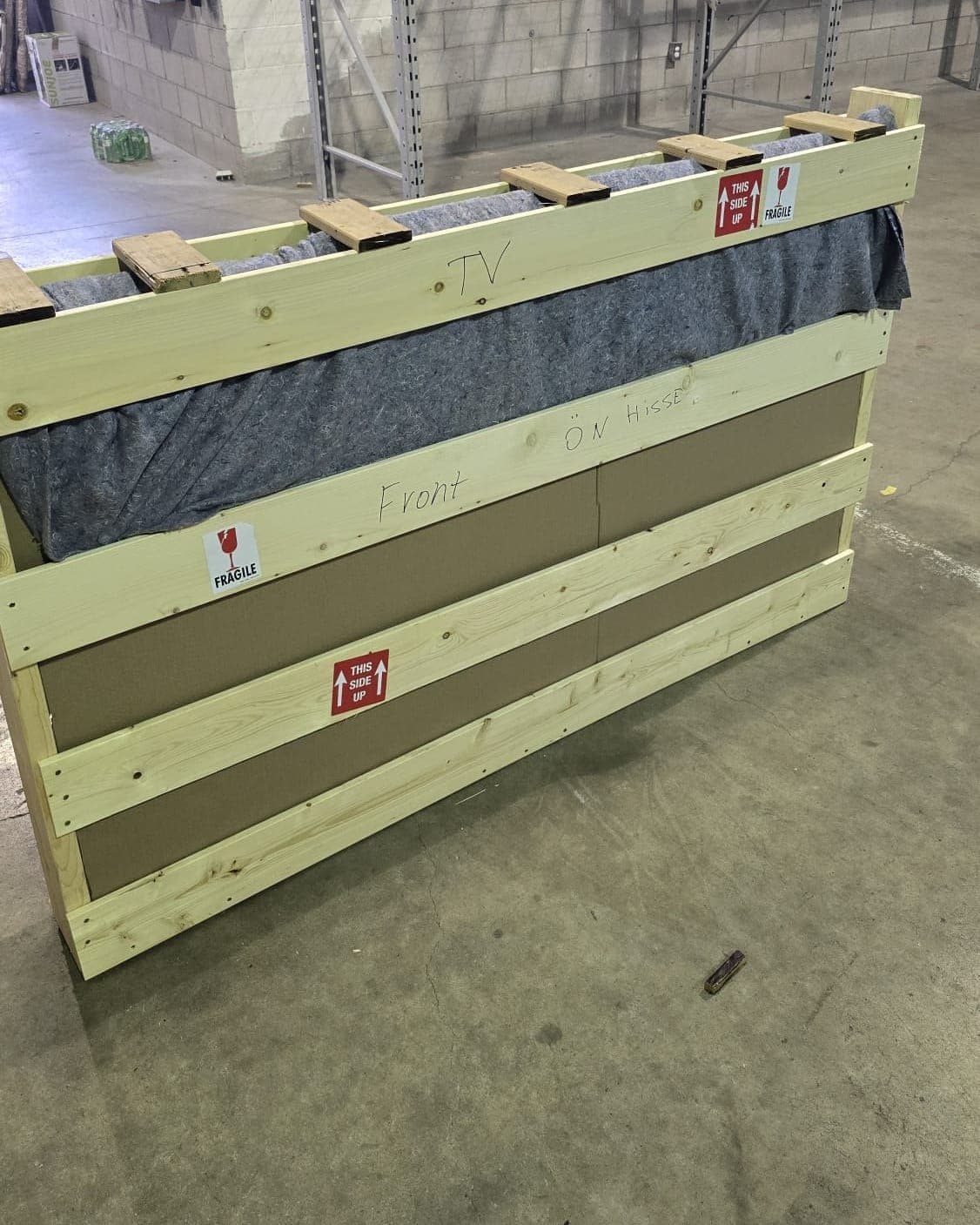
| Flat-screen TV | Thin glass panel, no structure of its own | Felt-lined slatted crate, marked front and this-way-up | Our warehouse |
| Mirrors, glass tabletops, framed prints | Flex and point loads crack glass | Slatted crate with foam edges, stood on edge | Our warehouse |
| Marble or stone tops | Very heavy for their size; snap under their own weight if laid flat on a gap | Plywood crate on a timber base, carried on edge | Our warehouse |
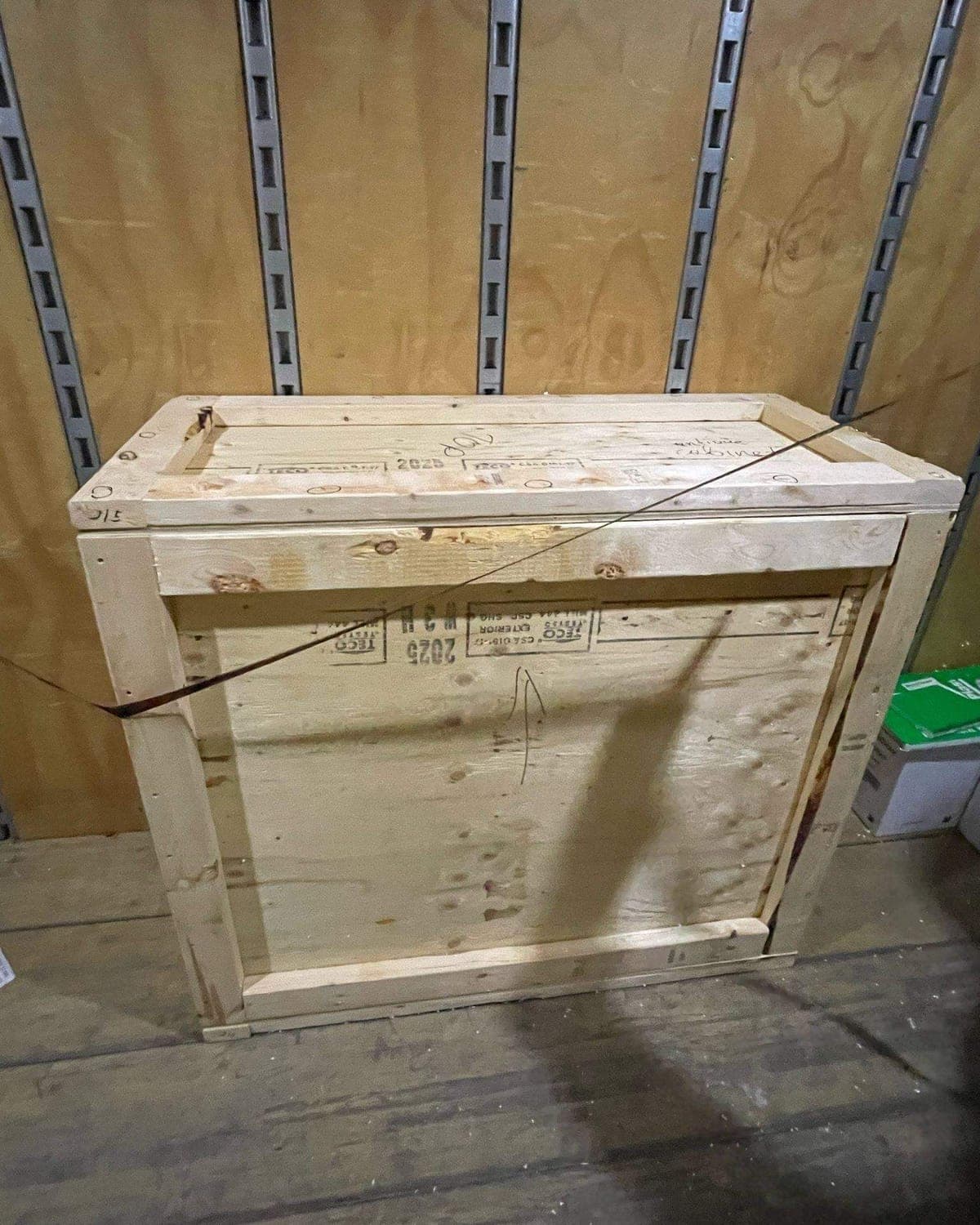
| Antique furniture | Old joints, veneer and finishes react to knocks and humidity | Wrapped, then crated and braced so nothing touches the case | Our warehouse, or a specialist for high-value pieces |
| Fine art and sculpture | Irreplaceable; needs climate-aware materials and documentation | Museum-grade crate with an inner case, often with a condition report | A specialist crater |
| Chandeliers and light fixtures | Dozens of loose glass parts | Disassembled, parts boxed, frame crated | Our warehouse |
| Machinery, tools, exercise equipment | Heavy, oily, odd-shaped, often over carton limits | Skidded and crated, sometimes with blocking for a single heavy point | Our warehouse, or a specialist for industrial pieces |
| Motorcycles | Fuel, battery and a narrow footprint | Strapped to a timber base, crated around the bike | Our warehouse |
The crates we build on our own warehouse floor
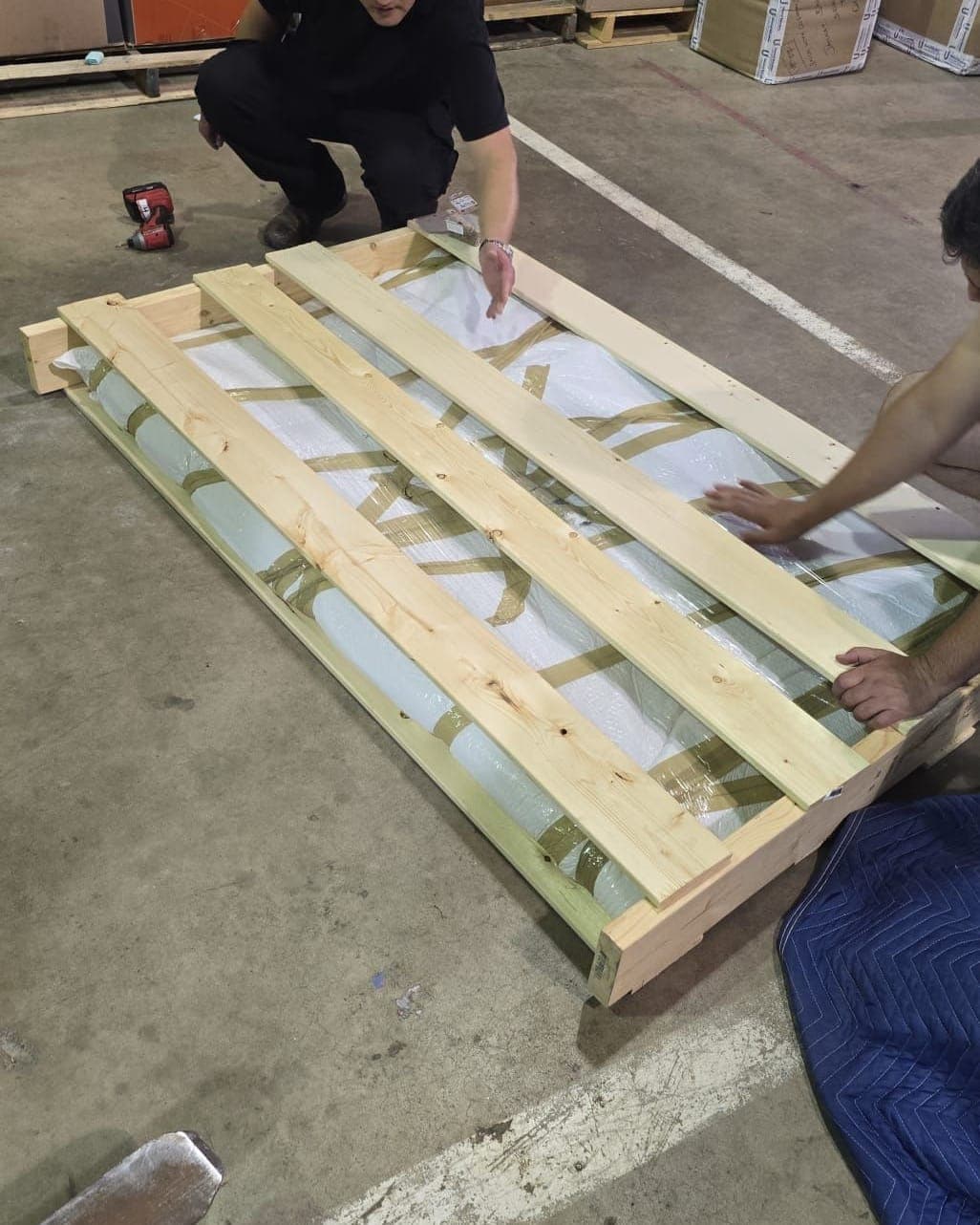
Most crating on a household move happens at our North York warehouse, by the same crew that packed the house, which is what keeps the piece's custody unbroken. TV crates are slatted pine lined with felt. Mirror and glass crates get foam edging and travel standing up. Marble and stone ride on a timber base so the weight sits on the frame, not on the slab. An antique cabinet gets its own box, blocked so it cannot shift inside, then braced to the container wall so the box cannot shift either. For smaller moves, the lift van itself is a crate: built around the whole shipment, screwed shut, and labelled with your name, destination and piece count.
All the lumber we use for export is heat-treated and stamped to ISPM 15, the international standard for wood packaging. Most countries inspect for it, and untreated wood is one of the few things that can get a whole container held or fumigated at destination. The same crating, skidding and bracing is the backbone of our commercial crating and export packing service.
When a specialist crater is the right call
Some pieces deserve more than a moving company's crate. Museum-quality paintings and sculpture, antiques worth more than the rest of the shipment, a grand piano's soundboard, an object that needs a climate-buffered inner case or a full condition report for the insurer: that is a trade of its own, with its own materials, techniques and paperwork. When a survey turns one of these up, we bring in a specialist rather than improvise.
In Toronto, the shop we point clients to is Argos Crating, a dedicated crating company that builds custom wooden crates for everything from industrial equipment to medical devices. For the pieces that matter most on a household move, their fine art and antique crating in Toronto covers paintings, sculpture and heirloom furniture, built and documented to a standard a fine-art insurer will accept.
How a specialist crate joins the rest of your move
A crate built by a specialist does not need its own shipment. It is delivered to our dock, or collected from the crater on our own truck, added to your inventory with its dimensions and declared value, and loaded into the same container as the rest of the household: braced in its own position, photographed before the seal goes on, and covered by the same bill of lading and the same customs entry. At destination our partner agent delivers it with everything else, and the crate is opened at your new home, not at the port.
Two things make that easy. Tell us about the piece at the survey, so the crate's size is in the plan and the quote before anything is built. And if it is valuable, decide on insurance early: professionally crated and loaded goods are covered all-risk on the declared value, which is exactly the cover a piece like that needs.
Shipping a household with a few pieces that need a crate?
List them in your quote request. We plan the crating at the survey, build what we can on our own floor, bring in a specialist where it is warranted, and put it all in one fixed door-to-door price.