Commercial · International shipping from the GTA, worldwide
International Shipping & Logistics Company in Toronto: Ocean, Air and Road, Door to Door
International shipping from Toronto is four different jobs wearing one name: a full container by sea, a few pallets consolidated into a shared container, a time-critical shipment by air, and a trailer across the U.S. border. Most international shipping companies in Toronto sell one of them and broker the rest. We run all four from the same North York warehouse, with our own crews loading the freight and our own trucks taking it to the rail terminal or the airport, and we quote them side by side so the mode is a decision, not a default.
This page is the map: what each mode is good for, where we ship from Canada and how long it takes, what an international shipment actually costs, and the paperwork a shipper needs. The ocean, air and cross-border pages go deeper on each; one quote form at the end covers them all.
Ocean FCL & LCL, air freight, cross-border road, customs coordination
Lanes
Europe, Asia, Oceania, the Middle East, Africa, Latin America and the USA
Minimum
One pallet or crate and up: freight, not parcels
Assets
North York warehouse, loading crews, drayage tractors, straight trucks
What an international shipping company in Toronto actually does
An international logistics company moves your goods from a door in Southern Ontario to a door abroad and owns every hand-off in between: the pickup, the receiving and packing, the container or air booking, the paperwork, the rail or road leg to the gateway, the customs entry at destination and the final delivery. The difference between companies is how many of those steps they perform and how many they subcontract. A broker-style forwarder performs none of the physical ones. We perform the origin side ourselves and manage the rest through named carriers and partner agents we have worked with for years.
In practice that means your freight is collected on our straight truck, counted and photographed on our dock, packed or crated by our crew where it needs protection, loaded and braced into the container by the same people, and drayed to CPKC Vaughan or CN Brampton on our chassis against the rail cut-off. One dispatch desk sees it from your plant to the vessel, and one invoice itemizes it.
From the GTA terminal to the coast by rail: the leg most shippers never see, and the one the cut-off is built around.
Pickup across the GTA and Southern Ontario on our own trucks, or receiving at our dock
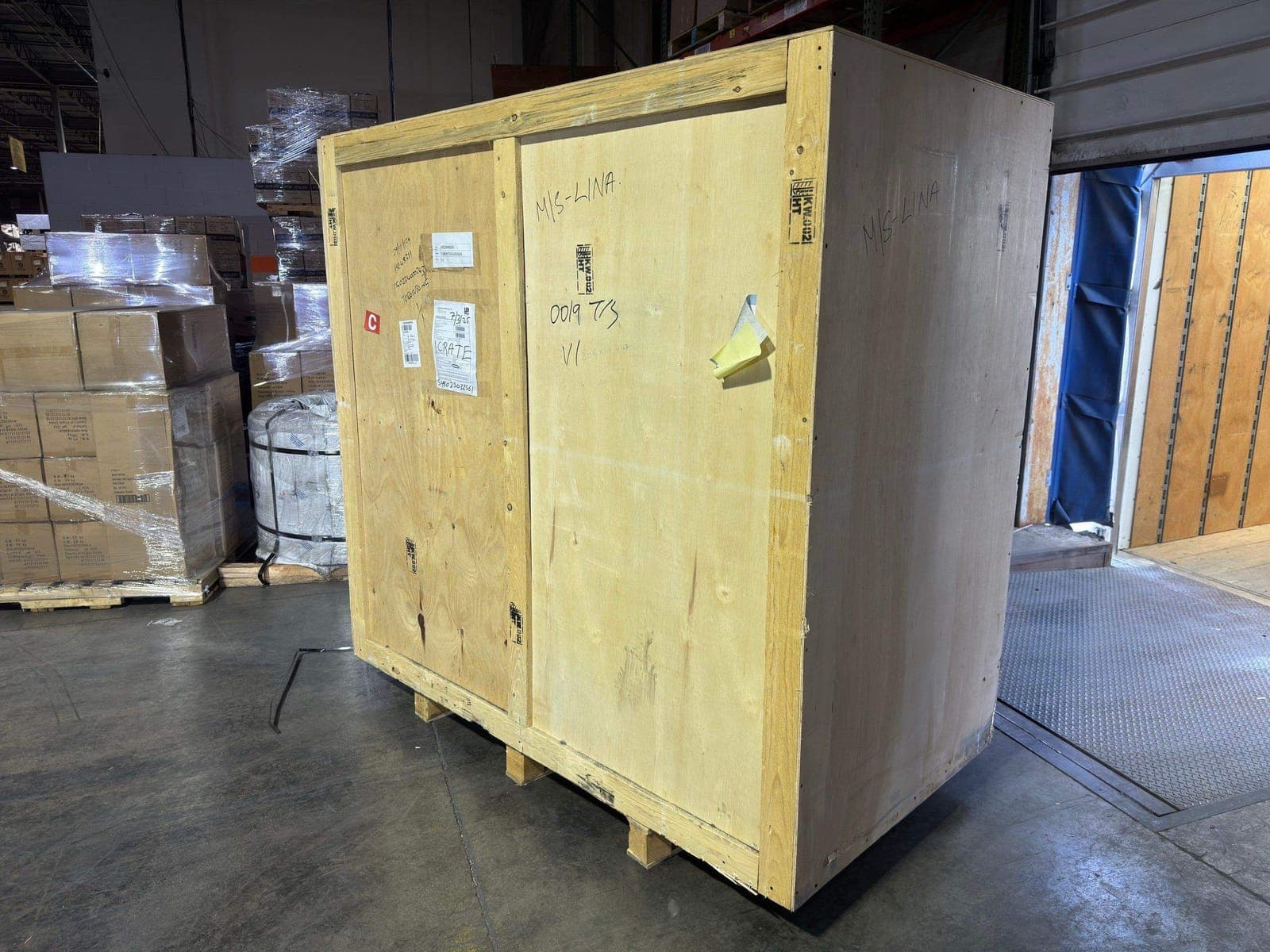
Export packing, crating and ISPM-15 wood where the destination requires it
Container stuffing, blocking and bracing by our loading crews, photographed before the seal
Ocean, air or road booking with named carriers, and the documents each one needs
Drayage to the rail terminal or Pearson on our own equipment
Customs coordination at both ends and delivery by a partner agent abroad
Four ways to ship internationally from Toronto
Choosing the mode is the first decision and the one that sets the price. Ocean is the default for anything over a pallet that can wait a few weeks; air is for the shipment whose delay costs more than the freight; road is for the United States, where a trailer is both the fastest and the cheapest option; and LCL consolidation is the way a small export sails without paying for a whole container. We quote the ocean price beside the air price whenever the choice is real.
Ocean carries most of what leaves Toronto for abroad; it is the slowest leg and by far the cheapest per tonne.
Mode
Best for
Typical transit from Toronto
How it's priced
Ocean, full container (FCL)
Ten pallets and up, machinery, fragile or high-value goods, dangerous goods, a fixed sailing
9–16 days to the UK and Northern Europe · 14–28 days to East Asia · 25–40 days to Australia, plus 1–7 days of rail to the coast
Per container: 20′, 40′, 40′HC, open-top or flat-rack
Ocean, consolidated (LCL)
One to eight pallets, samples, spare parts, small exports
The same sailings, plus 3–7 days at each end for consolidation
Per cubic metre or weight-measure, with a minimum
Air freight
Urgent parts, launches, perishables, high-value electronics, anything under a tonne that cannot wait
1–5 days airport to airport from Pearson, door to door in about a week
Per chargeable kilogram (actual or volumetric, whichever is greater)
Cross-border road (USA)
Any freight to or from the United States, full or partial trailer
1–3 days to the Northeast and Midwest · 5–10 days to the West Coast and Sun Belt
Per trailer (FTL) or per pallet and lane (LTL)
Where we ship from Canada: lanes, gateways and transit times
Every international shipment from Toronto leaves through one of three gateways. Montreal and Halifax take the Atlantic trades: the UK and Europe, the Mediterranean, the Middle East, India and Pakistan, Africa and South America's east coast. Vancouver and Prince Rupert take the Pacific: China, Korea, Japan, Southeast Asia, Australia and New Zealand. The U.S. is reached by road at Fort Erie or Windsor. The container travels to the coast by CN or CPKC rail from the GTA intermodal terminals, and the routing is chosen for the carrier's service and the cut-off you need, not by habit.
The table shows typical port-to-port ocean times by region. Add one to seven days of rail at origin, consolidation time for LCL, and customs and delivery at destination for a door-to-door estimate; the ocean freight page has the lane-by-lane detail.
Rail west to Vancouver: the Pacific gateway for Asia and Oceania, five to seven days from the GTA.
Destination region
Canadian gateway
Typical ocean transit
Common cargo from Ontario
United Kingdom & Ireland
Montreal / Halifax
9–16 days
Machinery, building products, retail goods, household goods
Northern Europe (NL, DE, BE, FR)
Montreal / Halifax
10–16 days
Industrial equipment, automotive, project cargo
Mediterranean (ES, IT, PT, GR, TR)
Montreal / Halifax
18–30 days
Equipment, food products, personal effects
Middle East (AE, SA, QA, IL)
Montreal / Halifax
25–40 days
Project cargo, machinery, household goods
India, Pakistan, Sri Lanka
Montreal / Halifax
30–45 days
Machinery, scrap and recyclables, personal effects
China, Korea, Japan, SE Asia
Vancouver / Prince Rupert
14–28 days
Lumber, agricultural products, returns of equipment
Australia & New Zealand
Vancouver
25–40 days
Machinery, vehicles, household goods
West & South Africa
Montreal / Halifax
25–40 days
Used equipment, vehicles, project cargo
South America (east coast)
Montreal / Halifax
20–35 days
Industrial equipment, project cargo
United States
Fort Erie / Windsor by road
1–10 days
Everything: FTL, LTL, consolidated loads
What international shipping from Canada costs
An international shipping quote has the same anatomy whatever the mode. The freight itself, ocean, air or road, is the largest line and rarely the whole story. Around it sit the pickup, the receiving and packing at our warehouse, the drayage to the terminal, the terminal handling and documentation at the Canadian gateway, the carrier's surcharges at its current tariff, and at destination the terminal charges, the customs entry and the delivery. For LCL add the consolidation and deconsolidation charges that make small shipments feel expensive per cubic metre; for air add the airline's fuel and security surcharges and the airport handling at both ends.
We itemize all of it on one quote, and we quote the alternative mode beside it when the choice is close. Worked examples with 2026 ranges are in our guides to shipping container costs from Toronto and container sizes and prices in Canada. The one cost that is never on the quote is the one a broker-style forwarder discovers after loading: a re-measured volume, a re-weighed pallet, a demurrage day. Our crews measure and photograph the freight on our dock before anything is booked.
Export and import paperwork, handled in-house
Shipping internationally from Canada is as much a documents job as a trucking job. For exports we review the commercial invoice and packing list, prepare the shipper's letter of instruction, file the export declaration through CBSA's CERS system, submit the bill of lading instructions and verified gross mass (VGM), prepare dangerous goods declarations where applicable, and arrange certificates of origin through the chamber of commerce when the destination needs one. For imports we coordinate the release with a licensed customs broker, yours or one we introduce, time the container pull to the day it grounds, and deliver on our own trucks.
First-time exporters and importers get walked through the set-up: a CBSA business number with an import/export program account, CARM registration for importers, Incoterms that match who is actually paying for what, and the packaging rules, ISPM-15 heat-treated wood above all, that stop a shipment at the far end. The practical guide is here: how to export from Canada.
The export file: invoice, packing list, declaration and bill of lading, prepared before the container leaves our dock.
Customs broker coordination at origin and destination; release timed to the container's arrival
Incoterms explained before the quote, so the price covers what you think it covers
Packaging and marking to the destination's rules, including ISPM-15 wood
Freight, not parcels
This is freight logistics: a pallet, a crate, a container, a trailer. If you are shipping a single box abroad, a courier such as Canada Post, UPS, FedEx or DHL will be faster and cheaper than any freight forwarder, and we will tell you so. Our minimum is one pallet or one crate, and the sweet spot is anything from a few pallets of samples to a programme of weekly containers. Household goods and personal effects are the exception, handled by our international moving team with its own survey, packing crews and quote: see international moving costs for what a household move from Toronto costs.
Import & export
Exports and imports, both directions
The same warehouse, crews and trucks work the lane outbound and inbound, which is why overseas forwarders use us as their Toronto agent.
Exporting from Southern Ontario
Your plant to a door abroad
1Step 1
Pickup on our truck
2Step 2
Pack & load at our dock
3Step 3
Rail to the coast
4Step 4
Ocean or air
5Step 5
Cleared & delivered abroad
What it includes
Receiving, packing, crating and consolidation at North York
Container stuffing with blocking and bracing, photographed
CERS declaration, B/L, VGM, DG and certificates of origin
Drayage to CPKC Vaughan or CN Brampton against the cut-off
Destination agent for customs and door delivery
Importing into the GTA
A supplier abroad to your dock, or ours
1Step 1
Origin pickup by our agent
2Step 2
Ocean or air to Canada
3Step 3
Rail to the GTA terminal
4Step 4
Customs release
5Step 5
Our truck to your dock
What it includes
Origin-to-door booking through partner agents abroad
Customs broker coordination and CARM set-up for first-time importers
Container pulled the day it grounds, on our own chassis
Unloading, transloading or palletizing at our warehouse when your dock cannot take a container
Delivery across the GTA and Southern Ontario on our straight trucks
How it works
How an international shipment runs
Four steps, one dispatch desk, whether the freight is going by sea, air or road.
01
Tell us the shipment
Commodity, pieces or pallets, weight, origin and destination, Incoterm and the date it needs to be there. You get an itemized quote, with the alternative mode beside it when the choice is close.
02
Book, collect and pack
The vessel, flight or trailer is booked; the freight is collected on our truck or received at our dock, counted, photographed and packed or crated as needed.
03
Load and document
Our crew loads and braces the container or builds the air pallet; the export declaration, bill of lading or air waybill and any DG paperwork are filed before it leaves.
04
Ship, clear, deliver
Drayed to the terminal or airport on our equipment, tracked to destination, cleared by the broker and delivered by our partner agent, or, for imports, pulled and delivered by our own trucks.
Steamship lines
Booked with the lines that actually sail from Canada
Ocean freight is booked carrier-direct or through our NVOCC partners, on whichever line fits the lane and the date.
Logos belong to their owners.
The right mode
Ocean, air or road: quoted side by side
The premium for air over ocean is often five to ten times the freight. We put the two numbers next to each other so the urgent shipment flies and everything else sails.
Ocean FCL
A whole container, loaded and sealed on our dock, unopened until the consignee. Cheapest per tonne; two to six weeks door to door.
Ocean LCL
Your pallets consolidated with other shippers' cargo for the same destination. The way one to eight pallets sail without a container's price.
Air freight
Packed and palletized here, booked through IATA cargo agents at Pearson, door to door in about a week.
Cross-border road
A dedicated or shared trailer to anywhere in the United States, customs entry at the bridge, no port and no ocean.
Dangerous goods ship by ocean FCL with a full IMDG declaration; most LCL consolidators and many airlines refuse them.
Capabilities
Everything an international shipment from Toronto needs
The services most forwarders subcontract, performed by our own people in our own building.
Ocean freight FCL & LCL
Booked with the major steamship lines, loaded at our warehouse, drayed on our chassis.
Air freight
Export packing and palletizing here, booking through licensed IATA cargo agents at YYZ.
Cross-border trucking
FTL and LTL to and from the USA, consolidated at our dock, customs coordinated door to door.
Customs coordination
Export declarations in-house; import release through a licensed broker, timed to the container.
Crating & export packing
Custom crates, skids, ISPM-15 wood, moisture protection for machinery and electronics.
Consolidation & storage
Receive from several suppliers, hold, consolidate and load one container.
Project & out-of-gauge cargo
Open-tops and flat-racks with securement designed and installed by our crews.
Household goods
Door-to-door international moving for families and employees, with its own crews and quote.
In the field
Ports, rail and the warehouse behind the booking
Where an international shipment from Toronto actually goes, and where it starts.
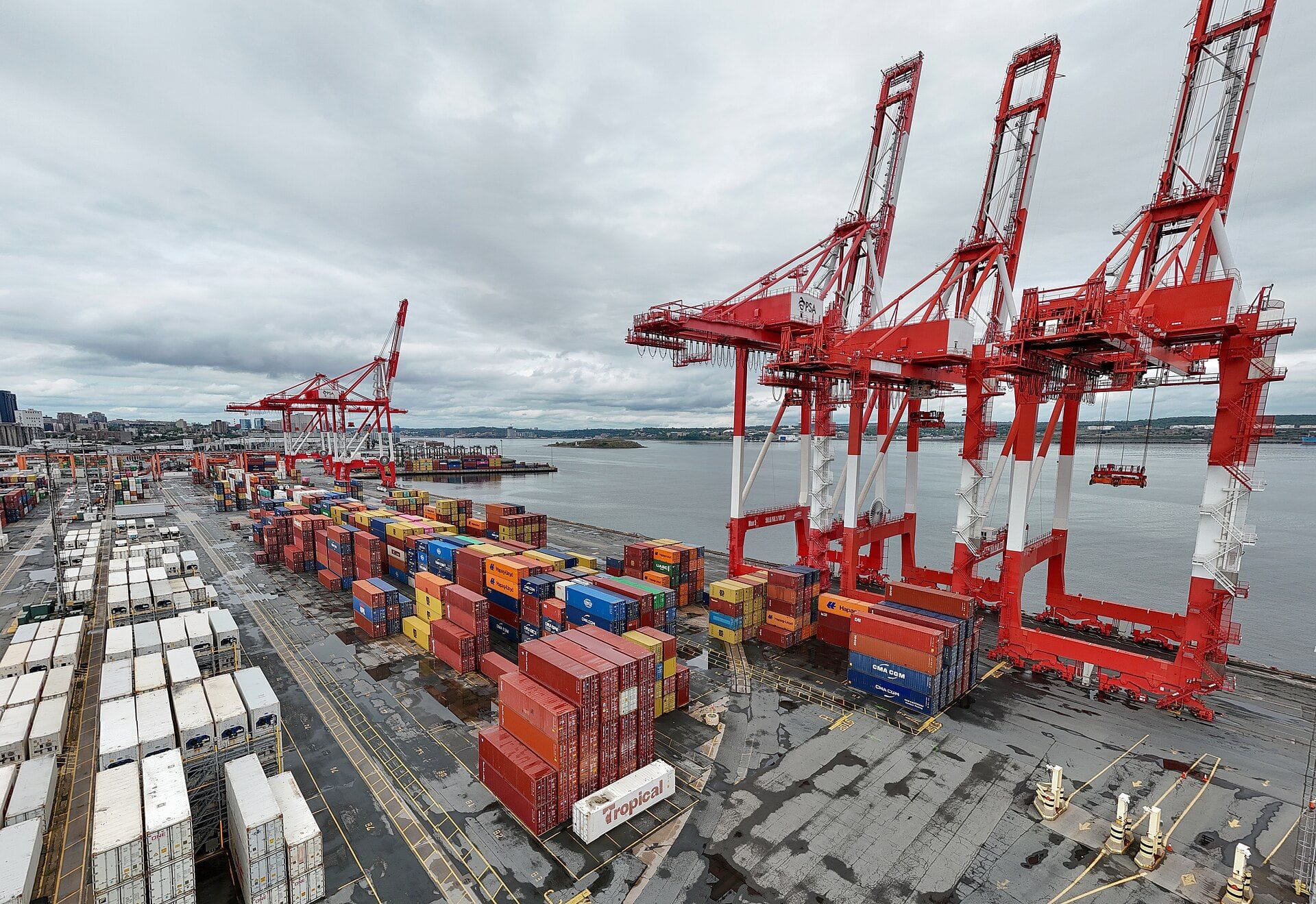
The gateway: your container lifted aboard under the port gantries at Montreal, Halifax or Vancouver.
Vancouver, the Pacific gateway for Asia and Oceania.
Consolidation: several suppliers' pallets held and combined into one export container.
Our dock: the load blocked, braced and photographed before the seal.
What's included
Everything on the invoice, nothing hidden
Mode recommendation and an itemized quote, with the alternative beside it
Pickup on our trucks across the GTA and Southern Ontario, or receiving at our dock
Export packing, crating, palletizing and consolidation at North York
Container loading with blocking and bracing, or air pallet build-up, by our crews
Ocean, air or road booking with named carriers
Export documentation: CERS, B/L or AWB, VGM, DG declarations, certificates of origin
Customs broker coordination at origin and destination
Drayage to the rail terminal or Pearson on our own equipment
Destination agent for customs clearance and door delivery abroad
Built for
Who uses this service
Ontario manufacturers exporting machinery, equipment and products worldwide
Importers bringing containers or air freight into GTA distribution
Businesses shipping their first international freight who need the paperwork explained
E-commerce and wholesale shippers moving pallets, not parcels, to overseas markets
Overseas forwarders and shippers who need an asset-based agent in Toronto
Companies relocating equipment or employees abroad
A working dock minutes from the intermodal terminals: containers received live or dropped, freight unloaded by our own crews, storage on our racks, and straight trucks loading for delivery — there whenever a shipment needs it.
Operating warehouse in North York, Toronto
Dock-level receiving, container live-unload or drop, racked and floor storage, staging for outbound.
Lumper crews on staff
Floor-loaded 40′ containers are hand-unloaded, palletized and wrapped by our own people — not day labour.
Straight trucks for delivery
Warehouse-to-door distribution across the GTA & Southern Ontario, including inside and white-glove delivery.
Minutes from the intermodal terminals
≈15 min to CPKC Vaughan, ≈30 min to CN Brampton, ≈25 min to the Port of Toronto — short drays, fewer chassis days.
International Shipping & Logistics: frequently asked questions
What does an international shipping company in Toronto do?
It moves your freight from a door in Ontario to a door abroad and manages every hand-off between: pickup, packing, the ocean, air or road booking, export documentation, the rail or road leg to the gateway, customs at destination and delivery. We perform the origin steps ourselves, in our own warehouse with our own crews and trucks, and manage the carriers and destination agents for the rest.
Should I ship internationally by sea or by air?
By sea unless the delay costs more than the freight. Ocean is five to ten times cheaper per tonne and carries almost everything that leaves Toronto for abroad; air makes sense for urgent parts, launches, perishables and high-value electronics under about a tonne. We quote both when the choice is real.
How much does international shipping from Canada cost?
It depends on the mode, the volume, the destination and the season. A quote itemizes the freight, pickup, packing, drayage, terminal handling, documentation, carrier surcharges and destination charges; there are no unlisted fees on our invoices. Our container cost guide gives 2026 ranges by lane, and the quote form on this page returns an itemized price with the next available sailings.
How long does international shipping take from Toronto?
Add one to seven days of rail to the coast, then typically 9–16 days by sea to the UK and Northern Europe, 18–30 to the Mediterranean and Middle East, 14–28 to East Asia and 25–40 to Australia. Air is one to five days airport to airport. Road to the United States is one to ten days depending on the state.
Do you ship small packages or parcels internationally?
No. Our minimum is one pallet or one crate; below that a courier such as Canada Post, UPS, FedEx or DHL is faster and cheaper, and we will say so. We ship freight: pallets, crates, containers and trailers.
Which countries do you ship to from Canada?
Anywhere with a port or an airport. The UK and Europe, India and South Asia, the Middle East, China, Japan and Southeast Asia, Australia and New Zealand, Africa and Latin America by sea and air; the United States by road. Europe, the Middle East and India sail from Montreal and Halifax; Asia and Oceania from Vancouver.
What documents do I need to ship internationally from Canada?
A commercial invoice and packing list, the export declaration filed through CBSA's CERS system, the bill of lading or air waybill, verified gross mass for a container, dangerous goods declarations where applicable, and a certificate of origin if the destination or a trade agreement requires one. We prepare or review all of them before the freight leaves our dock.
Do you handle customs clearance?
We file export declarations in-house and coordinate import release through a licensed customs broker, yours or one we introduce, timing the release to the container's arrival so nothing sits at the terminal. Customs entries themselves are filed by the broker; see the customs clearance page for how the two roles fit together.
Can you ship household goods and personal effects?
Yes, through our international moving team, which has its own survey, packing crews and quote: door-to-door household moves from the GTA to the UK, Europe, the USA, India, Australia, the Gulf and worldwide. The international moving costs page shows typical prices by home size and destination.
Commodity, pieces or pallets, origin, destination and the date it needs to be there. We reply with an itemized quote, the right mode, and the next sailings or flights.
Itemized pricing — terminal, fuel, chassis and accessorials listed
Answered by dispatch during business hours, Mon–Fri